
Welcome to Modern Agriculture!

 Occasionally we can experience what looks like some pretty substantial pasture damage with high high stock density grazing in wet conditions, but first looks aren’t always what they appear to be. Each picture tells a little bit about the results.
Here is the scenario, the pivot passed over this paddock in the night just before the cattle were put on the morning of July 27. On July 27 it rained 1.15″ which is well over our usual total for the month (.86″). There are 943 beef animals in the herd including 388 cows, 376 calves, and 178 bred heifers. they are on 6 acres. That puts the stock density at about 120,000 lbs liveweight/acre on a 24-hour move.
In the picture below I had just moved the herd off the paddock in the center. You can see the combined effect of 3/4″ of water from pivot overnight and 1.15″ of rain through the day. Note where the peaks are situated in the background for future reference.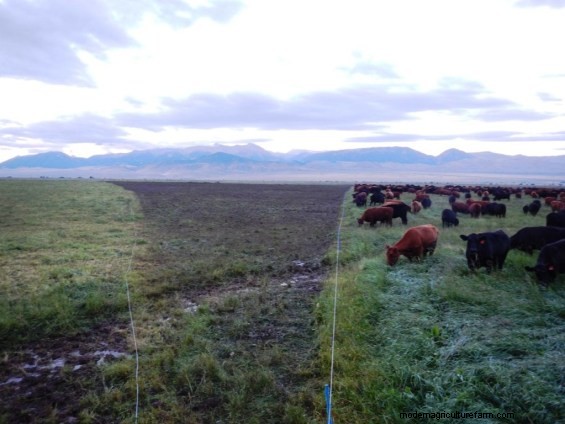
This picture gives an idea of the spatial density of the cattle.
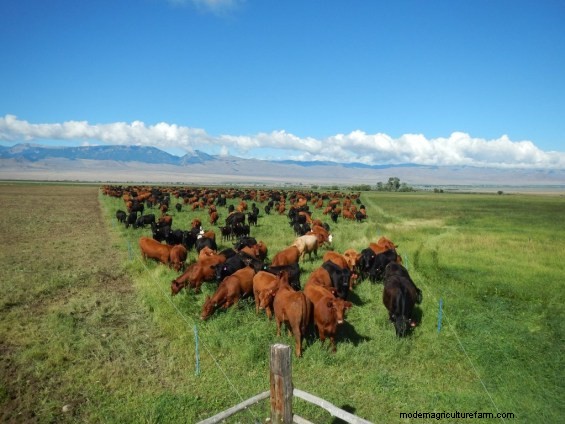
Here’s another shot. The field almost looks like it was disked! That is the impact of 120,000 lbs/acre stock density on a wet pasture.
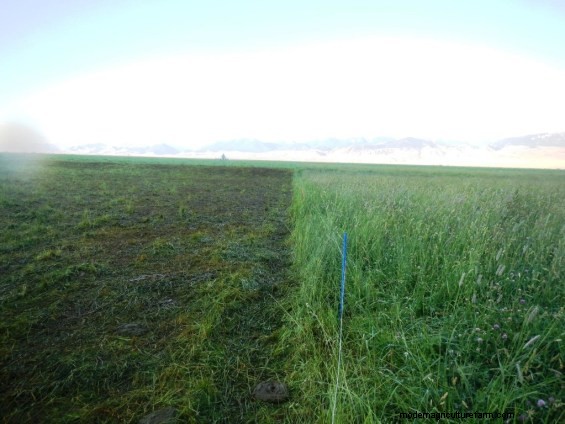
Below you can see what it looked like just a couple hours later after the sun had shone on the ground a little bit. It does look like a tilled field. One side note here, there were thousands of dead voles on this paddock and the ravens & magpies had a picnic.
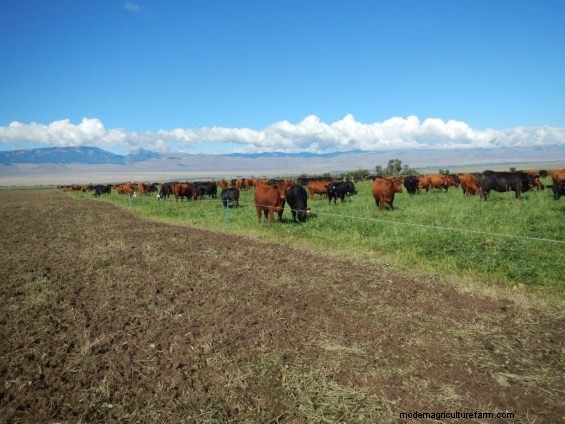
Two weeks later and the trampled paddock is already recovering. Remember this is the same line we were looking at that looked like it had been fully disked on the right hand side.
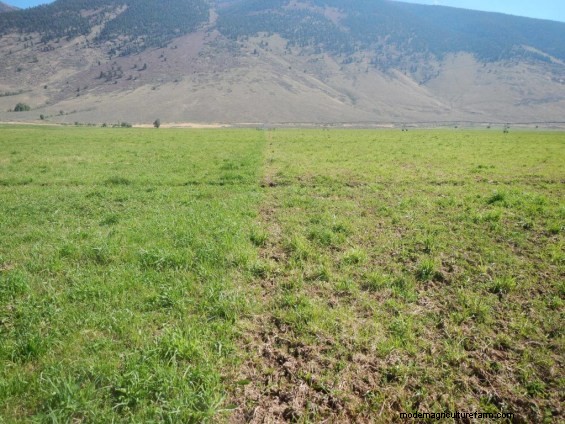
Below is the pasture again, just prior to being grazed 60 days later on September 28. The fence is in exactly the same position it had been in the first photos in this series. Note that there is no visible difference in the standing crop when you look across it like this. Yes, there was a little more open soil when you looked straight down into it. All of the surface litter had been trampled into the soil during the July 27 grazing event.
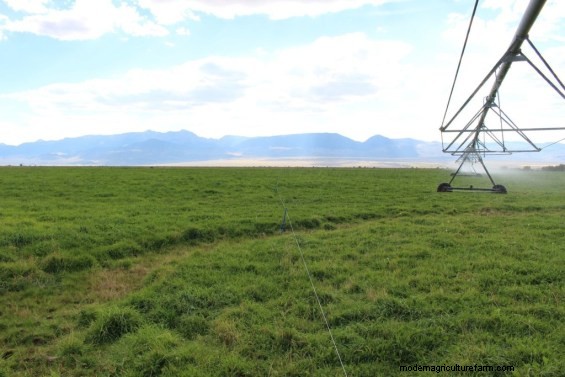
Here is the post-grazing line comparing the two sides. In the late September grazing cycle, the trampled (left side) paddock yielded 81 AUD/acre while the non-trampled (right side) paddock yielded 80 AUD/acre.
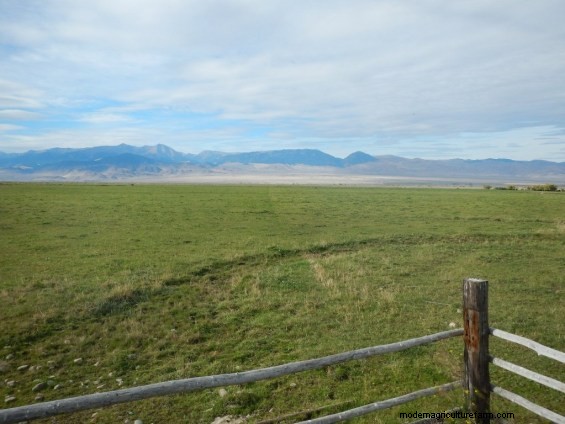
It had looked like a mess, but the bottom line is when the paddock was grazed again 60 days later, there was basically no difference between the ‘damaged’ pasture and the ones to either side. All three yielded right around 80 AUD/acre.
This last shot pulls in the strip that had been grazed on July 26 (at the far left), the paddock ‘damaged’ on July 27, and the July 28 paddock. While the graze line on the right side is barely visible, there is no sign of a differential effect on the left side at all.
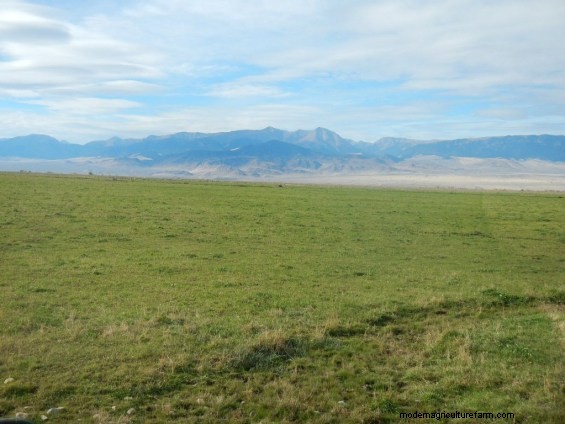
One more time with before:
And after recovery:
Bottom line, don’t panic if the cattle muck up a pasture. Just get them off right away and continue with the movement across the pastures. Nature will heal itself pretty quickly when water is in the equation.
 Thanks to the National Grazing Lands Coalition for making this article possible. Click on over to see the great work they do for all of us. Thank them for supporting On Pasture by liking their facebook page.

