
Welcome to Modern Agriculture!

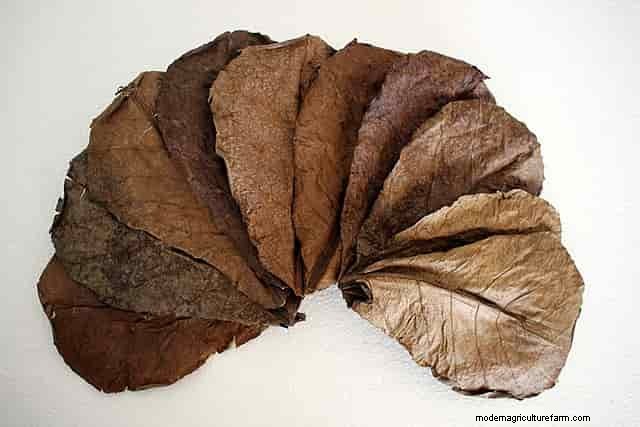
Today we will talk mainly about Indian almond leaves (link to check the price on Amazon) also known as Terminalia catappa leaves.
Many advanced shrimp keepers use these leaves in their tanks because of their outstanding qualities and properties. Even more, these leaves have also been used for years by tropical fish keepers as well (besides shrimp these leaves are excellent for fish like betta, discus, gouramis, killifish, tetras, arrowana, angelfish, South American dwarf cichlids, corys, plecos, and many other). Let’s find out why.
Actually, there are several main reasons why aquarists go crazy over Indian almond leaves:
When Almond leaves are added to water, they start leeching many beneficial substances into it (including humic acid, tannic acids which help to lower pH naturally), and minerals that are beneficial to your shrimp or fish.
It also creates a natural water environment for freshwater inhabitants. Naturally, in the wild, the shrimp are found in slow-moving streams with leaf litter from the surrounding trees. Adding Indian almond leaves replicates that in your aquarium and gives them a more natural home environment.
Once the leaf is in a tank, a multitude of microorganisms will begin to colonize the leaf creating biofilm. Shrimp’s natural diet is a biofilm, having an extra place for that is highly beneficial to your shrimp. With time they will also eat the leaf itself as it breaks down (the stem is usually left behind).
It’s a natural source of food just to give them that extra bit of nutrition. Also if you have snails in your aquarium, the snails will eat the leaves and poop. In their turn, shrimp will eat the poop which is very important to the natural diet. Variety is very important in the diet.
Unfortunately, people are prone to underestimate the importance of a healthy shrimp diet. As a result, they often lose a lot of shrimp. If you give your shrimp the same food day after day, it will not work well for you and your shrimp. It is better to have at least 3 different kinds of foods and they will thank you with abundant progeny.
Indian almond leaves just provide a natural alternative source of foods for your shrimp. You can read more about “How and what to feed your shrimp” right here.
It makes your fish or shrimp more resistant to bacterial inflation because of the released compounds (which have antifungal and antibacterial properties). This will also help your shrimp to save from many parasites. The protection of livestock is the number one priority for any aquarist.
It can be used to lower your pH or to keep your pH at a certain level if you do not have an adequate substrate for that.
The phytochemical analysis revealed(concentrations mg/100g): the presence of tannins (0.50±0.58, 0.49±0.58, 0.47±0.56), saponins (2.67±1.33, 2.99±1.41, 3.31±1.49), alkaloids (1.20±0.89, 1.32±0.89, 1.23±0.90), phenols (0.32±0.49, 0.45±0.55, 0.35±0.48), flavonoids (0.93±0.79, 0.86±0.76, 0.65±0.66), anthraquinones (0.02±0.05, 0.03±0.06, 0.04±0.65) and glycosides (-, 6.12±2.02, 2.10±1.18) |
The proximate nutritional analysis revealed: crude protein 4.2±1.67, fibre content 12.9±2.94, fat content 4.6±1.75, ash content 12.1±2.84, moisture content 8.3±2.35, and carbohydrate content 57.9±6.21. |
The result showed that the leaves were very high in glycosides, saponins, and alkaloids but low in tannins, phenols, flavonoids, and anthraquinones.
In simple words, this study justifies the use of Terminalia catappa leaves (Indian Almond Leaves) by traditional practitioners to treat various ailments and by pharmaceutical companies to produce useful drugs. The leaves are a rich source of carbohydrates, fats, and proteins.
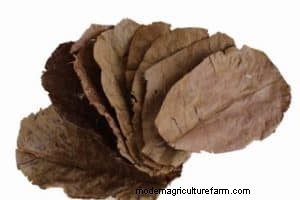
Proper usage:
1. Put the leaves in boiling water for 5-10 min. If you do not do that and add them directly, they will usually sink after one to two days.
2. Let them cool down.
3. Put it into the aquarium until the leave is eaten. It usually takes a few days. If it is not eaten, replace them in 2-3 days or just leave it there.
4. One leaf is enough for 20-40 liters (5-10 gallons) of water.
5. The leaves will turn your tank water in a brown color (depends on how many leaves were added). If you want to avoid it, you can pre-soak the leaves for a few days to leach out some of the tannins.
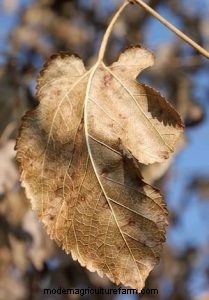 Mulberry Leaves and Shrimp
Nutrient analysis:
• Protein 22.60%
• Carbohydrate 42.25%
• Fat 4.57%
• Fiber 24.23%
Proper usage:
1. Put the leave in boiling water for 5-10 min. If you do not do that and add them directly, they will usually sink after one to two days.
2. Let them cool down.
3. Put it into the aquarium until the leave is eaten. It usually takes a few days. If it is not eaten, replace them in 2-3 days.
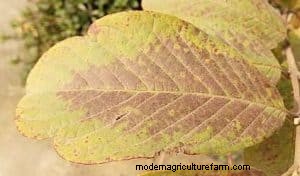
Proper usage:
1. Put it in boiling water for 10-15 min.
2. Let them cool off
3. Put the leaf into the tank. It takes more time to make Guava leaves soft, compared to other dried leaves. They are more firm and as a result, do not break down easily. It means that you will not have to replace them that often.
Proper usage:
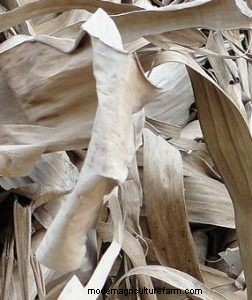
1. Do not require any preliminary treatment. The leaf can be added to the tank as it is.
2. Alternative option. The leaf can be added to a separate jar and left for 1-2 days. When water turns black, it can be added to the aquarium.
What is the difference between Indian Almond Bark and Indian Almond Leaves?
1. Indian Almond Bark will fall to the bottom at once.
2. It has a slower release rate of nutrients
Proper usage:
1. You need to boil it for 5-10 min.
2. Let it cool down before putting in the tank.
3. Leaves must be replaced every 1 or 2 weeks
 Alder Cones and Shrimp
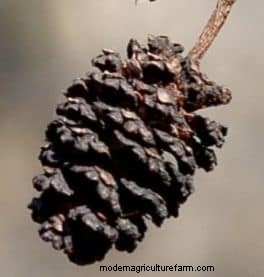
Alder Cones compared to Banana or Indian Almond Leaves are significantly more potent. That is why you can add them to the tank only in small doses. It also releases humic substances, coloring the water brownish.
Proper usage:
1. Can be added directly to the tank.
2. One cone will be good enough for 20 liters (5 gallons) of water. If you have the XXL version, in this case, one cone is good for 40 liters (10 gallons) of water.
3. The effects of Alder cones last for 1-2 months. After that, you need to replace them or leave them as a decoration and safe place for your shrimp livestock.
Alternative option
If by some reason, you do not want to put Alder Cones in your aquarium but would like to have all the beneficial effects of these cones, you can still have.
1. You need to boil it to make an alder cone extract. The extract can be added to your aquarium in small amounts.
2. You can put the Alder Cone a canister filter if you use one. It will be invisible but you will get everything you need.
Alder cones are quite common in many countries. So if you decide to collect them yourself, be sure to do that away from pollutants and pesticides. If not it is safer to buy from a trusted seller.
Actually, the list of dried leaves is rather long. There are many others like Amaranth Leaves, Catappa Logs, Bamboo Charcoal, Catappa Essence, Humic Black Water, Montmorillonite Powder and etc. I have just mentioned the most popular ones.
Some shrimp keepers use a variety of other dried leaves that have similar effects. For example, hardwood leaves like Oak or Ash, or dried fruit leaves such as peach. Yet again, make sure and never forget that your dried leaves do not have any pesticides or dangerous chemicals. Your aquarium is a very fragile eco-system and pollutants can easily destroy it.
And the last question which you may ask.
It is highly NOT recommended to use fresh or wind-fallen leaves. Unlike dry ones, fresh leaves are still full of chlorophyll, sugars, sap and etc. It means that they will decompose in the tank and foul the water.


