
Welcome to Modern Agriculture!

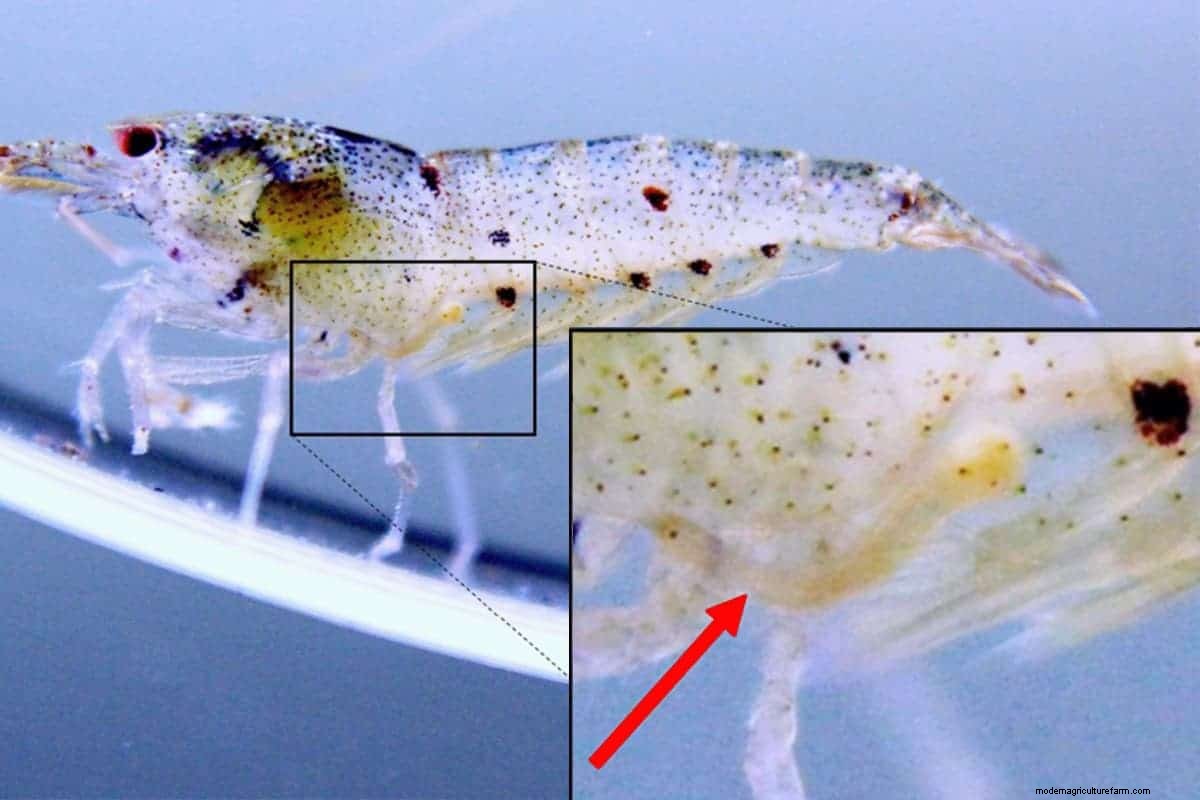
Unfortunately, shrimp keeping hobby is not always sunshine and rainbows. So, today I am going to continue my series of articles on dwarf shrimp diseases and parasites. This time it is a relatively new problem that came to use from the Asia aquaculture ponds – Holtodrilus truncatus.
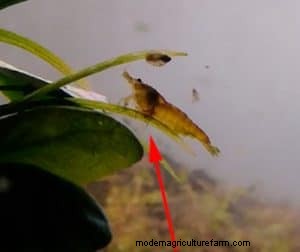
Holtodrilus truncatus are small, worm-like obligate epibionts (organisms living on other organisms) of crustaceans, mainly crayfish and shrimp. These worms do not appear to prefer to anchor to the rostrum, instead of anchoring under the shrimp right between the pleopods.
Surprisingly, these organisms proved to be resistant to popular aquarium treatments but with one exception. Their salinity tolerance is very low, therefore, we can use salt baths to efficiently remove them.
Keep reading for more information on Holtodrilus truncatus and how to treat these new worms in our aquariums based on existing official studies, experiments, researches, and experience of aquarists.
Holtodrilus truncatus (or shrimp worms) are leech-like, clitellate annelids belonging to the order Brachiobdellida that form an obligate, ectosymbiotic association primarily with shrimp and crayfishes.
Ectosymbiosis means that they live on the body of the host, including internal surfaces, for example, gills.
At the moment, science has no explanation of how this symbiosis works and what form it has.
Some scientists believe that it can be commensalism. This is a relationship between species in which one benefits and the other is unaffected.
Other scientists presume that this relationship can be even beneficial for the host shrimp because Holtodrilus truncatus feed on organic matter on the shrimp gills, and thus clean them, which may indicate a certain degree of mutualism.
According to some other studies, it is more like parasitism. This is a relationship between two biological species where parasites are organisms that harm their symbiotic partners eventually. I will talk about it a little bit later.
In any case, their behavior is not entirely clear. There are many unknown factors that affect the symbiotic relationship between Holtodrilus truncatus on the host shrimp.
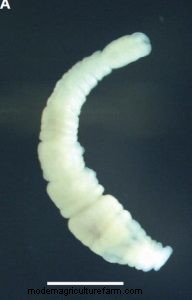
These are small worms. The body length of Holtodrilus truncatus usually ranges from 1.0 mm (0.04 inches) to 5.0 mm (0.2 inches).
This shrimp worm is characterized by its cylindrical and pinkish-transparent body form (with a large medial tooth and three pairs of smaller lateral teeth), and no trunk appendages.
The ‘head’ is always broader than the first segment of the body. The other end of the worm appears to be a sucker for attachment.
Holtodrilus truncatus are opportunistic omnivores. They hunt for plankton and algae but also feed on detritus as well as host hemolymph.
Although they usually attach to the external surface of the antennule, the rostrum, the carapace, and the abdomen, these worms can get inside the carapace of the host as well.
According to the experiment, once removed from the host shrimp and without additional food, Holtodrilus truncatus could survive up to 46 days!
These worms behave like Scutariella japonica but are much bigger in size. In addition, Holtodrilus truncatus also show microhabitat preferences.
According to the study, they tend to attach to its host shrimp at several anatomical locations, for example:
Read more about “Dwarf Shrimp External Anatomy” here.
The choice of this area cannot be accidental because it facilitates access to the gill chamber, carapace, and eggs of the shrimp.
When not attached to a shrimp, it moves like an inchworm, with the “head” moving from side to side, like, it is ‘smelling’ or detecting something. When decided, it then moves its sucker to its head location and begins again.
They can easily move from shrimp to shrimp. It seems like they can sense each other or a weak shrimp. So you can see them gathering together over time.
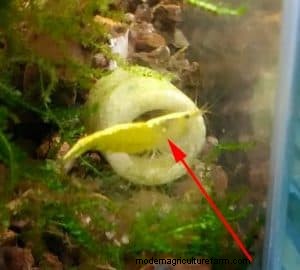
These shrimp worms are hermaphrodites. After ‘mating’ they lay cocoons only inside in the shrimp’s gill chamber.
Cocoons are transparent and ovoid in shape. Their size barely reaches 0.5 – 0.7 mm (0.02 – 0.03 inches) in diameter. According to the study, each cocoon can contain up to 14 juvenile worms (developing embryos).
There is no information on how long the incubation period lasts.
Newly hatching from the cocoon, Holtodrilus truncatus immediately enter the gill chamber of the host shrimp. At this stage, they are almost completely transparent.
There have not been enough studies regarding this question.
As I have mentioned before, some scientists believe that these worms do not have a clear negative effect on the shrimp.
However, there is also a completely opposite opinion. In accordance with the observation on Neocaridina species, biologists detected damages in gills as well as the pleopodal and abdominal area. In addition, females more likely presented damages in both areas, suggesting that the activity of Holtodrilus truncatus might be higher in them than in males.
Almost 30 % of Neocaridina shrimp showed signs of damages as a result of Holtodrilus truncatus activity.
| At first glance, the infected shrimp do not appear to be bothered by the worms, they can feed regularly: even the ones who had numerous worms. However, in the long-term, these organisms can affect shrimp’s wellbeing by causing distress. As a result, it may lead directly to shrimp weakness, loss of color, and even casualties. |
In addition, another experiment showed that a single shrimp can host as many as 39 Holtodrilus truncatus. So, even if these worms are harmless to shrimp, but only until they multiply in large numbers and do not fall into the gills, that can also cause the suffocation of the shrimp.
Note: Infection in the gills of shrimp usually does not affect the growth of the shrimp. Because they do not derive nourishment directly from the host but are considered to have a synergistic effect during the period of stress.
To sum up, it would be dangerous to exclude that the occurrence of these worms on aquarium shrimp may have a detrimental effect on host health.
| Name | Holtodrilus truncatus |
| Type | Epibionts (organisms living on other organisms) |
| Threat level | Low |
| Treatment difficulty | Easy |
| Treatment efficiency | 100% |
| Treatment length | 1 day |
Yes, these shrimp worms always try to find new hosts. If left untreated, these worms may progressively affect the entire population of the shrimp colony.
For example, in the case of Neocaridina species, Holtodrilus truncatus started attaching to the host shrimp after 30 minutes. All worms attached within 3 hours after exposing themselves to their new host.
In addition, if shrimp dies, these worms immediately migrate to the healthy shrimp.
Here comes the bad news. These worms do not care.
They have the ability to infect Neocaridina and Caridina species alike. Even more, there were multiply reports that crayfish species (for example, Procambarus clarkii) are also on the list.
I would like to start off by saying that Holtodrilus truncatus came to us from Korea, China, Japan, and Taiwan. Nowadays these worms have become one of the major problems in breeding dwarf shrimp in Asian aquaculture ponds.
It is a well-known fact that the growing market of aquarium shrimp has caused the establishment of new aquaculture farms modified to produce mass quantities of low-cost shrimp.
Regrettably, in most cases, those farms do not have proper maintenance. As a result, poor water conditions and dirt are the main reasons for the development of potentially undesirable organisms called epibionts.
Therefore, it is absolutely crucial to quarantine any shrimp we are going to put in our tank. Especially, if we know that those shrimp are from Asian aquaculture ponds.
For more information, read the article “How To Setup an Easy Quarantine Tank”.
Holtodrilus truncatus worms are not the only organisms that lay eggs inside the gill chamber of the shrimp. Eggs of Scutariella japonica could be observed there as well.
It is quite interesting but these organisms do not have any contact. There is no interaction no predation between them. They can happily co-inhabiting the same shrimp host.
Now we have come to the most important part, how we can get rid of them.
Remarkably but these shrimp worms are pretty resistant to popular aquarium treatments. There were reports that No-planaria, Planaria zero, Canine Dewormers, Panacur did not have an effect on Holtodrilus truncatus.
However, a simple salt bath showed amazing efficiency against them. According to the salinity tolerance experiment, Holtodrilus truncatus have a very low threshold of salinity tolerance. It is only between 0–0.5%. So, we can use it to our advantage.
 Freshwater aquarium salt (link to check the price on Amazon) would be the safest choice. Although you can use table salt as well.
Note: In shrimp keeping hobby, there is an opinion that table salt is not completely safe because it contains potassium iodine. Personally, I have not found any proof that potassium iodine can harm the shrimp.
In addition, I would like to thank our fellow shrimp keeper Megan Jerbic, for testing and reporting the effectiveness of this method.
The main downside of this method is that you have to catch every infected shrimp and it can be very problematic. Especially when you have a big aquarium and lots of shrimp.
Be very careful, if you decide to treat the tank instead of giving the shrimp a salt bath. A small dosage will be ineffective, however, overdosing can be even a worse problem! You have to understand the risk.
These worms mostly feed on detritus, plankton, and algae (green water). So, the best way is to improve the quality of water and do not overfeed.
It will reduce their nutrient base and without food, they die out. However, do not expect fast results, as I have mentioned earlier, these worms can survive without any external food source for several weeks.
You can also read the article “How Often and How Much to Feed Shrimp”.
Holtodrilus truncatus (shrimp worms) is potentially a new threat that came to use from Asian aquaculture ponds.
Historically, they are endemic (native to particular countries). However, considering the fact that in recent years, dwarf shrimp gained increasing popularity in the aquarium trade, it has become a leading pathway for the introduction of them in our tanks.
There are also two opposite opinions on how dangerous they can be:
In any case, we need more data.
Understanding Dwarf Shrimp Diseases and Parasites


