Welcome to Modern Agriculture!

Interested to know how to treat dropsy in betta fish?
If you catch dropsy early enough, administer the right treatment and take care of your fish, then there’s a good possibility it will survive. And this article will show you the exact steps you need to take.
Click the links below to skip to the information you’re after directly.
If you’ve heard of dropsy before, then you may have been told that it’s a disease. This simply isn’t true. In fact, dropsy is actually the symptoms of underlying poor health, most often caused by gram-negative bacteria.
It’s incredibly rare for dropsy to happen in a healthy fish, instead, it’s most likely to happen to fish with weakened immune systems. If you want to know exactly what dropsy is, it’s similar to edema in humans. It’s when soft tissue fills up with fluid that the body can’t remove. This is what causes bloating.
One of the problems with dropsy is the fact that the early symptoms can be caused by a whole range of problems. But if you don’t catch dropsy early enough the risk of fatality increases dramatically. Here are are a list of common betta dropsy symptoms you may find.
Earlier symptoms of dropsy in bettas are:
If you notice all of these symptoms in your betta it’s often only 2-3 days before their belly starts distending. At which point it is a lot harder to treat dropsy effectively.
But remember these symptoms can also be caused by stress. So you should take some time to consider whether it’s a good idea to treat your betta for dropsy.
Because if your betta is suffering from stress, unneeded treatment for dropsy will make matters worse, and could drastically affect their immune system.

As well as the early symptoms there are a lot of other symptoms that you need to watch out for. These are 3 of the most common and noticeable symptoms of dropsy. However, it’s important not to mistake a swollen or distended belly as dropsy when it could be constipation.
Your betta may not have all of these symptoms at once, or may never get some of them. But as time goes on you should notice more and more of these symptoms in your fish, ESPECIALLY the main 3.
If you notice the main 3 together, you should start treating your fish for dropsy ASAP.
Before moving on to dropsy treatment it’s important not to confuse dropsy with constipation. If you treat your betta for dropsy when they’re suffering from constipation then you could severely stress them out. The best way to discern dropsy from constipation is to notice whether your fish is passing stools or not. If they’re not, then it’s most likely constipation.
Also, you may be able to know if it’s constipation depending on how much your fish has been fed. You should only be feeding your betta a portion of high-quality food the size of their eyeball twice a day. If you’re doing anything more than this then it may just be constipation.
(If you don’t notice these symptoms in your betta, then they may be suffering from something else! Check out this article on all the diseases and illnesses your betta can end up suffering from.)
Before you learn how to treat dropsy in betta fish, it’s important to know whether your fish is going to survive dropsy. And it really depends.
If you catch dropsy early enough then there is a good possibility your fish can survive. However, once you start seeing the 3 main symptoms then, unfortunately, survival rates are quite slim. Because at this point irreversible damage has been done to your bettas internal organs.
Some experts recommend euthanizing your fish immediately when it has the main 3 signs of dropsy. Not just for the fish, but because of the risk of it spreading to other fish. If you think your betta has a fighting chance though, at the very least you should move them to a quarantine tank.
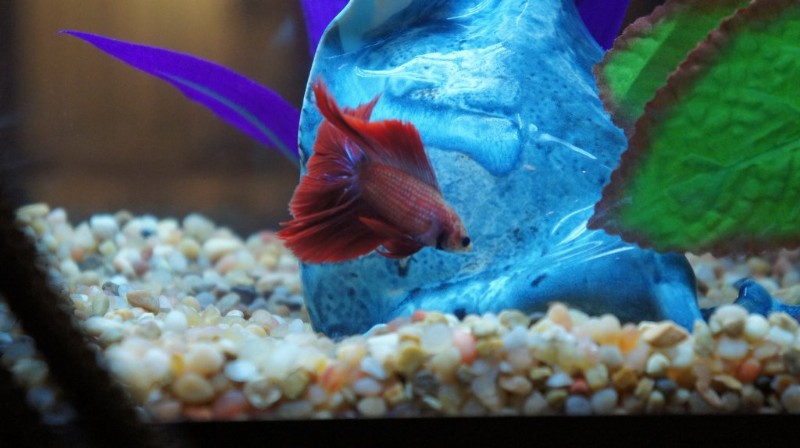
If you’ve caught dropsy early enough in your fish, or you think your bettas will to survive is strong then keep reading and you’ll find out how to treat dropsy in betta fish!
Normally treatment like this will last for 10 days. You’ll need to monitor your fish closely to see if they’re getting better or worse. And most importantly stick to the manufacturer’s instructions precisely. Even if you think your betta is well again you should still continue treatment. If you stop the treatment early the bacteria could come back stronger and more resistant to antibiotics.
Another treatment you may consider is a methylene blue bath. Methylene blue can cure dropsy as it’s great at fighting bacterial infections, as well as a whole host of other natural illnesses. If you wanted to treat your betta with a methylene blue dip then below you’ll find the most common method. However, remember, that it’s important to ALWAYS follow the instructions that come with the bottle.
Remember that you should avoid adding methylene blue to your main tank. If you add it, there’s a chance that you’re going to ruin your filter and make it unusable. As well as this, it’s not very good for the plant life in your tank and it can leave a stain on things.
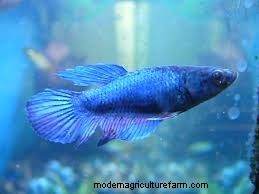
Aeromonas bacteria is the most common cause of dropsy. It is found in most fish including healthy ones but it’s only when a bettas immune system becomes weakened or compromised that it can result in dropsy. The most likely cause of this happening is stress. Some common things to watch out for to prevent dropsy occurring are:
Also, in most cases, occasional stress that is short term will not cause dropsy to occur. It happens in fish that have been in a stressful environment for a long period of time. Long enough for their immune system to become weak. That’s why it’s so important to take care of your betta!
Even if your tank is a stress-free environment, dropsy can still occur in older fish. Just like with humans the older they get, the weaker their immune system will become.
Because dropsy is one of the more difficult illnesses to cure, it’s always better to prevent it from occurring in the first place. Luckily, dropsy prevention is fairly straightforward and easy. And if you’re taking care of your fish tank the chances of dropsy occurring in healthy fish is quite low. Remember, the aim of the game is to keep your betta as stress-free as possible. Here are some ways you can do that.
I hope you’ve learned everything you need to know on how to treat dropsy in bettas, as well as tips for preventing dropsy and what causes it in the first place.
Wondering where you can find a complete guide on Betta fish care? Check out this article!
Other common fish diseases:
If you liked this article, make sure you check out the rest of the website! And if you have any more questions you can ask them in the Q&A Section!
Subscribe below and not only will you be up to date on everything betta, but you’ll also receive a free eBook. The eBook “How To Build An Aquarium Bonsai Tree” will teach you step by step how you can make an underwater bonsai tree and turn your tank into an underwater garden!
What are you waiting for!