Welcome to Modern Agriculture!

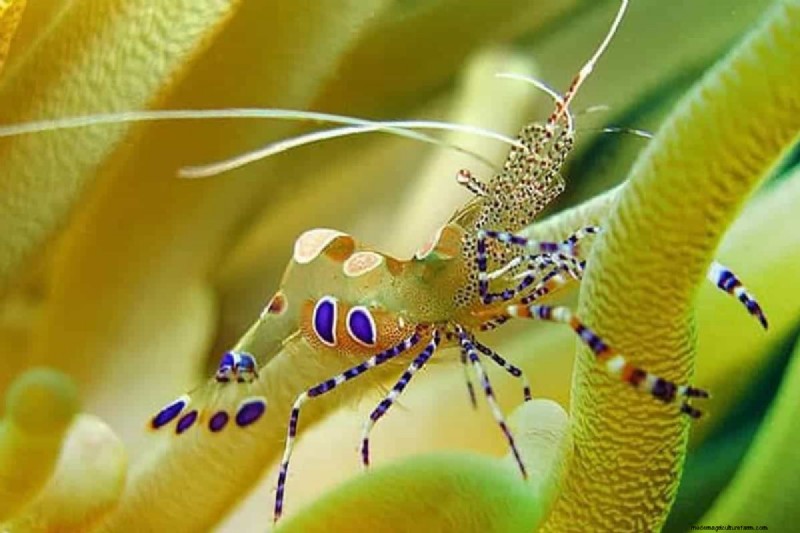
Even though Periclimenes yucatanicus, commonly known as the Spotted anemone shrimp, is quite common in the Caribbean basin, they are still considered relatively rare finds in the aquarium trade.
It is actually a bit surprising, given their striking colors and ease of care, which could make Spotted anemone shrimp a great option even for beginner aquarium enthusiasts.
Unfortunately, the ecology of Periclimenes yucatanicus is poorly researched and much is still unknown about these shrimp.
In this guide, I gathered everything that is currently known about the Spotted anemone shrimp including ideal tank setups and how to care for them.
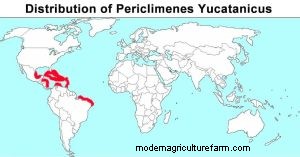 Periclimenes yucatanicus inhabits various locations within the Caribbean Basin, including Key Largo, Florida, U.S.A.; the Bahamas; Turks and Caicos Islands; Netherlands Antilles; Honduras; the Florida Keys; Puerto Rico; and Panama.
Nowadays, there are also reports of this species in southwestern Japan and the west Indies.
They can be usually found in coral reef systems (at depths of 9 – 70 ft (3 – 22 m), where they also establish a cleaning symbiotic relationship with anemones and fish cleaners, removing parasites and damaged tissues.
The spots may vary in size and density, with some individuals exhibiting more prominent markings than others. Additionally, the antennae and appendages may display contrasting colors, such as orange or red, adding to the shrimp’s overall colorful appearance.
Overall, the combination of translucent body and white, tan, green, blue, or purple blotches spots gives Periclimenes yucatanicus a striking appearance in aquariums.
Note: Scientists noticed that these shrimp may vary in the number of rostral teeth, length/width ratio of the carpus of the major cheliped, color pattern, and cnidarian host.
Currently, there is no data available on the average or maximum lifespan of Periclimenes yucatanicus in the wild.
At the same time, laboratory experiments have shown that these shrimp typically live for about 260 days, with the maximum recorded lifespan reaching 728 days.
These shrimp are completely peaceful creatures and usually do not bother anybody in the tank.
They are also very social and tend to aggregate in large groups potentially reflecting the small size and limited defensive capability of these shrimps. At the same time, they lack social structure. They are not territorial and males will not fight.
Periclimenes yucatanicus is usually associated with anemones. However, in aquariums, they can also live free without any anemones.
These shrimp are also considered to be the Cleaner shrimp. In their natural environment, they can clean parasites from fish skin, and even the mouth of a large fish like grouper. That is why they sometimes are called Spotted cleaner shrimp.
Features:
This species is a symbiotic cleaner shrimp.
According to the study, these shrimp are known to associate with 4 species of anemones;
Periclimenes yucatanicus use them as the centers of cleaning stations that attract client fishes for ectoparasite removal. In addition, these shrimp clean the anemone removing organisms caught in the anemone’s mucus.
Because of their ability to host cleaners and act as visual signals that draw in client fishes, the anemones also can receive nutrients in the form of waste products (excreted ammonia and eliminated feces) from their crustacean symbionts and visiting clients, thus contributing to efficient nutrient cycling on coral reefs.
Unlike Pederson shrimp, this species usually exhibits fidelity to a single species of host sea anemone and does not migrate from one to another.
For some time, the role of Periclimenes yucatanicus as a cleaner was uncertain. As only one cleaning interaction had been reported in its natural habitat.
As a result, this led to the assumption that this species is a cleaner mimic.
However, further research revealed that this was not true. It was found that Periclimenes yucatanicus regularly signals its availability to clean, client fishes visit regularly and the shrimp does engage in true symbiotic cleaning interactions, but these are brief and rare.
Note: Although this is still a true cleaner shrimp, compared to Pederson shrimp, P. yucatanicus is less efficient. Less than 15% of all client visits resulted in an actual cleaning interaction.
Feeding is easy. These shrimp are omnivorous. They will accept a wide range of fish, shrimp, or sea anemones food. No direct feeding is necessary.
Note: While Periclimenes yucatanicus may also consume parasites and dead skin from client fish even in aquariums, I would not count only on that. Relying solely on their cleaning ability is insufficient for their nutritional needs.
Therefore, you need to provide them with some food at least 2 – 3 times a week.
They will eat any pellet, flake, and gel foods that provide animal-based nutrition. Basically, the diet should be comprised of meaty seafood or marine flake food such as:
This will make them grow faster and be healthy.
Yes, you should not have any problems with the Spotted anemone shrimp in reef tanks.
There are no reports that they eat SPS frags, destroy polyps, or something like that.
Keeping the Spotted cleaner shrimp in an aquarium is not complicated because they do not have special water quality requirements.
Basically, these shrimp should be maintained under conditions that are suitable for any other typical reef-aquarium inhabitants.
Because of their small size, there are no minimum requirements. Even nano reef tanks tank will be good enough for a few Periclimenes yucatanicus.
The only problems with small tanks:
Therefore, ideally, it will be a tank with a capacity of at least 10 gallons (about 40 liters).
Note: These shrimp can crawl out of the aquarium. Therefore, to prevent it from happening, there are a few things you can do:
Temperature: The ideal water temperature for keeping Periclimenes yucatanicus is between the range of 75 – 79°F (24 – 26°C).
pH: Maintain optimal pH values of 8.1 – 8.4 for the shrimp to thrive in your saltwater aquarium
SG: The salinity should be in the range of 1.021 – 1.025 as measured using its specific gravity.
Hardness: Keep water hardness values between 8 – 12 dKH
Calcium: The concentration of calcium must be maintained at acceptable levels as well. Keeping calcium concentration in the range of 400 to 450 ppm is optimal, but it can be a bit lower or higher.
Periclimenes yucatanicus is nocturnal animals. They do not really need light. Thus, lighting should be adapted to the needs of your corals and fish in the tank.
These shrimp are not diggers and do not have any preference for the substrate.
In nature, they are found free-living and on a wide array of substrates (rocky shorelines, hard-bottom reefs, tube sponges, etc.), suggesting that their transparent body is not particularly related to any habitat type.
In the natural ecosystem, Periclimenes yucatanicus inhabits shallow waters where the current is very slow-moving.
Therefore, any surface agitation makes them very uncomfortable and causes stress. Avoid fast-moving water flow, if it is possible.
In aquariums, decorations play an important role for the Spotted anemone shrimp – they provide hiding places (shelter and protection) and minimize stress to your shrimp.
This is also crucial for the molting process!
If they are going to be in a community tank, there should be plenty of dark areas for them to hide in and these should be created out of rocks, PVC pipe, plastic tunnels, etc.
Keep in mind that the Spotted anemone shrimp are mostly wild-caught. So, they are often delivered to pet stores in poor conditions.
Before putting them into the tank, we need to at least temperature acclimate them.
Give them time to acclimatize before adding to the tank. Do not rush the process! Sudden changes in habitat can harm them.
Related article:
Breeding this species is very difficult. In scientific literature, there is not even a description of the larval development. At the moment, all that is known is:
In the natural environment, these shrimp are known for their cleaning role, where they are often avoided by reef fishes due to their recognized status.
Although predatory fish may suppress their hunting instinct for the benefit of being cleaned in nature, this type of behavior is absolutely not reliable in aquariums.
Additionally, it’s crucial to recognize that if a fish is unaware of the cleaning behavior of a specific shrimp species, especially if it originated from an area where such shrimp are absent, aggression can significantly escalate.For instance, lionfish often consume many cleaner shrimp due to their lack of familiarity with them, as these fish are not native to the area but are introduced accidentally.
Therefore, in aquariums, it is not recommended to keep them with large, predatory fish.
Spotted anemone shrimp are peaceful and small. They get along well with others of their kind, so maintaining a group is not problematic but it will require more space.
Good tank mates for Periclimenes yucatanicus:
If you have Emerald crabs and Red Fire shrimp I would just be careful and watch them closely (especially with big crabs and territorial shrimp).
Do not keep them with Arrow crabs and Coral banded shrimp. As they will likely begin to prey on them eventually.
Do not keep them with Clownfish. These fishes will not tolerate Periclimenes yucatanicus in their anemone and bully them to get anemone for themselves.
Given their unique appearance and small size, Periclimenes yucatanicus can be a great addition to small reef aquariums.
The main problems though are their rarity in the aquarium trade and the lack of scientific information about them.