Welcome to Modern Agriculture!

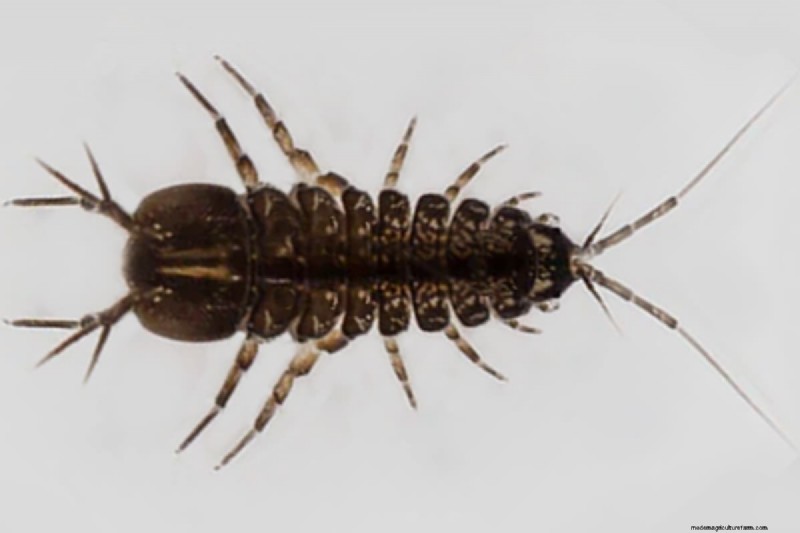
Asellus aquaticus, also known as the Water louse, Water shrimp, Water slate, or Aquatic sowbug is a species of small, freshwater crustacean in the family Asellidae. They look like something in between woodlice and cockroaches, which they are actually related to.
These small crustaceans are pretty hardy creatures. They can live in extremely polluted, acidic, or alkaline waters, water with low oxygen, and even brackish conditions.
Asellus aquaticus can be introduced into home tanks along with live food and can be found inhabiting small crevices and crawling on the substrate.
So, if you found them in your tank, or simply want to know more about Asellus aquaticus, in this article, I will provide a comprehensive overview of these small crustacean including their habitat, lifecycle, and more.
Asellus aquaticus is one of the most common freshwater crustaceans and is widely distributed throughout Europe and North America.
This species is commonly associated with a temperate climate, it has been recorded as far south as the Mediterranean, and as far north as Scandinavia
Note: It is hypothesized that Asellus aquaticus arrived in Europe around 8 to 12 million years ago through the brackish Paratethys basin.
High densities of Asellus aquaticus can be found in stagnant or slow-flowing waters with organic pollution, especially in the vicinity of sewage outfalls. However, they can be also found in relatively clean waters in areas with high levels of naturally occurring organic matter.
Asellus aquaticus is eurybiont.
These crustaceans are highly adaptable and capable of thriving in a wide range of environmental conditions including slightly brackish surface waters, as well as in subterranean freshwater habitats.
The species is absent from marine waters and from fast-flowing streams and rivers, so seas and high mountain ranges are reported as significant barriers to its dispersal.
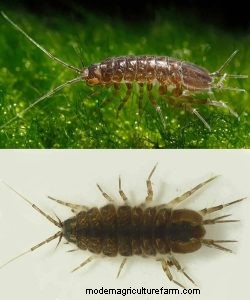
Asellus aquaticus belongs to the Isopoda, which contains more than 10,000 species with extensive intraspecific morphological variation, sexual dimorphism, sequential hermaphroditism, and with a global distribution.
On average, their lifespan is about 1 year. However, depending on temperature and diet, it can be slightly longer (up to 1.5 years).
The water louse moves slowly using its legs in a rhythmic, crawling motion along the substrate or decaying plant debris.
They are fully aquatic animals. The water louse is practically helpless in the air, as its long and slender limbs are incapable of supporting its body weight in the air.
They do not swim. However, they can use their appendages to propel themselves through the water. In reality, it looks more like a jerky and hopping motion that only looks like swimming.
This species has two defensive mechanisms, they can either survive by remaining motionless, making them difficult to notice, or use autotomy (when captured, the animal can easily shed its limbs, which subsequently regenerate).
In dry seasons, Asellus aquaticus buries itself in the mud and enters a state of torpor until the rains return.
Asellus aquaticus is an efficient detritivore with a broad spectrum of diets. This species is known to feed on leaf litter, biofilm, microorganisms, fungi, algae, etc.
Although these crustaceans are excellent scavengers, they still have some preferences.
Their primary food source is decaying vegetation, which positions them as major contributors to nutrient and biomass recycling within their ecosystem. It also serves as a shelter from predators such as fish, aquatic beetles, their larvae, nymphs of dragonflies and damselflies, and amphibians like newts, axolotls, frogs, etc.
Additionally, if we compare other food sources to each other, according to the study, there is compelling evidence that this species prefers fungal food sources, and even specific species of fungi, over other parts of the biofilm, possibly because higher growth rates can be sustained when feeding on phosphorus and nitrogen-rich fungi.
In aquarium.
If you keep them in an aquarium, there will not be a problem with feeding as they will consume everything.
However, if you wish to indulge them and recreate the natural conditions they are accustomed to, simply add a few dry leaves to the aquarium periodically. You will observe that only the veins of these leaves will remain.
Important: It is not advisable to add green leaves. They still contain lots of sugar. The decomposition process can lead to an increase in organic waste and potentially affect water quality.Additionally, ensure that these leaves are clean and not contaminated or treated with anything. Therefore, collecting them in the city could pose a risk.
Yes, it is safe to keep them in planted tanks. Although Asellus aquaticus is a nonselective feeder that can consume a variety of food items, they prefer and thrive on decaying vegetation.
Unfortunately, people sometimes confuse grazing on with eating the plant. Even if you see them eating a “healthy” plant, it is not as it seems. It means that the plant is already dying, although, it has not been shown yet.
These crustaceans are true survivalists in freshwater tanks. Let me give you some examples.
It is also worth noting that this temperature range does not imply that they can acclimate immediately.
In other words, temperature changes should be gradual. In the case of abrupt fluctuations (e.g., more than 5 degrees), this can lead to temperature shock, as demonstrated in a study. Additionally, the initial predisposition of the organisms should be taken into account. For instance, if they were collected in warmer locations, their tolerance to higher temperatures might be greater compared to organisms collected in colder areas.
I’ll add a bit more for comparison.If you ever hard scuds in your tank, you probably know how hardy these creatures are. Well, with Asellus aquaticus, the situation is even more impressive.
Experiments showed that Asellus aquaticus was 5 times more resistant to low oxygen levels and 2 times more resistant to unionized ammonia than Gammarus pulex.
Asellus aquaticus is a sexually reproducing arthropod. This specie usually produces two complete generations per year. These give rise to spring and autumn cohorts. Breeding starts in spring when the water temperature reaches about 44 – 46°F (7–8°C).
Sexual maturity is reached at 1.5 to 3 months (depending on environmental conditions) and at approximately 0.12 – 0.16 inches (3–4 mm) in length. Growth is continuous after sexual maturation.
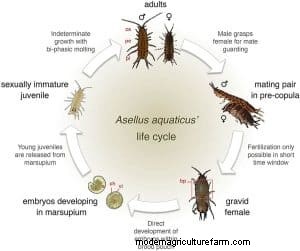 Life cycle picture reference
Mating is preceded by a pre-copulatory stage (called amplexus or mate guarding) during which the male guards the female by carrying her until insemination becomes possible.
Males grasp the females with specialized legs (the 4th pair of pereopods) and wait for 5-7 days until the female molts into a fertile state.
It was observed that when mating, larger males often pair up with larger females within the population.
Fertilization is only possible during approximately 24 hours, while the female oviducal openings are free (right after she molts).
The male transfers sperm to the female’s genital openings using his copulatory abdominal legs. The inner branches of the second pair of legs in the male serve as a kind of syringe.
After fertilization, the male immediately releases the female.
Within 2-10 hours after mating, the female develops a brood pouch that appears as a greenish swelling.
In this pouch, orange eggs are deposited.
Females can produce a variable number of eggs (usually between 30 – 150). Large females tend to produce more eggs.
These pouches serve as a developmental environment where the eggs mature and undergo several stages of growth.
Initially, eggs are round and surrounded by the chorion and the vitelline membrane. Early embryogenesis is characterized by the appearance of a dorsal curvature and the start of the incorporation of the yolk into the digestive glands.
By late embryogenesis, the yolk is fully incorporated, the appendages are well developed, and the embryo has lengthened along the ventral curvature.
In the brood pouch, the larva undergoes three molting stages.
The estimated incubation time ranges from 23 to 35 days, depending on the temperature.
Embryos develop into small juveniles inside the marsupium and are released from the brood pouch at approximately 1 mm in length.
They are tiny copies of adults and are completely independent.
As in other crustaceans, growth is dependent on molt (shedding old exoskeleton), which involves tissue growth and the synthesis of a new exoskeleton.
These small crustaceans are sometimes used as live food for medium to large bottom-feeding fish, but breeding them as live food has not gained widespread popularity.
Their movement and presence can trigger predatory instincts, encouraging fish to hunt and feed actively. This can be especially beneficial for fish that thrive on live prey.
Although it does offer potential benefits for certain fish and other aquatic animals, wild-caught Asellus aquaticus can act as intermediate hosts for parasitic worms (such as acanthocephalosis).However, infection of aquarium fish by the latter is rare, so there is no cause for concern.
As scavengers, they will be a clean-up crew and contribute to the breakdown of organic matter in the aquarium. They help clean up decaying plant material and other detritus, contributing to a healthier and more balanced ecosystem.
If you have egg scatterers in the tank, do not worry, they will not damage the eggs.
Having Asellus aquaticus in a shrimp tank can add diversity to your setup. However, it is important to note that if your aquarium is specifically designed for breeding shrimp, keeping these two crustaceans together is not recommended.
This is not due to aggression, which is unlikely, but rather because of potential food competition.
Food Competition. Asellus aquaticus and dwarf shrimp share common food resources (detritus, algae, biofilm, etc.). Thus, having competitors, especially for shrimplets, can have an impact on the survival and growth of young shrimp.
For example, after hatching, baby shrimp are not very active and often prefer to stay for several days in one area where they can hide. They do not dare to swim into the open and can get only floating particles, algae, or biofilm nearby.
Asellus aquaticus do not care. Adult or young they will venture into the open to find anything they can eat.
Breeding rate. Additionally, Asellus aquaticus reproduces at a much faster rate than shrimp, which could the situation even worse over time.
Tolerance. Asellus aquaticus is a highly tolerant species. They can survive in environments where shrimp cannot. Basically, anything that can kill them will also definitely kill shrimp.
Asellus aquaticus does not really like a clean environment.
Water louse are very undemanding, easy to care for, and don’t require large tanks. They can also be used as live food for aquarium fish.
They are not a foe to aquarium setups. Through their daily activities, these tiny crustaceans contribute positively to the tank’s cleanliness and that’s commendable.