
Welcome to Modern Agriculture!

The estimate of how much you will spend on 1,000 fishes depends on so many factors. These include the type housing (whether concrete or earthen pond) the type of feeds used (whether important or local) and feeding and all other management procedures.
It also depend on the size you want them to reach before harvesting them. However for them to reach an average weight 1kg,you are likely to have spent between 150 and 200 per fish, so, you can multiply this by number of fish you want to produce so that you make adequate budgeting.
Of course, if you want to start a profitable catfish farm one of the first things you want to know is the cost involved in setting up the farm.
Let’s set the ball rolling by listing some of the expenses that will be incurred before, during and at the end of the production process. These expenses are:
Combination of floating and sinking feed.
Detail of ExpenditureCost Value (Naira)Pond rentage for six months (for 1,000 juveniles)15,000Pond preparation (applicable to earthen pond only)10,000Netting (including workmanship)5,000Procurement of juveniles (N25 each; between 6 and 10 grams)25,000Feeds (floating; I recommend 100 grams per fish. That’s approximately seven bags at 7,000 each)44,000Local feed (1,700kg at N280 per kg). Note: At conversion ratio of 1.4:1.392,000Cost of feeding (assume N2,000 monthly for five months)10,000Cost of logistics (assume N2,000 monthly for five months)10,000Security (assume N1,000 monthly for five months)5,000Cost of Medication (optional)2,000Cost of Cropping4,000TOTAL522,000Floating Feed Only
Detail of ExpenditureCost Value (Naira)Pond rentage for six months (for 1,000 juveniles)15,000Pond preparation (applicable to earthen pond only)10,000Netting (including workmanship)5,000Procurement of juveniles (N25 each; between 6 and 10 grams)25,000Feeds (floating all-through; 74 bags at conversion ratio of 1.2:1kg. A bag will cost N6,000)444,000Cost of feeding (assume N2,000 monthly for five months)10,000Cost of logistics (assume N2,000 monthly for five months)10,000Security (assume N1,000 monthly for five months)5,000Cost of medication (optional)2,000Cost of Cropping4,000TOTAL530,000Sales Analysis Table
Quantity Harvested (expected)Value (Naira)1,080kg of fish (At the current rate of N600 per kg)648,000Total648,000Net Profit = Total Value of Sales – Total Cost of Production
For Alternative A: Net Profit = 648,000 – 522,000 = 126,000
For Alternative B: Net Profit = 648,000 – 530,000 = 118,000
The higher the quantity of catfish stocked, the better the profit expected. However, I would like to suggest that new Nigerian catfish farmers should start with a maximum of 1,000 pieces of catfish and later increase the scale.
This will enable them to learn the rudiments of catfish farming while gradually working towards scalable profitability. Also, I would like to advocate, and I believe other farmers will join me, that a kg of fish should not be sold for less than N650.
i would also like to give this piece of advice to my readers: don’t quit, there are better days ahead.
In site selection for a pond, the ecological factors to be considered include soil, water, topography and climate.
The soil quality influences the pond productivity and water quality and determines the dyke construction. The properties of soil texture and soil permeability are determined to decide the suitability of a site. Pond bottom should have the ability to hold the water.
Loamy, clay loamy and silt clay soil types are most suitable for pond construction. A good quality gravel should not exceed 10 percent. Thus the rocky, sandy, gravel and limestone soil types are to be avoided.
Soil suitability can be evaluated by three methods.
An adequate amount of water is required to build the fish farm because water depth needs to be adjusted at regular intervals. Natural water bodies such as reservoir, river, and lakes have stable water quality parameters (Water temperature, dissolved oxygen, pH, alkalinity and water hardness) when compared to borewell and well water.
The site should be away from the flood area. Water should not be acidic or alkaline and if found to be so, suitable correction is to be done by applying lime or organic manure respectively.
The ideal water temperature is 20 – 300C for a fish farm. Water Salinity is the amount of salt dissolved in water. A few freshwater fishes such as tilapia and catfishes grow even in salt water, but the carps can withstand only in freshwater.
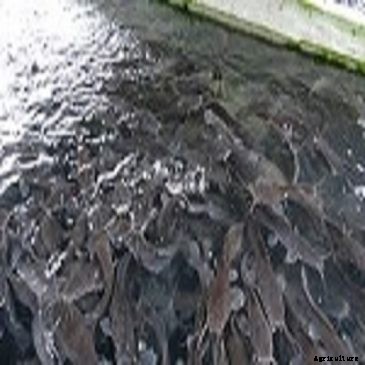
Type of pond construction is determined by the land topography. Normally, flood prone areas and poor rainfall areas need to be avoided. Areas such as industrial zones, fields with underground oil pipelines, irregular land area, fields with high electricity poles and radio masts and highly rooted vegetation area are also not recommended for pond construction.
Biological factors include the species to be cultured, seed source and culture type and they need to be considered before site selection of farm.
The ecological and biological factors are a prerequisite for good practices in aquaculture site selection and site management. It is also important to get to know the social and economic background of the area and understand the culture and traditions, particularly ideas and beliefs locally associated with aquaculture practices.
The social fabric, market, and its structure, services directly or indirectly linked with aquaculture sector such as transportation, storage, wholesale market aspects etc are to be considered. The land identified for farm should be without legal issues and fish farming should be accepted by the local people. Other factors include availability of labour, electricity, medical facilities, and transportation.
An intelligent design and layout is a prerequisite for an efficient pond construction. The excavated earth should be used to construct the dyke and with a plodding slope towards the outlet for the proper draining facility. Preferably construction of pond has to be completed during summer so that the pond can be used for stocking.
Normally, the pond construction includes the following steps.
Step 1: Prepare the site by removing unwanted things such as the trees, bushes, and rock
Step 2 : Construction of seepage-free and secure dyke by using the clay core
Step 3 : Digging the pond and construction of dyke over the clay core
Step 4 : Inlet and outlet construction
Step 5 : Pond dyke covered with soil and plant grass species (avoid long rooted plants such as Rhodes grass and star grass)
Step 6 : Pond should be fenced to avoid theft and entry of predatory animals
The place is cleared of ropes, cables and other items. Trees and bushes and other obstacles that hinder movement of heavy equipment around the site are to be removed – manually / animal power /using machinery. All vegetation including wood are to be cleared in the area (inclusive of 2 to 3 m beyond the dyke for workspace).
Trees within 10 meters surrounding, tree slumps, large stones, are also to be removed. The surface soil which has the highest concentration of roots and organic material is not suitable for pond construction. Hence, about 30 cm of surface soil has to be removed.
Dykes should be compact, solid and leak free. A desirable dyke is constructed using 15 – 30 percent of silt, 45 – 55 percent of sand and 30 – 35 percent of clay. A sufficient width of the berm (not less than 1 m) is required to stabilize slope. The embankment slope in horizontal to vertical should be 2:1 in good quality clay soil and 3:1 for loamy silt or sandy soils.
To raise the dyke, the clay buddle (1:2 sand and clay) is deposited as 10 – 15 cm thick layer and it can be formed at centre or inside the waterside of the pond. The crest of the dyke should be sufficient to help allied farm activities and the top of embankment should be above 1 m. Extra outlet is essential on the embankment as a safety measure to avoid damage due to excess raise in the water level.
Specific kinds of ponds are required for specific life stage development of fishes – such as nursery, rearing, stocking, treatment and broodstock pond. The rectangular pond is preferred than round shaped corners as it prevents the fish escape during harvest.
An ideal length and breadth ratio of the pond is 3:1 is ideal, with breadth not more than 30 – 50 m. The total farm area can be divided as – nursery – 5 % of total farm area, rearing pond – 20 %, stocking pond – 70 %, and bio pond or treatment pond – 5 % of the total farm area.
A productive farm should use its higher altitude area for construction of nursery pond followed by the rearing pond. The lowest area of the farm should be used to build the stocking pond, which will help in reducing the cost of construction and increase ease of farm management.
Reference


