
Welcome to Modern Agriculture!

by Alex Makol, Global Manager Aquaculture, Delacon Biotechnik GmbH, Austria
Global fish consumption has been growing at an annual rate of 3.1 percent from 1961 to 2017, whilst also accounting for almost 20 percent of the protein of animal origin consumed worldwide. In 2018, aquaculture contributes for approximately 46 percent of global fish production (FAO, 2020).
As in other production sectors, optimising fish and shrimp production performance is crucial to the success of the sector. Efficient diet formulation, together with successful health and welfare management, will result in an increase in production output.
As part of a proactive approach to production health and performance, the use of functional and sustainable additives, such as phytogenics, has been demonstrated to be an effective tool to boost fish and shrimp performance, as well as the profitability of production.
Performance shortens growth cycle
Phytogenic feed additives (PFAs), commonly defined as plant-based feed additives or botanicals, represent a group of natural substances used in animal nutrition. These substances are derived from herbs, spices, other plants and their extracts consisting of highly active plant substances.
Phytogenics encompass much more than essential oils: they include spices or bitter substances, saponins, flavonoids, mucilages or tannins. During the last two decades, research on phytogenics as potential functional ingredients in animal production has increased and with it their commercial use in all areas of animal production.
Phytogenics can act as natural growth promoters that improve the palatability of feed, stimulate appetite, increase nutrient uptake and thus support growth performance in animal species – making them a valuable tool in terms of reducing the use of antibiotic growth promoters in animal production.
The broad spectrum of phytogenics' potential applications presents a competitive advantage for those charged with the responsibility of addressing the most pressing challenges in fish and shrimp production.
Several studies demonstrate that phytogenics stimulate the secretion of digestive enzymes, contribute to maintain gut mucosa structure, support a healthy microbiome and reduce production-related intense stress.
All in all, by supplementing growth performance and feed efficiency with phytogenics, the production cycle may be shortened, which would in turn result in more profitable aquaculture production and economic benefits for the farmer.
Alternative strategies
The mucosal tissues of fish and shrimp, including the intestines, are exposed to a variety of biological, physical and chemical hazards. These environmental hazards include potential pathogens or even the raw materials used in feed. The consequence of prolonged exposure is often impairment of integrity and physiological functions, which may directly reduce the profitability of aquaculture production.
Constantly rising raw material prices, limited availability and the need for sustainable fish feed production with ecologically sustainable feed ingredients, increase the pressure on nutritionists. They must look for alternative strategies to support the efficiency and profitability of aquaculture production.
Unfortunately, the search for alternative sources of raw materials is not an easy task. On the one hand, replacing marine raw materials such as fishmeal with single or combined vegetable proteins and oils can be a suitable alternative - whether for economic or sustainability reasons.
On the other hand, this can also lead to inefficient and uneconomic production, as there is a lack of essential nutrients for optimal growth performance. Moreover, antinutritive factors may also be present.
In addition, depending on the fish species and the replacement level, plant-based proteins and oils can have undesirable effects on the health and functionality of the intestinal mucosa of fish. This may result in impaired nutrient uptake, and thus reduced production performance. The presence of undigested nitrogenous compounds in the intestine is a further point for consideration, as this can promote the formation of ammonia by intestinal microbiota, resulting in poor water quality, which can in turn result in reduced performance and increased susceptibility to disease.
Sustainable development of aquaculture requires the use of safe, efficient and effective solutions to address the most pressing challenges facing the aquaculture industry. There is growing evidence that phytogenic feed additives, such as special premixes of spices, essential oils and specific saponins, can have beneficial applications in aquaculture production. Due to their various applications, phytogenic solutions have the power to make a significant contribution to the most pressing challenges in aquaculture production.
In vivo performance trials
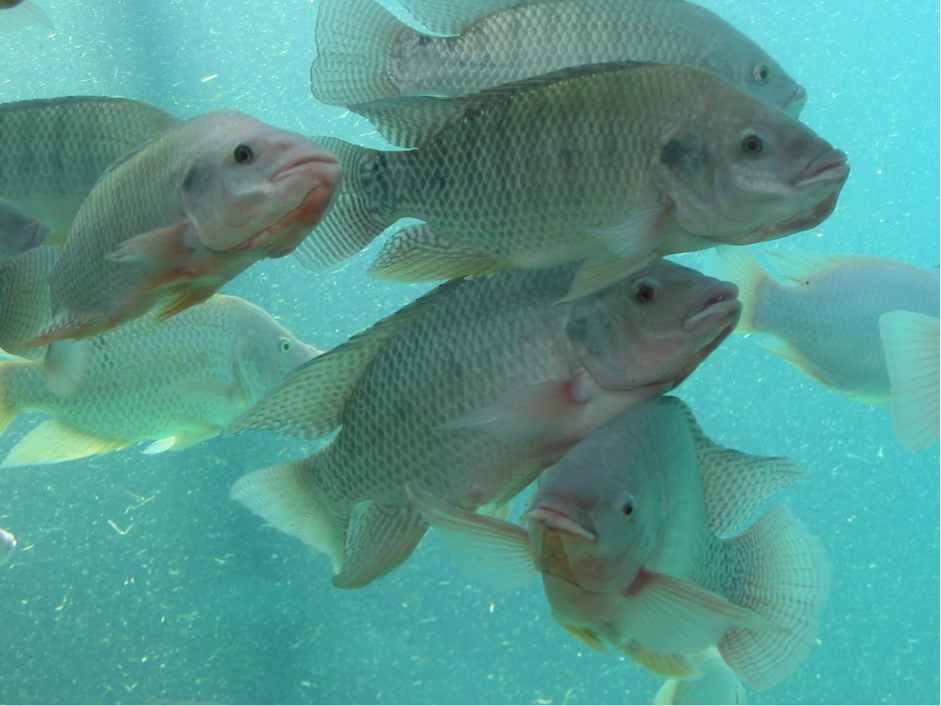
Three experiments with a new phytogenic formulation in Nile tilapia (Oreochromis niloticus) were performed to confirm the effect on growth performance parameters and feed efficiency. The first trial (EXP I) was conducted in the Asian Institute of Technology (AIT) in Thailand, using 180 Nile tilapia of an average individual initial weight of 3.40g ± 0.17g.
The fish were randomly allocated into two groups using a complete randomized block design (CRD). Three replications were used for each treatment in 100 L tanks: one control group (basal commercial diet with 34 percent crude protein) and one group receiving Syrena® Boost included at 200mg/kg of feed. The fish were fed ad libitum twice daily with their respective diet for eight weeks. Each tank was supplied with compressed air diffused through air-stones, connected to a pump keeping dissolved oxygen (DO) above 7mg/L and water temperature at 27.7ºC. After eight weeks, growth performance, feed efficiency, and survival were evaluated.
At the end of the feeding experiment the fish weight had quadrupled.
The survival rate for both treatments was over 90 percent. Fish fed Syrena® Boost showed an 11.5 percent increase in weight gain, 6.4 percent increase in specific growth rate (SGR) and 7.6 percent increase in total feed intake without compromising feed conversion rate (FCR), compared to fish fed with the control diet (Figure 1).
The second trial (EXP II) was again conducted in the Asian Institute of Technology (AIT) in Thailand following a similar experimental design. However, using 210 Nile tilapia with an average individual initial weight of 7.05g ± 0.22g. The fish were randomly allocated into two groups using a complete randomized block design (CRD). Three replications were used for each treatment in 100 litre tanks: one control (basal commercial diet with 33 percent crude protein) and one Syrena® Boost included at 200mg/kg of feed.
The fish were fed ad libitum twice daily with their respective diets for eight weeks. Each tank was supplied with compressed air diffused through air-stones connected to a pump that kept the DO above seven mg/L and water temperature at 27.8ºC. After eight weeks, growth performance, feed efficiency and survival rate were evaluated.
At the end of the feeding trial, the fish weight had quadrupled and the survival rate was over 97 percent in both treatments. Fish fed Syrena® Boost showed a significant (p=0.032) increase of weight gain compared to fish fed the control diet by 7.2 percent, an increase in SGR by 6.7 percent and a significant (p=0.025) improvement in FCR by 6.9 percent compared to fish fed the control diet (Figure 1).
The third trial (EXP III) was conducted at Minh Phu AquaMekong Co, Ltd in Vietnam with 180 Nile tilapia of an average individual initial weight of 13.3g ± 0.38g. The fish were randomly allocated into two groups using a complete randomized block design (CRD). Three replications were used for each treatment in 350 litre tanks: one control group (commercial basal diet with 33.5 percent crude protein) and one group receiving Syrena® Boost included at 200mg/kg of feed.
The fish were fed four times daily ad libitum with their respective diets for eight weeks. All tanks were equipped with an activated biological coral filter and aeration that kept the DO above 6.5mg/L and the water temperature at 27.9ºC. After eight weeks of feeding, growth performance, feed efficiency and survival rate were evaluated.
At the end of the feeding trial, the fish weight quadrupled and the survival rate was over 97 percent in both treatments. Fish fed Syrena® Boost showed a significant (p=0.002) increase in feed intake by 5.9 percent, a significant (p<0.097) increase in weight gain by 9.6 percent and a significant (p=0.009) improvement in SGR by 4.8 percent (Figure 1).
An ideal phytogenic product
These studies indicate that the benefits of supplementing Syrena® Boost, a specific formulation of selected phytogenics, efficient to promote Tilapia growth performance, to stimulate feed intake and to optimise feed conversion ratio.
All this supporting Syrena® Boost as an ideal phytogenic product to enhance the profitability of Tilapia production in a cost-effective way.


