
Welcome to Modern Agriculture!

by Cláudia Figueiredo Silva, Zinpro Corporation, Eden Prairie, MN, USA; and Stavros Chatzifotis HCMR, Gournes Heraklion, Greece;
Introduction
Trace minerals are key elements for activation and function of hormones and hundreds of enzymes. They are essential for proper development and function of bone, nervous and reproductive systems, being critical to epithelial tissue production and maintenance and thus affect health through enhanced skin, gill, fin, scale and gastrointestinal integrity.
By playing essential roles in activation and modulation of several processes involved in fish immune response, optimal trace mineral nutrition is very important in helping fight stress and disease. Among these, zinc is known to exert beneficial effects beyond growth, namely through modulating immune response and resistance to disease development of muscle and bone, reduction of cataract incidence and oxidative stress.
In addition, zinc plays an essential role in wound healing, and speeds re-epithelialisation processes in fish (Ogino and Yang 1979; Hughes 1985; Jensen et al, 2015; Gerd et al, 2018). Interestingly, metal-amino acid complexes have proven to be more efficient than inorganic minerals in reducing skin lesions of Atlantic salmon after infestation with Caligus (Figueiredo-Silva et al, 2019), indicating enhanced barrier defense mechanisms against pathogens.
We have evaluated the effects of metal-amino acid complexes (Availa®Zn, Availa®Fe, Availa®Mn, Availa®Cu, Availa®Se), supplemented at half the level of inorganic or in combination with inorganic minerals (sulfates of Zn, Fe, Mn and Cu, and Se in the form of selenite), on growth performance, gut and skin morphology, hepatic enzyme activity and zinc content in skin of European sea bass.
Materials and methods
Quadruplicate groups of European sea bass, with an initial body weight of 15g, were daily fed one of three diets, formulated to vary in trace mineral source and/or level to apparent satiety, for four months. A Control diet (46% crude protein, 18% crude fat, 19.2% nitrogen free extract) was formulated to include an inorganic trace mineral premix of 100ppm Zn (ZnSO4), 80ppm Fe (FeSO4), 24ppm (MnSO4), six ppm Cu (CuSO4) and 0.24ppm Se from (Na2SeO3).
A second and third diet were formulated to include metal-amino acid complexes as a 50:50 combination with inorganic minerals or at one-half the dose of inorganic minerals in the control diet, respectively.
In order to magnify response to trace mineral source and level, fish were submitted to a temperature challenge in the second half of the feeding period (last two months), with feed restricted by 50 percent, from the pre-stress period intake in the last month of the feeding period.
Results and discussion
Metal-amino acid complexes (supplemented at one-half the level of inorganic source supplementation levels successfully maintained growth performance of European sea bass. Performance results indicate metal-amino acid complexes are a more effective hence, a more bioavailable source of trace minerals than inorganic sources in European sea bass, as demonstrated previously in Atlantic salmon (Figueiredo-Silva et al, 2019) and catfish (Paripatananont and Lovell, 1995a, b).
In work by Paripatananont and Lovell (1995a), zinc methionine complex (Zn-Met) was shown to be three-to-five times more bioavailable than inorganic Zn (ZnSO4) in meeting growth requirements in purified and practical diets containing phytic acid, respectively.
In addition, benefits of supplementing channel catfish diets with metal amino acid complexes vs inorganic minerals were observed to go beyond growth performance, with Zn-Met being three-to-six times more effective than ZnSO4 in protecting channel catfish against Edwardsiella ictalurid (Paripatananont and Lovell 1995b).
Increased hepatic activity of glutathione peroxidase (GPx) found in European sea bass supplemented with metal-amino acid complexes at one-half the level of inorganic trace minerals, indicate metal-amino acid complexes are more effective in promoting the antioxidant capacity of fish.
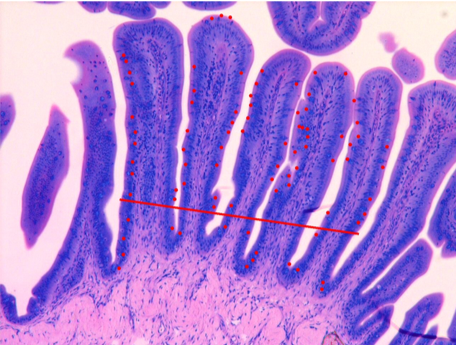
Partial or complete replacement of inorganic trace minerals with metal-amino acid complexes had a clear impact on the number of goblet cells, in both intestine and skin of European seabass. As part of the mucosal immune system, goblet cells play an important role in protecting fish against pathogens, especially in aquatic animals that are in close contact with their environment.
Enhanced antioxidant capacity (ie GPx) and barrier defense lines (ie goblet cells) are expected to translate to better response of fish to disease, and thus result in healthier fish, especially when grown under commercial farmed conditions.
Outcomes of this project are expected to contribute to the development of more efficient diets for European seabass, through the supply of trace minerals that are highly available and efficiently meet seabass performance targets, contributing toward their welfare status.

