
Welcome to Modern Agriculture!

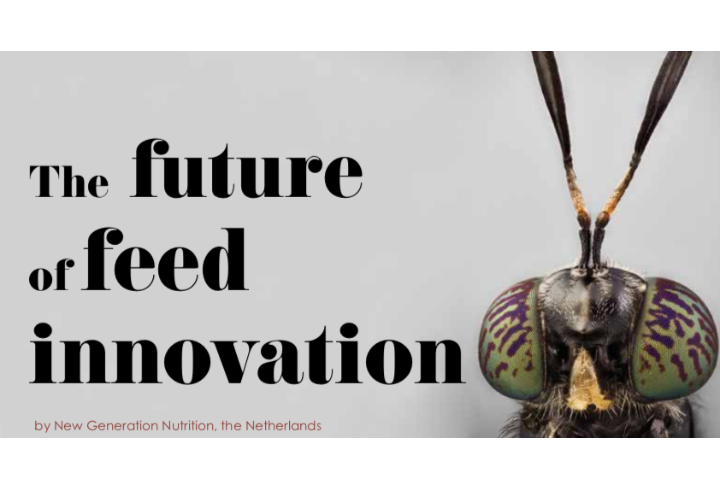
by New Generation Nutrition, the Netherlands
INvertebrateIT is a European project aiming to stimulate innovation and development in the aquaculture sector, through the use of invertebrates. The two-year project has identified three promising small-to-medium enterprises (SMEs), who have developed innovative ideas that have high potential in solving some of the key challenges facing the aquaculture industry today, related to alternative feed sources and valorisation of side streams.
Invertebrates offer such potential, due to their ability to convert substrates into high quality nutrients, particularly protein, that can be used in diverse applications, including that of aquaculture. These animals, which include insects and marine animals, such as worms, crustaceans and mollusks, are therefore extremely resource efficient, as well as space efficient.
To explore applications for invertebrates in aquaculture, the INvertebrateIT project conducted an open call for SMEs that have developed innovative solutions, three of which are now establishing Public Private Partnerships (PPP) to bring the solutions to market through technical and commercial collaboration. Such support is key at a time when the EU aquaculture market requires innovation and growth to remain competitive, with invertebrates offering opportunities to close the loop and stimulate sustainable food chains for aquaculture.
The three SMEs, as selected through the open contest, are Entogreen, Innovafeed and Musflour, all offering sustainable aquaculture feed solutions;
Innovafeed, France
Innovafeed is also diving into the world of aquafeed based on black soldier fly, rearing larvae on agricultural residues to produce high quality proteins and oils. Using a circular business model, Innovafeed intends to scale up to a production of 10,000 tonnes/year in 2019. Recognising the need for competitive pricing, especially with fishmeal, Innovafeed is maximising their processing efficiency to produce high quality, sustainable feed for the aquaculture market.
Entogreen, Portugal
Developing sustainable feed sources for aquaculture is one of the key challenges that must be addressed to create a sustainable future for the industry, whereby, feed both serves its purpose effectively, whilst being ecologically and economically efficient. One such possibility for aquaculture feed is the black soldier fly.
Entogreen has developed a production system based on the use of agri-food residues to grow black soldier fly larvae, that offer an alternative feed source to fishmeal, with impressive feed conversion rates and potential for upscaling. Entogreen is aiming to have a 3,000m2 facility up and running, making use of 3,000 tonnes of agri-food residues per month for conversion into high quality fish feed.
Musflour, Spain
With over 3,000 mussel processing facilities, the Spanish mussel industry provides a unique opportunity for the valorisation of biomass that is separated during mussel processing. These biomass residues contain up to 71 percent protein that can be processed into highly nutritious flours for use as an aquafeed ingredient.
Currently, such residues are unused, providing a key opportunity for building a circular economy and minimising waste in the food chain, and providing an alternative protein source for aquaculture.
The future of fish feed
These SMEs are pioneering in the use of invertebrates for aquaculture solutions, which, when considering the current sustainability climate in the sector, can prove invaluable for the development of a circular economy that adds value both economically and environmentally. Nonetheless, the introduction of such innovations into an already established market, largely dominated by inputs such as fishmeal, does not come without challenges.
One of the main points of concern in these cases is often cost price, and whether feed innovations, in particular, will be competitive on the market. For invertebrates, that are extremely feed and resource-efficient themselves, creating economies of scale will be key in reducing costs and facilitating large scale production at a competitive price.
Additionally, more awareness and support are needed from consumers and industry. In the meantime, premium markets offer a viable sales outlet for sustainable innovations, showcasing the quality and potential of invertebrates in aquaculture.
As for the availability and security of the feed sources used for rearing of invertebrates, for example insect larvae, developing long-term supplier contracts with agricultural and food processors has been identified as a key strategy to secure supply of high-quality substrates. Additionally, the cost of these substrates, and the possibility of the cost rising as demand rises, has also been raised as a concern, however, this has been factored in by the SME and still proves a viable and competitive business model for aquaculture.
In the case of marine invertebrates, there is great scope for synergies with algae and integrated multi-trophic aquaculture.
When considering the aquaculture market, product performance and quality are also highly consolidated. As an essential attribute, innovators and first movers in niche segments, including invertebrates in this case, must ensure that the quality of the output is acceptable on the market. This has been highlighted among the SMEs that are developing feed solutions that meet industry needs, in terms of nutritional composition and homogeneity, as well as considering options for organic certifications in some cases to meet demand.
These innovations, supported through PPP, as facilitated by INvertebrateIT, offer high impact solutions for the aquaculture industry that can accelerate sector transition to a sustainable, closed-loop model that produces high quality, affordable aquaculture products with minimal environmental impact.
INvertebrateIT is supported by the European Union Maritime and Fisheries Fund. As INvertebrateIT comes to a close, the project calls on interested investors and industry actors for further collaboration to embed these invertebrate innovations in the market. For this purpose, a thematic event will be held in Wageningen, NL, on the 26th March 2019. For more information, please visit the project website.
The project is coordinated by Innogate-to-Europe, a Madrid-based SME. The consortium is formed of six other partners: AquaTT (Ireland), Cluster de la Acuicultura de Galicia (Spain), FórumOceano (Portugal), Marine Institute (Ireland), NGN Pro-Active (Netherlands) and Pole Mer Bretagne Atlantique – Technolpole Quimper Cornouaille (France).


