
Welcome to Modern Agriculture!

Mukota pigs are indigenous to Zimbabwe and can be found across the country. They live in two broad classes: hardy black savanna swine, resistant to disease and poor nutrition, requiring little water; or a smaller variety that is native only to central-eastern parts of the country where they adapted themselves for life on higher altitude plains with cooler temperatures who have also developed longer hair coats as protection from cold weather.
Mukota Pigs (known alternatively as Rhodesian Indigenous) are an easier breed of pig hybrid which thrives best in tropical regions due to their natural resistance against diseases such as African Swine Fever – making them ideal livestock for many impoverished farmers living near these climates around Africa since most other breeds cannot survive long enough without costly vaccinations
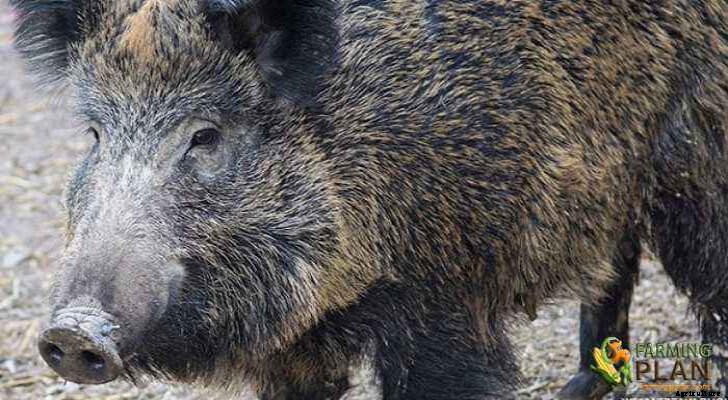
The Mukota Pig is It is a medium-sized breed. This breed has 2 different distinctions, one has a short snout, which bears a lot of resemblance to the Chinese pig. And another that has a long snout and is related to the winds year race. Although both distinctions are very similar, the only variation is the snout.
The coat of this breed is just black and usually does not have spots of any other color. In some individuals, the coat is short, very close to the body, while in other individuals the fur reaches 5 centimeters. The legs are thick enough and Fornicas. In addition, the back is straight, with a slight curvature in the center of it. While the face is lower down the line of the back. This breed has large ears that are leaf-shaped, inclined upwards, and are always straight.
And the tail is something short that does not measure 5 centimeters. The udders of this race are hanging and have several pairs of teats which are enough for the number of offspring produced by this breed. This breed can reproduce for the first time between 6 and 12 months of age. The litters that come to produce this breed are between 6 and 10 offspring by birth. The weaning of this breed can be done naturally. You may also read Lacombe pig
This breed can mate at any time of year, however, they produce 1 pregnancy throughout the year. Also, when there are warm climates, this breed can mate freely, and it can not be controlled. The delivery season is approaching the rainy season and towards the end of the year. They can get to reproduce even if they are in a very severe climate, and although the food is not the most propitious. It is a race that adapted to survive in extreme situations. When there are seasons of drought this race is kept in open spaces and walking in the field. But when cold and winter seasons come they are kept in dry spaces like corrals.
The Mukta Pig is a breed that is used mainly for meat production, producing characteristic meat with a very sweet taste. Although this breed also manages to cross with other species to add resistance in adverse situations, such as climate and feeding. In the same way, the descendants of this race also have an improvement in the taste of their meat.
The Mukta Pig can feed on the environment that surrounds it, feeding on branches, forests, leaves, and roots. As well as fodder, and some vegetables. However, this breed has no food restrictions. They may have a very poor diet, and water consumption is very low compared to other races. Reaching up to less than 10 liters of water per week. The intestine of this breed produces a high fermentation, which allows it to be fed with diets high in fiber. This situation is not possible for other races.
The Mukota Pig is a very tough breed, both in hot climates with high temperatures. As well as common diseases in other species. In addition, this breed has a high resistance to parasites, which is higher than in other species. And when this race has parasites, it is seen that they do not spread or produce so many in comparison with other species of the same region.
It is even a breed that can survive to be in stables where hygiene is precarious. It can be fed with very poor and deficient food. And still, be able to stay. Also is estimated that there are around 70.000 specimens of this breed in Zimbabwe. You may also read Minzhu pig
In this blog post, we’ve explored the Mukota pig species and how they live in Zimbabwe. You may have been wondering why there are two different types of these pigs; now you know! The hardy black savanna swine can be found across the country and is resistant to disease and poor nutrition, but requires too much water (you may need a well). A smaller variety that is native only to central-eastern parts of the country has adapted itself for life on higher altitude plains with cooler temperatures. This type also developed longer hair coats as protection from cold weather. We hope this guide has helped you learn more about Mukota Pigs! Good luck on your journey exploring them further.


