
Welcome to Modern Agriculture!

The Saxony duck was developed by Albert Franz in Chemnitz in the 1930s, with the duck Rouen Pomerania, Pekin Aleman and the blue Pomerania, created in the east of Germany, and arrived in the United States in 1980. German Duck Breed also called Saxon Duck, Sachsen-Ente, or Canard de Saxe. Saxony duck is a large duck breed and beauty developed in the Free State of Saxony. Saxony (Sachsen) is the oldest Free State in Germany.
The race is first shown to the public in the 1934 exhibition, was first exhibited in Chemnitz-Altendorf, the first Saxon County Exhibition. The Saxon duck or Saxon was recognized in East Germany in 1957, and in West Germany, the following year, in 1958, being accepted this new race in Great Britain in the year 1982.
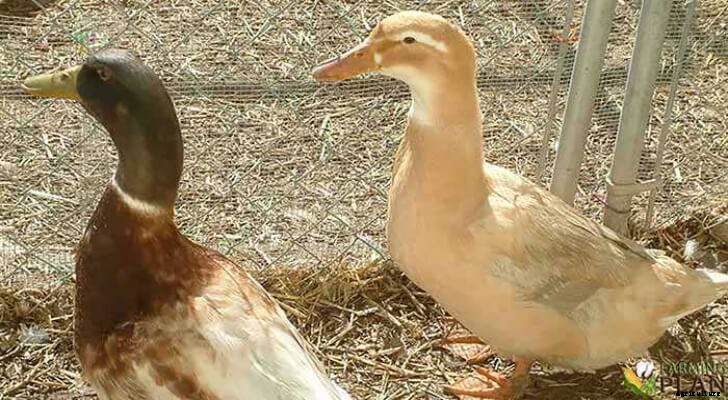
The Saxon duck headed to the United States when the Holderread Waterfowl Farm imported them in 1984. They were admitted to the American Perfection American Standard of the American Poultry Association in the fall of 2000.
The Saxon duck is a very large duck with an imposing physique, elevated egg-laying of white-pink generally large size. The mature males have a nice bluish color and the females are of a soft peach color with some slight bluish reflection.
Its beautiful figure, the torsos of its plumage and its rose and blue colors make this animal a beautiful ornamental duck. Ducks are of great ornamental value due to their beauty. Its weight varies between 3.3 and 4.2Kgen the male duck.
The Saxony duck weighs between 8-9 pounds at maturity. Its large head is somewhat oval and gently mixed with a medium-thick neck that is slightly arched forward. The compact body is long, broad across the shoulders, and has a prominent chest that is gently rounded.
The chest feathers are rich chestnut-burgundy, the bottom and flanks are creamy. The female duck is orange or reddish-brown and the bill is yellow or orange, often with Shaded pale green. The Females are white cream Facial stripes, neck ring, and underbody. The bill is orange, often with brown shading. The male and female ducks are orange to reddish-orange.
The Saxony duck is an active fodder and excellent layer with typical egg production in approximately 190-240 large white eggs annually. The Saxony duck does not grow as fast as some ducks. They have interesting plumage, produce meat with more flavor and less fat. They are better pickers and are more likely to hatch and hatch their eggs.
When choosing a Saxon duck for your flock, select vigorous, strong-legged birds that are free of physical deformities. Consider the growth rate, egg production and forage capacity for utility birds. For sample birds, choose birds that conform to the standard.
The Saxon duck is considered to be an excellent collector, so eradicating insects is part of their diet.
The Saxon duck is used as a race to produce eggs and also to produce its meat.
The Saxon ducks are the most attractive of heavy ducks. The male has a striking pigeon blue hood and wingtips. The female is the white apricot color with white eye stripes. There have been a number of Saxon ducks gaining in waterfowl shows in recent years.
Keeping ducks is easy with this beautiful breed. It is believed that there are fewer than 500 Saxon ducks currently in the United States. They are on the Livestock Conservancy’s critical list, so choosing to raise some Saxon ducks on their own would be helping to keep this wonderful breed in existence. It is characterized by having a very calm temperament, able to coexist in harmony with other animals.
The Saxony duck is a German breed of domestic duck. It was bred in Saxony, Germany in the 1930s but because of World War II it wasn’t recognised until 1957. We hope this guide has helped you! Good luck finding your own perfect pet!
As A Reference: Wikipedia


