
Welcome to Modern Agriculture!

Goats are ruminant animals and must eat the proper ratio of roughage each day to avoid bloat – which can be a death sentence if not treated both properly and promptly. A healthy goat feeding plan must include a solid hay base with limited grain feed rations and only safe treats given in small amounts.
A ruminant animal has four stomach chambers, the first being the rumen. Goats, sheep, cattle, elk, and deer are all ruminant animals. When a goat does not eat a proper diet, too much of an approved dietary item, or experiences a rapid dietary switch, the rumen does not function properly and can cause bloat and other digestive tract problems.
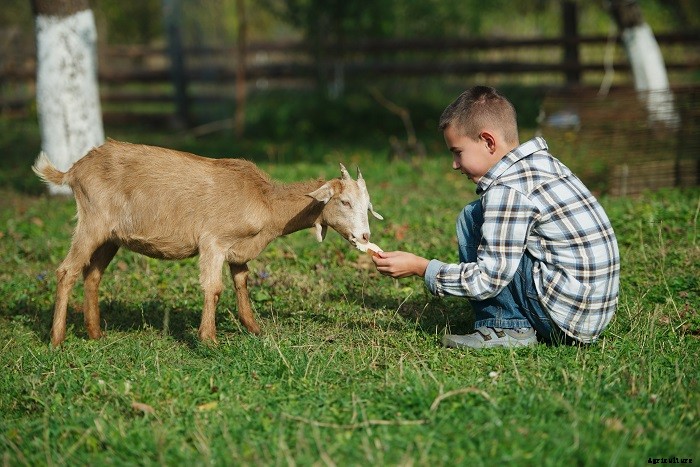
Always introduce new foods or changes in amounts and brands slowly to avoid rumen upset. It is best to limit free ranging in the early spring as new growth comes on by making sure the goats have eaten their fill of hay or a small typical grain ration before heading out in the pasture. Goats will become gluttons when the first sweet clover appears and this should be avoided as much as possible.
Always keep natural homemade of commercially manufactured goat drench solution and supplies on hand so you can treat this condition yourself if necessary or are ready for a livestock vet to arrive.
Providing free-choice goat supplements to the goat herd will also help ensure they are getting the proper amount of nutrients on a daily basis as well as helping to prevent bloat and parasite infestations in the process.
Grain feed should only account for roughly 10 percent of a goat’s diet. While they love the taste of a sweet mix – especially if it contains molasses, eating too much is not good for their health or proper rumen function. Hay should be the primary base of a goat’s diet.
Some goat keepers offer a slightly higher percentage of grain feed to dairy goats due to a belief the added rations may increase the quantity of milk produced. Likewise, when a nanny goat is pregnant or nursing she too is often provided with additional grain feed to provide the extra calories and energy she needs to provide nutrients and plenty of milk for her kids. Using a grain feed with a boosted molasses percentage is often recommended for pregnant and nursing nanny goats due to its high fat count and possible healing properties.
Unlike horses and cattle, goats do not graze for their food – they browse. A goat will eat grass that grows on the ground, but are naturally conditioned to eat twigs, tall brush, leaves, brambles, and other types of foliage that grows in the woods.
Even during cold weather months a goat can browse for a significant portion of their diet providing they have enough room to roam on a homestead that is at least partially wooded.
On average, a goat consumed between two to four pounds of hay each day. This amount fluctuates based on the age of the goats, if the goat is pregnant or nursing, and slightly to take into account goat size – standard or miniature.
A goat can eat any type of agriculturally produced hay, but the quality of a hay variety depends upon the nutrients of which it is comprised. The best type of hay for one type of livestock may not best fulfill the dietary needs of another livestock breed.
A goat’s dietary needs are best fulfilled by eating a legume style of hay. This variety of hay is most often comprised of clover, alfalfa, vetch, and soybeans. Goats have a far smaller mouth than horses or cattle, and even sheep if you are keeping miniature breeds. Because of this size difference, the texture or legume hay is far easier for goats to chew than other more coarse varieties of hay.
Nursing nanny goats, as well as goat kids, should especially be fed on a diet legume hay due to its nutritional properties. More mature goats are best served by a mixture of easy to digest orchard grass and legume style hay.
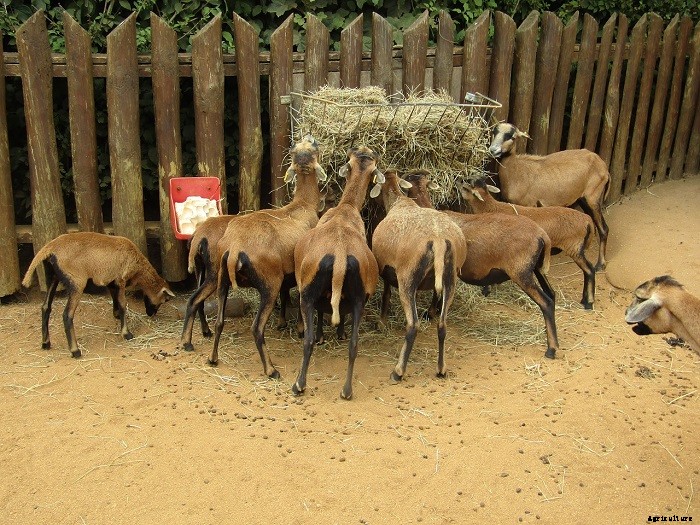
Treats, even healthy ones, should only be provided in small to moderate amounts. Healthy goat treats are especially helpful when used as training aids to establish trust between keepers and the animals and to teach them their ranging boundaries. Once a true level of trust or report is developed between the keepers and the goats the animals are more likely to come when called and be compliant when medical treatment, shearing, or milking is necessary.
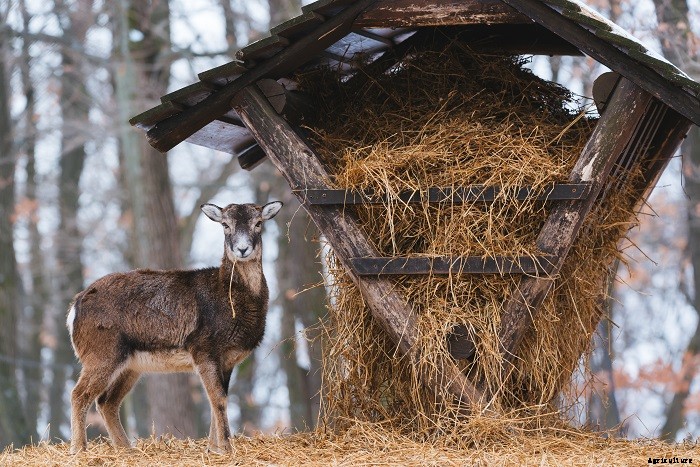
Contrary to popular belief, goats do not eat everything … or tin cans. The items on this list are dangerous to deadly for goats to eat.
Goats may be the only living creature on the planet that can consume poison hemlock and survive, but it really is not good for them – or perhaps their keepers. The deadly hemlock spores can live on surfaces for up to three years – including the fur of the goats your children hug and you come into contact with on a daily basis.
Bread items are not necessarily unsafe for goats to eat, but they should be given in only very small amounts on rare occasions, if at all. When goats consume too much bread they will become bloated and experience other rumen health problems.
The healthiest diet for goats mirrors the most traditional and natural that can be provided. Commercially manufactured feeds and treats are not a necessary part of a goat’s diet and should remain only a very small portion of what they consume on a regular basis.
See related post below
Goat Diseases And Sickness
Learn More About Fainting Goats


