
Welcome to Modern Agriculture!

Ava is a mom of one goofy special-needs chicken that lives with a rabbit as an indoor-outdoor pet. She is also a vet assistant.
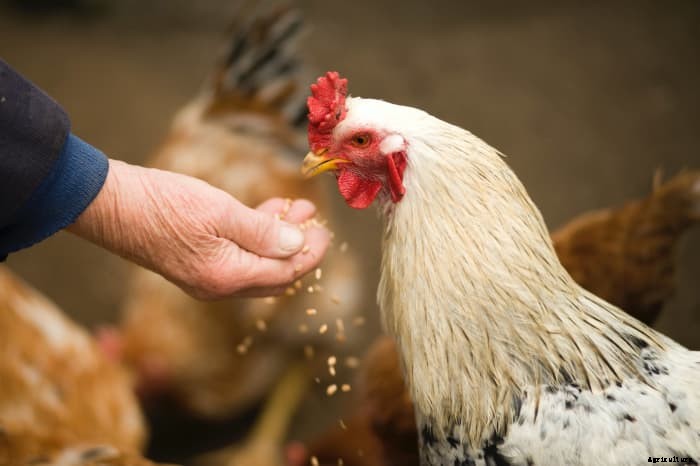
Feeding your chickens can be overwhelming to those new to the practice, or even experienced poultry keepers. The first step when choosing a formula for your chickens is to determine their age, your budget, and any extra specifications you want your chickens to have.
Good nutrition is crucial to maintaining a healthy flock. All chickens should be fed a crumble or pelleted diet formulated to meet their nutritional needs. They should get plenty of fresh feed daily and should be allowed to eat as much as they want.
— For the Birds, DVM
A good place to start is the budget. On average, a hen eats 1/4 a pound of feed daily. Multiply this by the number of hens you have, and then by the number of days you expect to keep your hens.
A hen at its peak laying age (1 year), will lay 250 eggs a year. By year two, this decreases to 80% of their peak, year three 70%, year four 60%, year five 50%, year six 45%, and year 7 35%.
You can use this information to calculate how much your chickens will be making you per year compared to their feed cost. Keep in mind organic eggs sell for more, and quality feed can increase the number of eggs laid, as well as practices such as lighting the coop during winter.
How Many Eggs Do Hens Lay?
A hen at its peak laying age (1 year), will lay 250 eggs a year. By year two, this decreases to 80% of their peak, year three 70%, year four 60%, year five 50%, year six 45%, and year 7 35%.
Layer Feed
Price Range for 50 LB
Organic
Protein Content
Scratch and Peck
$34
Yes
16%
Kalmbach
$24
No
17%
DuMor
$15
No
16%
Nutreana
$18
No
16%
Purina
$17
No
16%
There are three essentials that are not considered main feed for your chickens but are needed for laying hens. These are scratch, grit, and shells.
