
Welcome to Modern Agriculture!

The insect protein produced from this process can be used as an ingredient for animal feed or human food. It appears that in Western markets consumer acceptability will be a great barrier to marketing insect-based food to humans. Therefore, it seems that the main market for insect protein will be for animal feed.
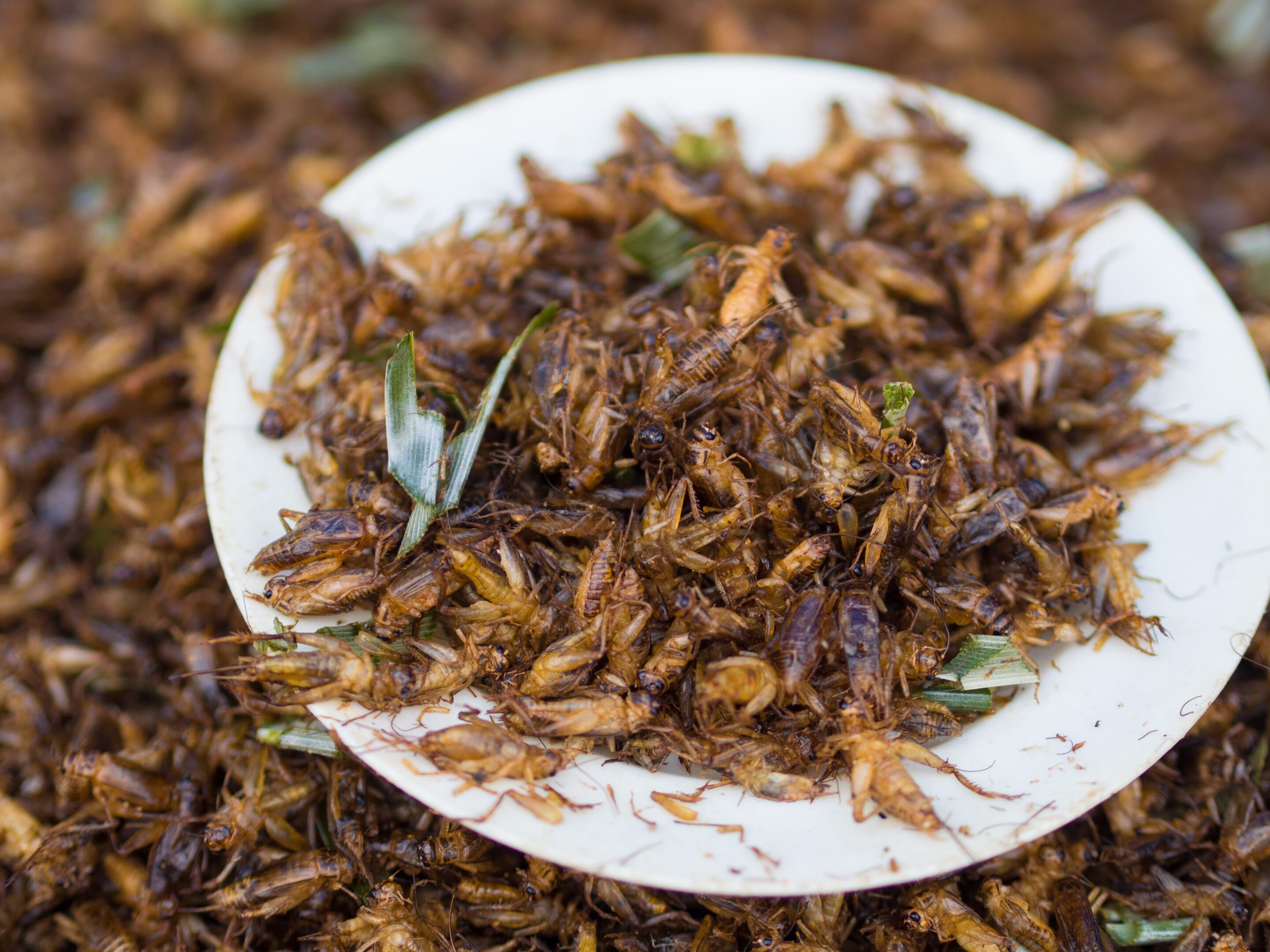
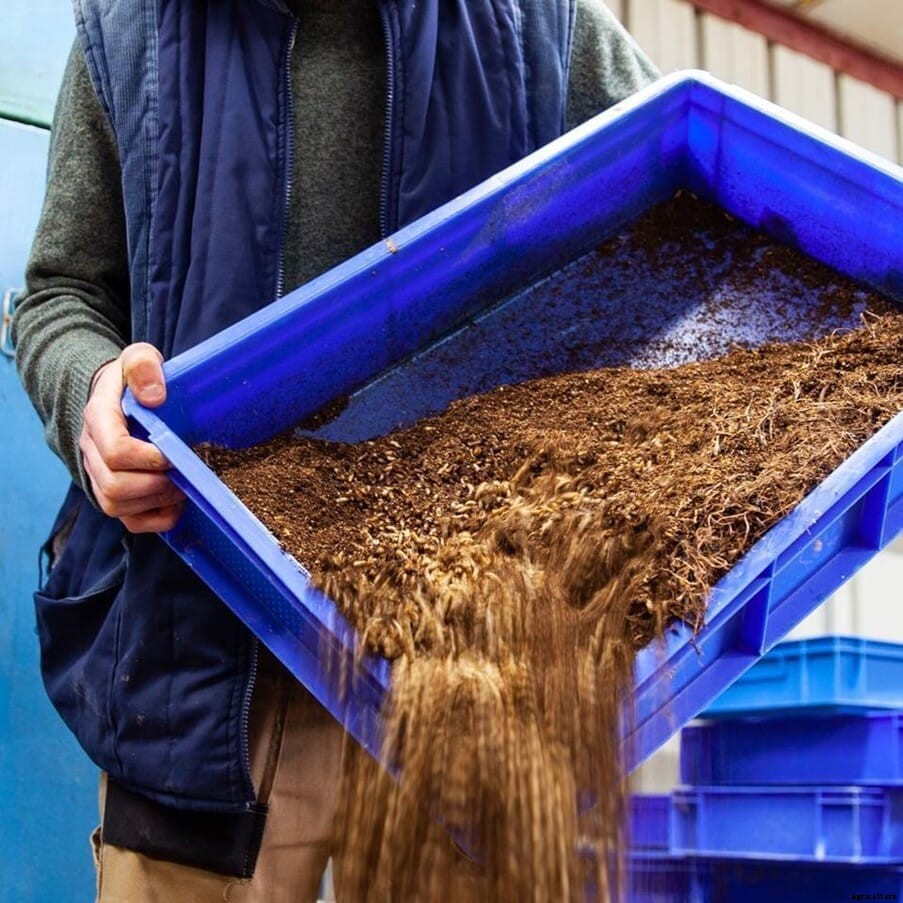
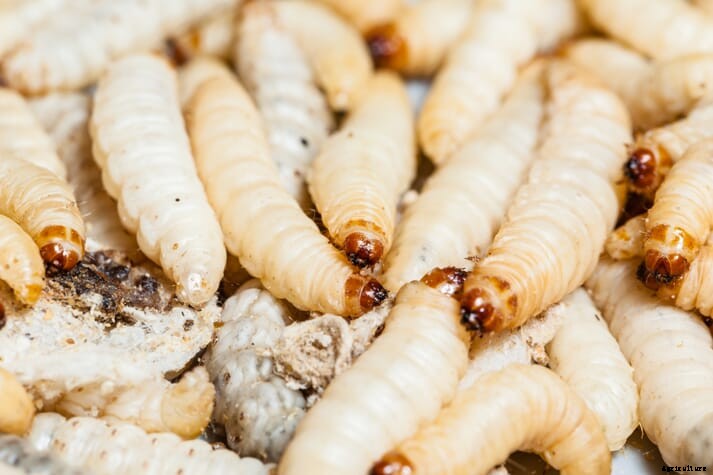
Many kinds of insects can be grown to produce protein. I will focus on black soldier flies (BSF), which are by far the frontrunner. I will not go into the technical side, except to say that the eggs of BSF larvae are spread over a substrate of organic waste, eg, poultry litter, mortality and slaughterhouse waste. The eggs hatch and grow into larvae. The larvae feed off the organic waste. They are harvested after about 12 days and processed into oils or meals with a high protein content. The protein is very rich and has a good balance of amino acids. The residue is valuable organic fertilizer. If the larvae are allowed to pupate into flies, these can be used to breed the next generation.
The poultry industry is frequently attacked as being unsustainable. The reasoning is that it takes about 2 kg of feed ingredients to produce 1 kg of chicken meat product. With the use of insects, almost all waste is reconverted back into either protein and lipids for feed or residue for fertilizer. Thus, the poultry economy becomes much closer to circular.
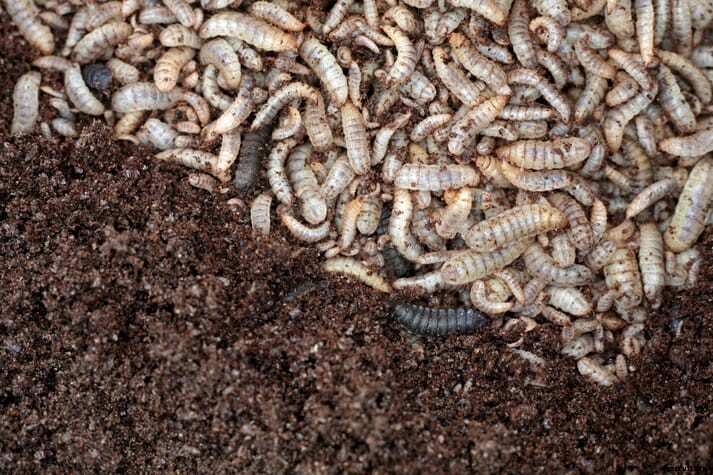
There are two main sources of protein for animal feed, soya and fish meal, which are challenging for the environment.
The growth of soya beans for animal feed protein is criticized as it is often grown on land from reclaimed rain forests. It also competes with crops that could feed the local population. BSF can replace soya in animal feed. This would reduce the pressure to clear rain forest so that more land can be used to produce soya as livestock farming expands.
The lucrative market for fishmeal for animal feed encourages corporate fisheries not to limit their yields of by-catch (from which fish meal is made), and thus leads to depletion of ecosystems, environmental damage, and the collapse of local fisheries.
Use of BSF can replace both soya meal, soya oil and fishmeal with great advantages to the environment.
The process of growing BSF from waste can be done locally without the need to transport the waste to large sites. It converts waste products – litter and manure and other agricultural waste – which are potential pollutants (ammonia, smell, water pollution), into stable valuable resources.
The basic process, if designed correctly, will use little energy and have no negative environmental impact. With BSF treatment, direct greenhouse gas emissions are 47 times lower than from windrow composting.
The basic process, if designed correctly, will use little energy and have no negative environmental impact (smell, emission of greenhouse gasses, pollution of water tables, etc.). With BSF treatment, direct greenhouse gas emissions are 47 times lower than from windrow composting.
The poultry industry, which is basically a way to convert vegetable protein into animal protein, faces a long-term challenge from lab-produced proteins. The use of insect protein should increase the efficiency of the poultry industry and improve its position to face these challenges.
Initial results seem to show that the use of insect-based protein in feed improves bird’s health. It is also greatly valued in premium pet food and the aquamarine industry.
The BSF and insect protein industry is at about the stage of development that the renewable energy industry (mainly solar and wind power) was 30 years ago.
The basic science has been done and it is recognized that the process works technically. Commercial-sized pilot projects exist around world. There are also a few large-scale producers, who are keeping most of the details under wraps for understandable commercial reasons.
Thirty years ago, renewable energy was not regarded as a solution for fueling the world economy. It had a few niche applications and mainly went forward due to government subsidies and environmental activists. In 2021, renewable energy is competitive with fossil fuels. It is not only the main pivot of world attempts to contain global warming but also the cheapest way to power an economy.
The chief challenge preventing BSF technology from being rolled out on a large scale is cost. According to a Rabobank analysis, the cost of insect protein is typically €3,500–€5,500 per metric tonne. The equivalent price of fish meal is between €1,200–€2,000 per tonne.
So, there is a vicious circle that needs to be broken: costs are high, so scale is low, but to reduce costs we need scale. This is a classic situation calling for government intervention to encourage scale. Before we look at the role of government, we should look at the cost side deeper.
Another hurdle to overcome to reach scale is regulation. Regulations differ from country to country, but they basically fall into two categories:
This summer the European Union relaxed its regulations to allow BSF to be used for animal feed in larvae as well as in oil form. This is in addition to its use in pet food and aquaculture, which has already been approved.
At the same time, EU regulations still prevent insects from being fed on animal waste, including litter.
Governments need to recognize the beneficial effects of the use of insect farming. So, for example, it can be used as a safe and sustainable means to recycle agricultural waste. Policy makers should also consider ways to encourage the industry’s development.
Rabobank expects that the cost of insect protein will fall below €2,000 by the end of the decade. At this price, BSF use should be widespread, thus converting the poultry industry into a virtually circular economy.
I see a five-stage process by which the cost of insect protein will fall to a level that will make it affordable and thus demanded in large quantities.
Rabobank expects that the cost of insect protein will fall below €2,000 by the end of the decade. At this price, BSF use should be widespread, thus converting the poultry industry into a virtually circular economy. This will enable it to increase efficiency and improve its image.
