
Welcome to Modern Agriculture!

Male feed is calculated on the farm at weight per hundred males.For example, 900 males fed 25.0 lb (11.3 kg) per 100 would receive 225 lb (102 kg) of feed. If we look at this on a per-male basis (1 male), his allotment would be 0.25 lb (0.113 kg).
The question is, can we accurately measure and deliver the correct amount of feed to each male day after day? How much feed would we expect to find in each pan? For a male breeder facility with 900 males, we need to have a minimum of 100 pans to achieve the 7 to 9 males per pan target. Considering the 225 lb (102 kg) of feed calculated in the example, we would expect 2.25 lb (1.02 kg) of feed per pan to confirm good feed distribution across the feed system. A good breeder male manager will continuously evaluate all the factors involved in good management. The top 4 factors include: accurate feed weighing, separate sex feeding, correct feeder height, and good feed distribution.
1. Accurate weighing of feed
There are a variety of scale systems available to weigh feed. Select the system that will provide the greatest accuracy. Become familiar with all aspects of the scale system.
2. Separate Sex Feeding
Accurately weighing and distributing a set amount of feed to males and females is critical to control body weight and achieve outstanding flock uniformity and performance. This cannot be achieved if both sexes are eating from the same feeder. If fed from the same feeder males and females may receive the appropriate amount of feed, but the total calories consumed by sex will not be correct.
3. Feeder height
Male feeder height is critical and probably more critical just after transfer. The male feeder must be at a height that allows the males to eat comfortably but also prevents female access from the male feeder.
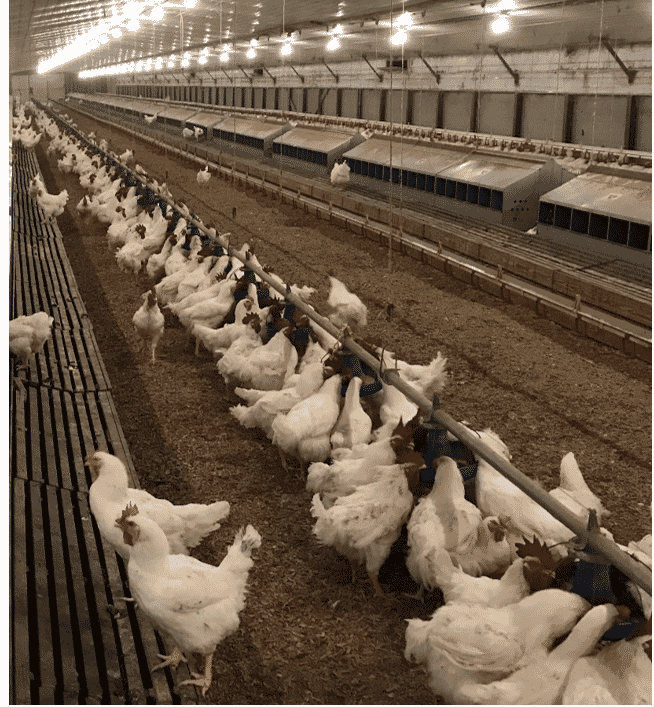
4. Feed distribution
Feed must be delivered accurately and evenly across the pan system. An uncharged feeder is the preferred method of feeding, as the same amount of feed needs to be delivered to every pan.
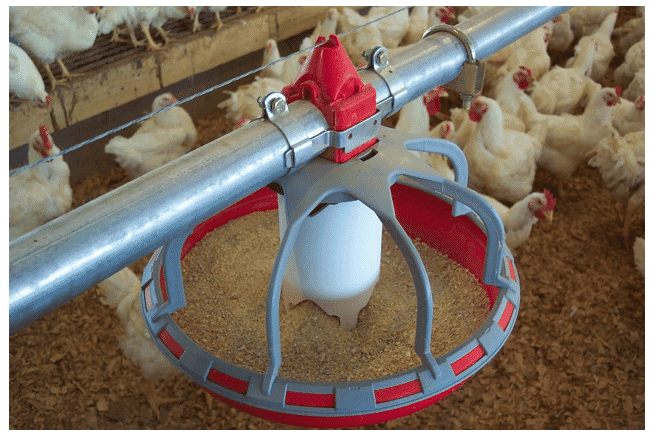
Male feeder management is critical to achieving strong fertility and chicks per hen housed. With small margins for error, small deviations from standard recommendations can be detrimental to good flock performance. The best approach to maximize fertility for the life of the flock is to pay attention to details. Good male feeder management will allow better control of male weight and fleshing necessary to achieve top performance. For more information regarding the management of male feeders, see the Cobb Breeder Guide (https://www.cobb-vantress.com/resource/management-guides).


