
Welcome to Modern Agriculture!

Disinfecting the house after flock depletion is:
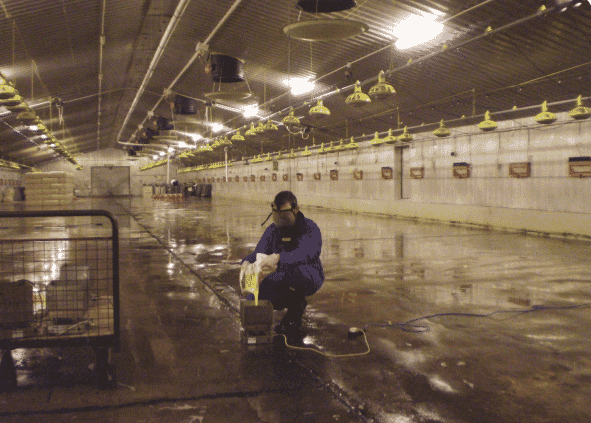
Disinfection should be done after cleaning and house repairs have been completed and when the house and equipment surfaces are dry. Only disinfectants that are compatible with the detergent used during cleaning are suitable for disinfection. All personnel should shower and change into clean clothing and boots before entering the house to reduce the introduction of harmful bacteria.
Ensure that the house has been thoroughly cleaned (see How To… Clean the Breeder House after Depletion). Disinfectants may become partially or fully inactive in the presence of residual organic material.
Wear recommended protective clothing appropriate for the disinfectant.
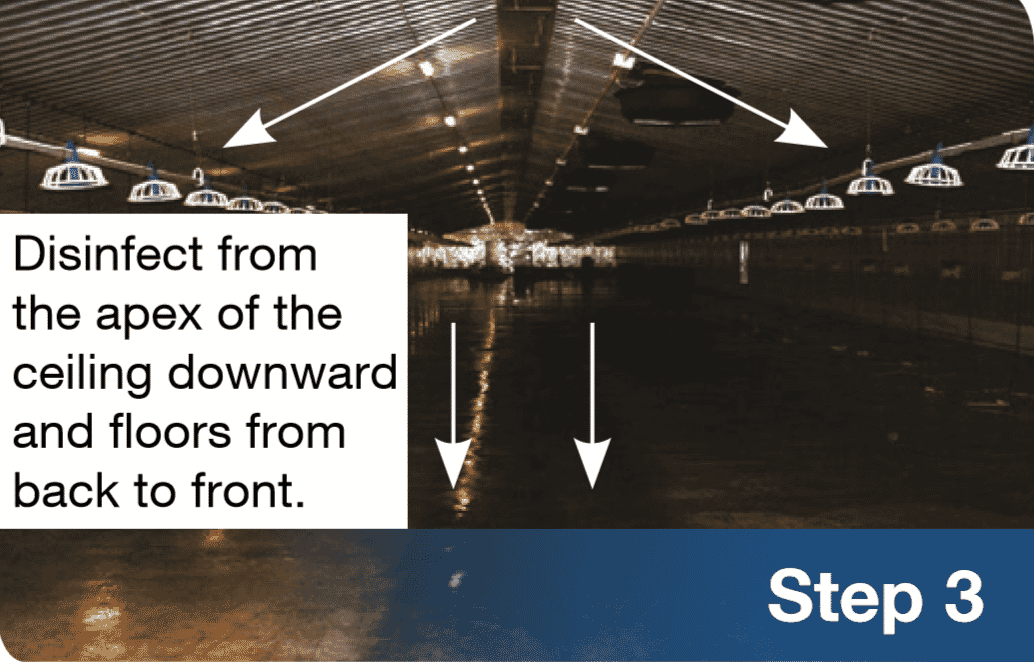
Prepare an approved disinfectant according to manufacturer’s instructions. Using a power sprayer or backpack sprayer (for smaller houses), spray the disinfectant on all surfaces of the house using a ceiling-side walls-floor sequence. Also disinfect supplementary rooms, staff rooms and showers.
Allow the house to dry by ventilation (open doors and inlets). If fumigation is permitted, the house should only dry until it is slightly damp. If fumigation is not permitted, the house should be allowed to dry completely.
Once the house has dried, return and re-assemble any equipment that was removed for cleaning during house preparation (see How To…Prepare the Breeder House for Cleaning and Disinfection) and complete a second disinfection of the house and equipment. Where local legislation permits, formalin fumigation can be used as part of the second disinfection process. Fumigation must be conducted by trained personnel following local safety legislation and guidelines. Personnel welfare, health and safety guidelines must be followed and protective clothing (respirators, eye shields and gloves) must be worn.
If salmonella is present, cleaning and disinfection procedures should be repeated until none is detected.


