Flock management tip for breeders: High mating ratios could mean low persistency of flock fertility
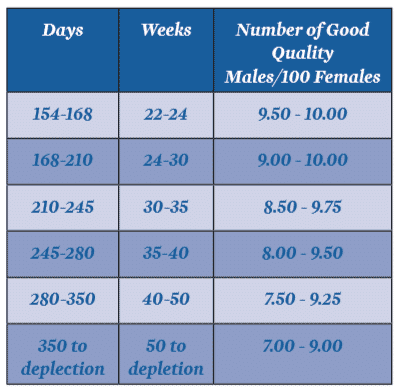
Maintaining fertility throughout the production period requires a balanced female to active male ratio. Higher than recommended mating ratios can lead to issues with over-mating, as well as reduced flock fertility, egg numbers and animal welfare. Therefore, a planned reduction programme should be used to avoid high mating ratios and maintain optimal fertility during lay.
To avoid high mating ratios:
Review mating ratios weekly
Establish a well-planned male-reduction programme
Use recommended mating ratios as a guide only, and adjust them to local circumstances and flock condition.
Assess mating ratios weekly, check for signs of over-mating from 25 weeks of age.
Remove males if:
Alertness and activity has declined
Body weight is not on target
Legs and feet are not straight or show signs of bent toes or footpad abrasions
Body condition is not as expected
Comb and wattles are not an intense red color and the beak is not uniform
Males exhibit no feather loss around the shoulders or thighs
Vent is pale in color with no signs of feather wear
Females show visible damage or excessive feather loss.