Best practice on the farm: darkling beetle control
Introduction
Darkling beetles can be found in poultry houses worldwide because the house environment is ideal for their growth and survival. They are vectors for common poultry viruses such as Infectious Bursal Disease Virus (IBDV), Marek’s Disease Virus (MDV) and Reovirus; bacteria such as E.coli and Salmonella spp. and protozoa such as Histomonas meleagridis. Diseases can be spread by darkling beetles by direct contact, recontamination of the disinfected environment by the reuse of litter or by being ingested by the bird directly. They can also cause significant damage to poultry housing.
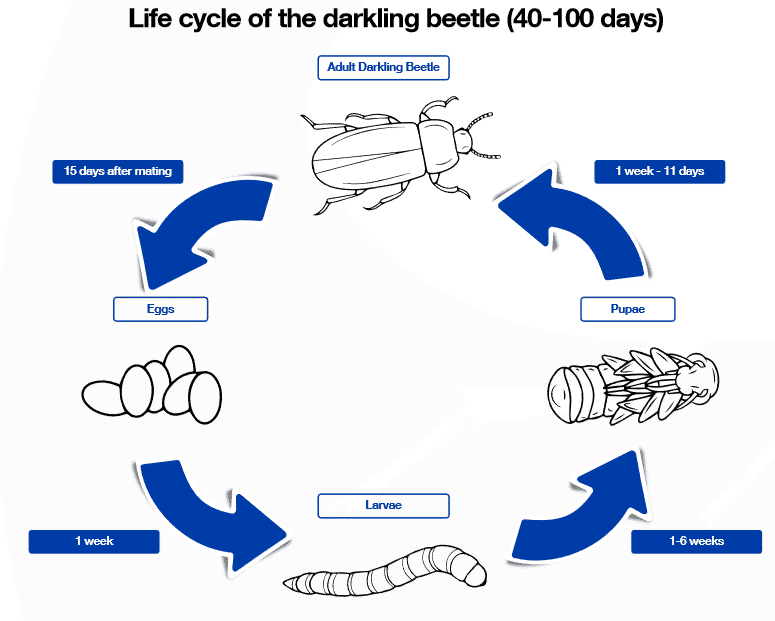
The life cycle of darkling beetles is 40 - 100 days depending on environmental factors. After the initial 15 days after mating, females can lay 200 - 400 eggs every 1 - 5 days, with eggs taking less than 1 week to hatch as larva. Therefore, the population can multiply considerably if no effective control is available.
Best practice for darkling beetle control
1) Controlling or eliminating the darkling beetle population on a poultry farm can be difficult.
They thrive best in house conditions of 21-35oC (70-95oF) with a litter moisture of at least 10 percent.
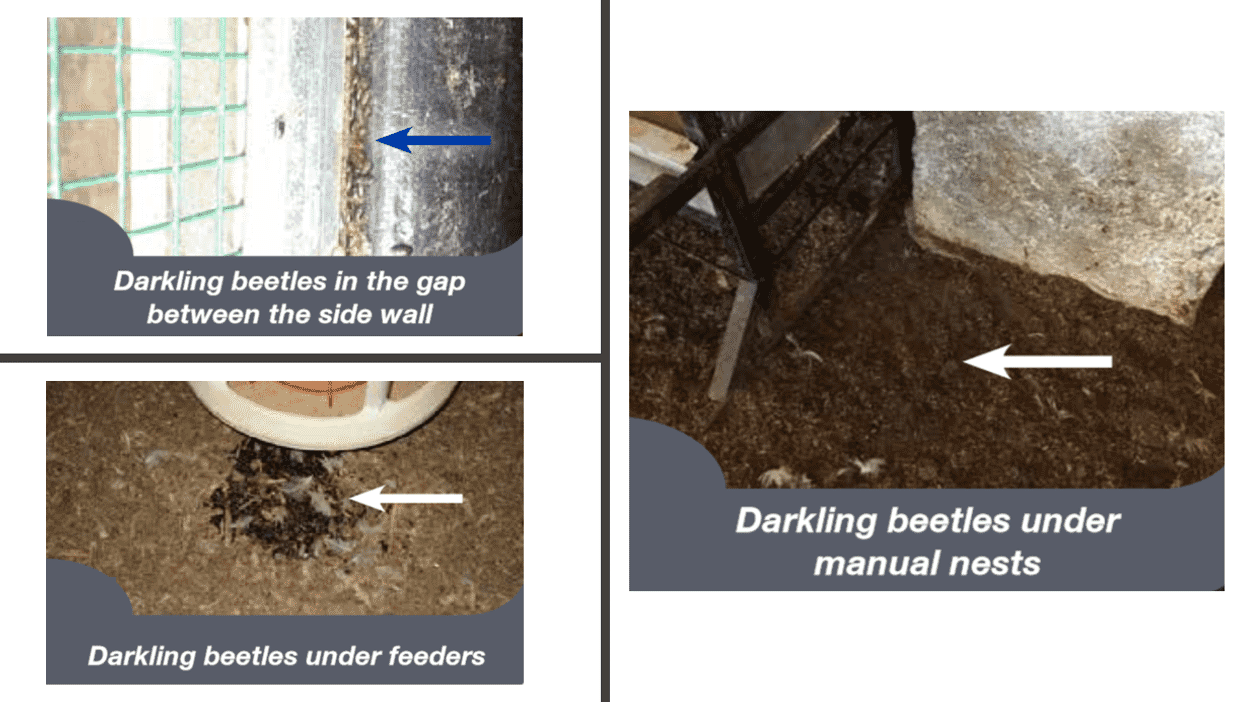
2) Identifying common locations for beetle populations within the house is fundamental to their control.
Darkling beetles can be found:
In the litter.
Beside pillars.
In curtains.
In nests.
On slats, feeders, drinkers and other equipment.
In gaps, holes or cracks of the wall.
In storage rooms and egg collection areas.
3) Chemical and physical methods work best for controlling darkling beetles.
Insecticide application and a detailed cleaning and disinfection program are essential to control.
Presence of darkling beetles on the farm
Assessment of darkling beetle populations inside the house is subjective; however, the severity of the infestation can be estimated.
Monitor for darkling beetles before chicks are placed, then once per month until depletion.
Observation points should be those described in the previous section, but no less than 20 points within the house should be checked.
Count beetles in a 0.10 m2 (1 ft2) space (under one feed pan, for example).
Low population: 1-10 beetles.
Medium population: 11-50 beetles.
High population: >51 beetles.
Control measures are successful if the population is 1-10 beetles per 0.10 m2 (1 ft2).
Chemical control of darkling beetles
1) Chemical control by application of insecticides will target both adult beetles and larvae.
Ensuring adequate coverage of insecticide is important, especially in places which are hard to reach or behind electrical panels. Insecticides should:
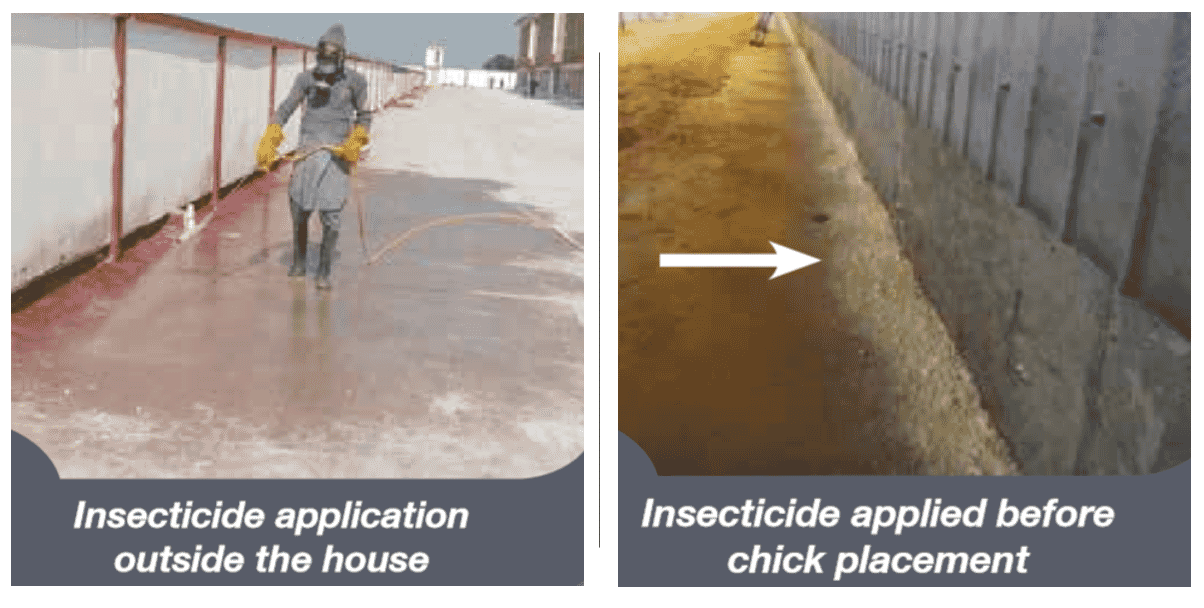
Be applied immediately after depopulation.
Insecticide should be applied both inside and outside of the poultry house. Once the house temperature reduces, darkling beetles will begin to migrate to a warmer location. The outside of the house must be sprayed to prevent migration to other houses on the farm.
Be used before chick placement.
Apply an approved insecticide and monitor the house area until no beetles are observed.
Be applied during the production period.
Insecticide should be applied every month.
Ensure the insecticide is approved for application with live birds in the house.
2) Follow manufacturer’s guidelines for safety and proper mixing of insecticides and rotate on a recommended cycle.
Ensure the water used for mixing the insecticide is of a neutral pH, and always follow the insecticide instructions to acidify the water before use. Rinse the spray equipment before use to avoid contamination.
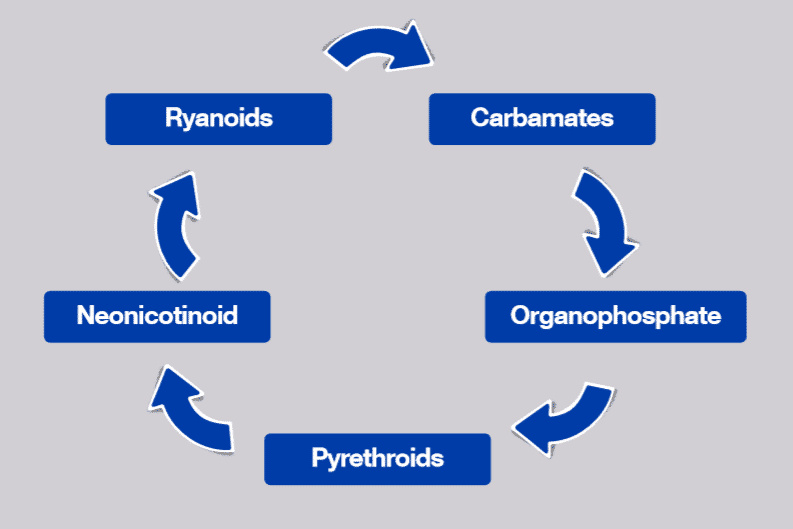
Rotate insecticides at least every 2-3 flocks for best results. This will reduce the chance of darkling beetles developing chemical resistance.
A common insecticide rotation plan should include different chemical groups.
Organic acids such as citric acid will prolong the effect of Pyrethroids and Organophosphates and should be added to the insecticide tank when these classes of insecticide are used.
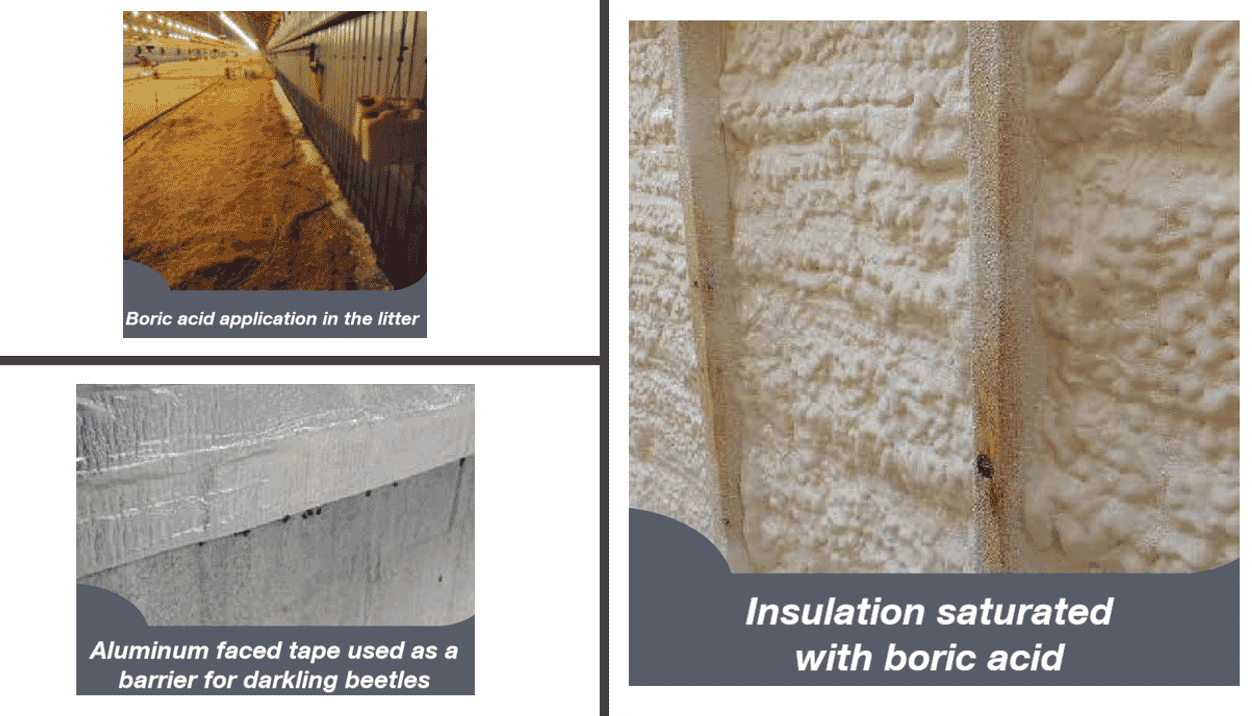
Boric acid application in the litter is commonly used in the industry and proven successful as well as cost effective. Caulking, sticky tape and insulation saturated with boric acid is also available to prevent nesting of darkling beetles.
Aluminum faced tape with tar backing for sealing the curtain gaps or holes is effective for preventing beetles from entering the house.
3) There are many factors that influence the success of chemical control.
Quality of the chemical used- products with a lower concentration or poor stability may not control the beetle population effectively.
Use of the same chemical group over a long period of time - this can cause resistance.
Litter condition - alkaline litter conditions will reduce insecticide effectiveness.
Degree of infestation- severe infestations may need several treatments.
Insecticide application before chick placement – litter should be treated with insecticide as a control measure.
Physical control of darkling beetles
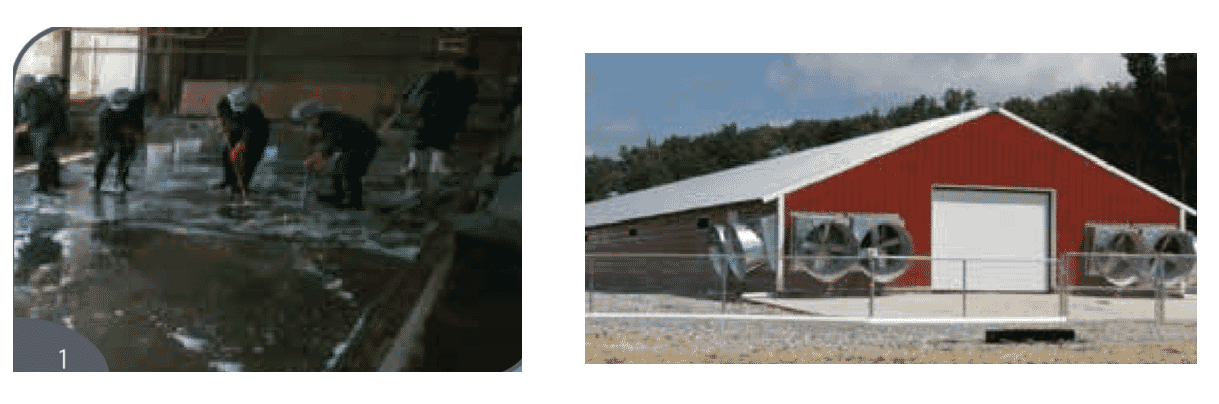
1) Implementing a good house cleaning and disinfection program significantly controls darkling beetle populations.
Live darkling beetles should be eradicated when preparing the house for cleaning and disinfection, before washing and sanitizing the house.
When removing house equipment in preparation for cleaning, check both removable and fixed house equipment, under feeders and drinkers, along walls and curtains, on slats and in the nest boxes for signs of darkling beetles.
Following detailed cleaning and disinfection procedures will ensure that darkling beetle residue and any bacterial contamination they leave behind will be removed.
2) House structure plays an important role in darkling beetle control.
Closed poultry houses with good water drainage and a smooth cement floor will reduce darkling beetle populations.