
Welcome to Modern Agriculture!

Dairy Housing Systems
Dairy Housing is required to protect the animals from inclement weather conditions, provide a clean, comfortable stay for good animal health and efficient management. Inadequate and improper housing planning results in additional labor charges and increased costs in the maintenance of sheds. Adequate housing to dairy animals is aimed at increased milk production, better labor utilization, better animal health, disease control, better care, and management of animals resulting in the production of high-quality milk resulting in a remunerative price and better profit of the dairy farm. In this article we also discuss the below topics about Dairy housing systems;
Proper dairy housing based on scientific principles is an important aspect of dairy animal management for obtaining maximum productivity of the animals. A clean and comfortable shelter increases the comfort level of dairy animals and results in their good health. The necessary criteria for housing dairy animals are animal health and comfort, hygiene, protection from predators, diseases, efficient and economical use of labor, and provision of a suitable environment for hygienic milk production. In this dairy housing system, shelter is provided along one side of an open paddock under which animals can retire when it is very hot or cold or during rains.
Proper dairy housing based on scientific principles is an important aspect of dairy animal management for obtaining maximum productivity of the animals. A comfortable and clean shelter increases the comfort level of the animals and results in their good health.
Efficient management of dairy animals will be incomplete without a well-planned and adequate housing of dairy animals. Improper planning in the arrangement of animal housing can result in additional labor charges and that curtail the profit of the owner. During the erection of a house for dairy cattle, care must be taken to provide comfortable accommodation for individual cattle. No less important is the proper sanitation, durability, and arrangements for clean milk production under convenient and economic conditions, etc.
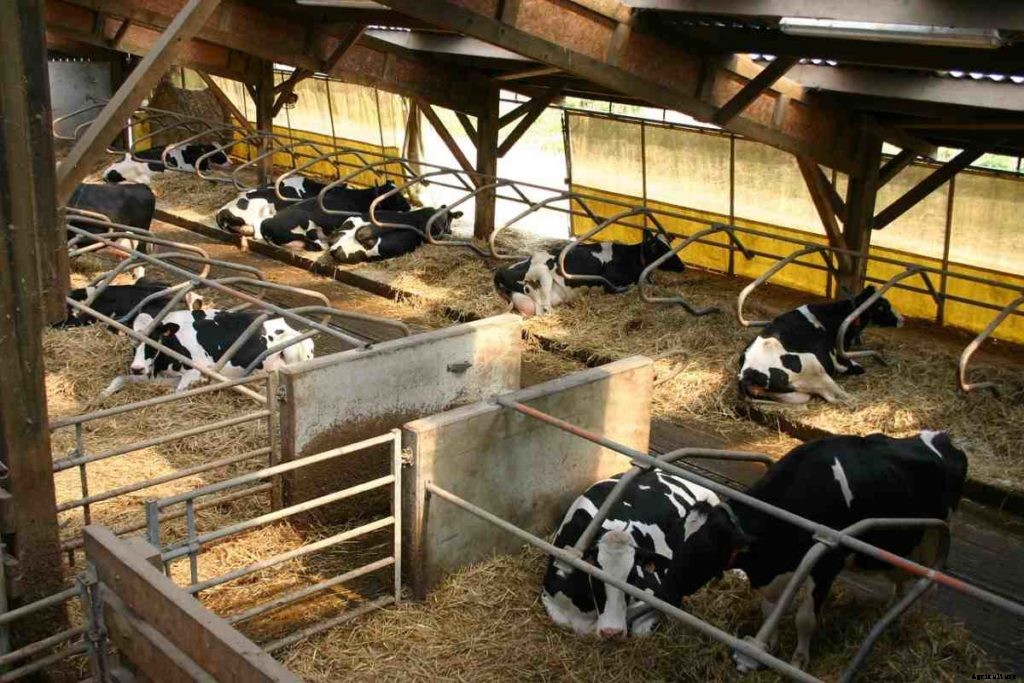
Six important aspects of dairy housing are as follows;
A proper dairy housing climate is one of the pre-conditions for maintaining an excellent environment within the various housing systems. Then, it has a great effect on the well-being and health status of animals, and overall performance. Conditions must be created to enhance the animal’s inherent ability to control its temperature. So, ventilation is essential for the supply of fresh air, with the emphasis on maintaining a suitable air quality under any weather condition over a long period. Also, adequate ventilation is required for the removal of harmful gases, avoidance of moisture accumulation, and the removal of heat produced by dairy animals.
A more specialized dairy housing system combines different management-related aspects at a dairy farm such as milking, feeding, health care, and manure management. The housing of dairy animals needs quite a high investment, but will also open possibilities to get high returns. Key issues for high returns are; reduction of losses, efficient feeding, and efficient utilization of manure, etc. Also, there are advantages of individual cow management like heat detection, health control, and treatments, etc.
The main guidelines for proper dairy housing design are:
Proper dairy housing is conducive to good health, comfort, and protection from inclement weather and feed for optimal production. For the construction of dairy farm buildings selection of the site is most important.
Factors to be considered when choosing land for dairy housing are fertile soils, no evidence of flooding during the wet season, convenience for transportation, proximity to milk collection centers, and access to supplies for farming and, year-round supplies of sufficient clean water. Distance from factories and to urban areas should also be key influences on location.
All dairy animals require shelter for protection and comfort. Then, they can perform better under favorable environmental conditions. Animal housing needs initial capital to the extent the dairy farmers can afford it. The animals are to be protected from high and low-temperature levels, strong sunlight, heavy rainfall, high humidity, snowfall, and strong winds. The comfortable temperature level for dairy breeds of cattle, buffaloes, and goats is 15C to 27C. Climatic stress occurs when the temperature level goes 50C below or above this range.
High humidity combined with high-temperature levels causes more stress to animals in the tropics. Strong winds further aggravate the conditions in the tropics and temperate climate conditions. Several methods are available to provide relief from hot weather conditions for lactating dairy cows. In tropical and sub-tropical climates, the well-ventilated shed is a necessity at points of high heat stress like feed barns, loafing areas, and holding areas. It is very important to provide a sufficient flow of air through the building in which the animals are kept to ensure optimum thermal conditions for dairy animals.
Availability of land
There should be vast areas to construct dairy housing and give way to the future expansion of the dairy farm.
Drainage system
Proper drainage of rain and subsoil water must be provided to keep a healthy environment and to protect the building from dampness.
Floor
Floors must provide a comfortable footing, be firm and durable, and should direct excess liquids towards competent drainage, to provide a dry walking surface
Checking the floor is mainly important for two major problems on dairy farms lameness and estrus detection. The quality of the floor of the barn is of major influence on the incidence of lameness, which is a problem on most dairy farms. An incidence of about 25% (cow cases per year) is considered “normal” but costs too much money.
The floor is smooth, clean, and dry
A clean and smooth floor is a prerequisite for a proper grip that allows cows to walk comfortably, without restrictions. If the floor is not smooth, injuries due to local pressure on the sole of the claw can occur, resulting in injury and lameness. Also, if there is a layer of manure present, the claws will remain wet and soft. The effect of a slight slope compared with a flat surface and they concluded that a slope maintains a drier environment for the feet, an important property that appeared to prevent the formation of the hind-claw lesion, even as animals stood on the surface for up to 4.5 hours per day. Floors in walking areas must be kept as dry and clean as possible.
Availability of water
Plenty of water is required for farm operations like washing, fodder cultivation, processing of milk and byproducts, and drinking.
Electricity
Disease control
In case if you miss this: Livestock Farming Tips, Ideas, Techeniques and Secrets.
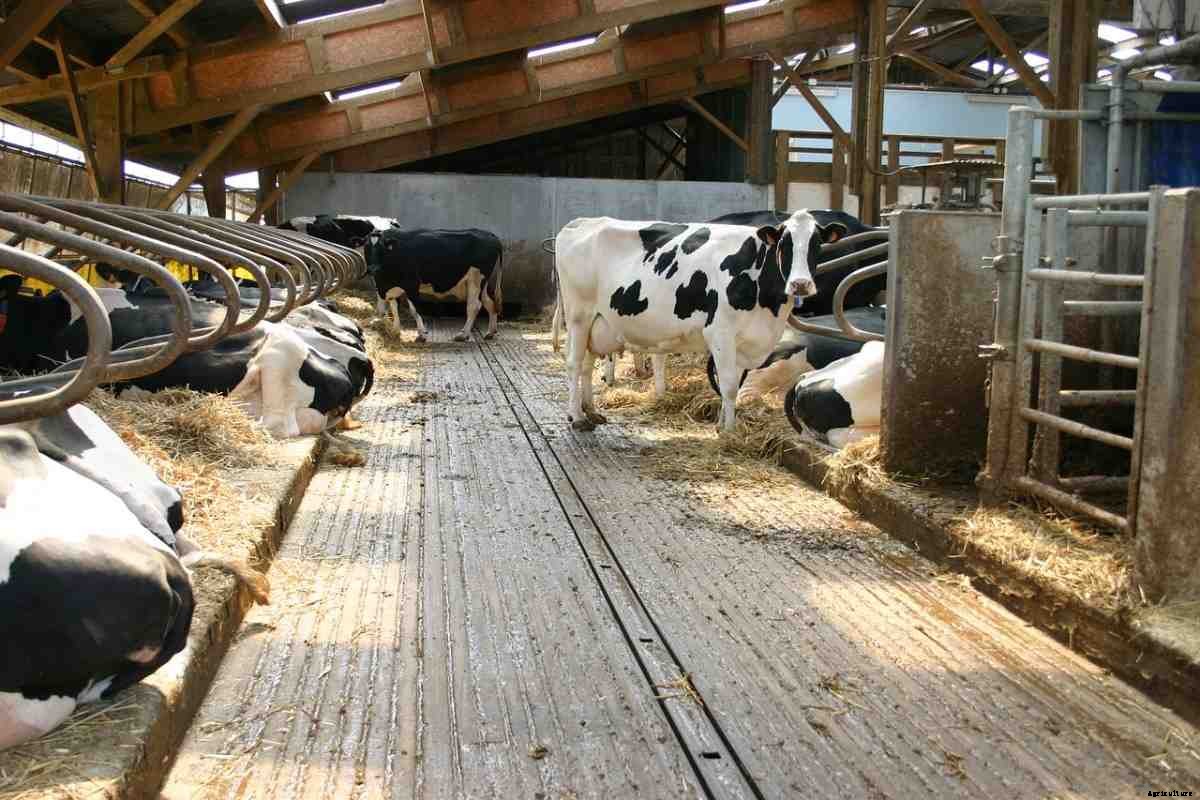
What is important in designing housing for dairy animals?
Some important aspects taken into account in designing housing for dairy animals are;
You should think about;
This involves protection from rain and extremes of heat and cold and strong wind and adequate ventilation.
The following points must be considered before planning and designing animal houses;
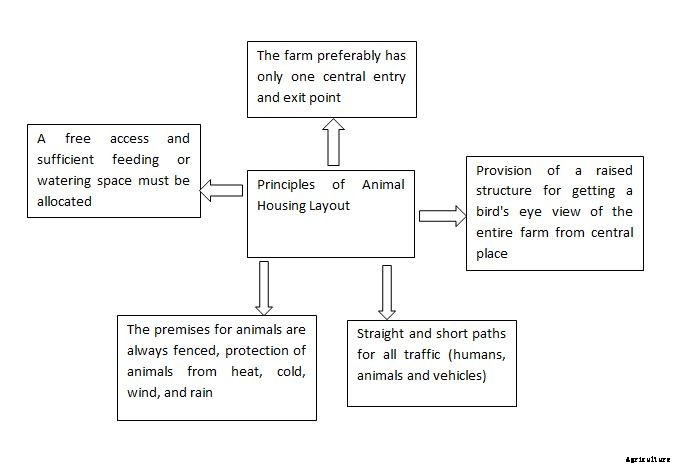
The housing layout of dairy animals is the most important document in the design process. This is where all the free-stall barn components come together to develop a plan that is functional, flexible, and cost-effective.
Some Important factors of Economic Importance in Planning a Good Layout of Dairy Farm Housing;
The dairy house facilitates various farm activities such as milking, feeding, and cleaning efficiently. Also, the animal house provides comfort to the animals for optimal milk production and protection against unfavorable weather conditions, for example, heat, rain, and wind.
Traditional animal shelters have grown out of the needs, resources, and ingenuity of dairy farmers. Building design and construction materials mainly affect the thermal comfort inside dairy shelters. Efficiently designed sheds can help less the thermal stress thereby increasing feed intake, milk production, and reproductive efficiency. It is easy to understand that unless cattle are provided with good housing facilities, the animals will move too far in or out of the standing space, defecating all around and even causing wasting of feed by stepping into the mangers. The dairy animals will be exposed to extreme weather conditions all leading to bad health and lower production.
Under different climatic, geographical, and economic conditions prevailing in India, designing an ideal set of building for dairy animals throughout the country is impossible. Usually, there are two systems of housing for dairy animals;
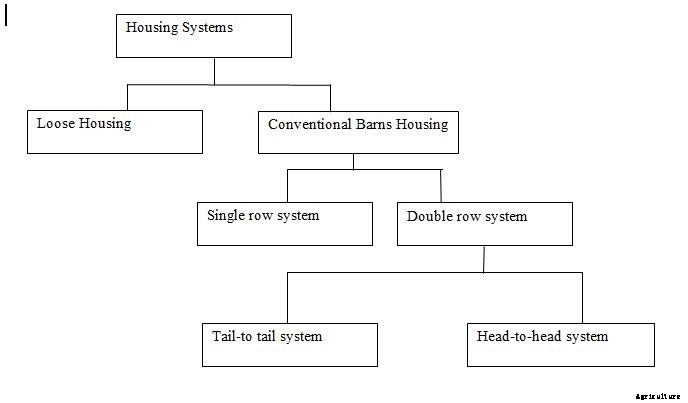
Loose housing for dairy animals is a system of housing in which animals are kept loose in an open paddock throughout the day and night except at the time of milking and treatment. Common feed manger and water tank are provided and concentrates are fed at the milking time which is done in a separate milking barn in which cows are secured at milking time and are milked. Then, the open paddock is enclosed using half walls or plain wire fences of convenient height. Some features of loose dairy housing system are as follows;
This housing system comprises of keeping animals loose in an open paddock or pasture throughout the day and night except at milking time. A common watering tank and common fodder manger is provided within the shed and concentrates are fed at the time of milking in a separate milking barn.
Advantages of Loose Housing Systems;
Disadvantages of Loose Housing Systems;
In this housing system, the animals are confined together on a platform and secured at the neck by the neck chain. The dairy animals are fed as wells as milk in the same barn. These barns are covered with roofs and the sidewalls are closed with windows or ventilators located at suitable places to get more ventilation and lighting. Also, it is applicable for temperate and heavy rainfall regions. This type of housing can be utilized for the tropical region with slight modification.
Advantages of Conventional Barns Housing System
Disadvantages of Conventional Barns Housing System
Though, the conventional dairy barns are comparatively costly and are now becoming less popular day by day. By this system dairy animals are more protected from adverse climatic conditions.
The following barns are generally required for proper housing of different classes
Single row system – In a single row system, 12 to 16 numbers of animals can be kept.
Double row system
The double row system is two types. They are;
In tail to the tail system, under the average conditions, 125 to 150 man-hours of labor are required per cow per year. Time spent at the back of the cows is about 4 times more than the time spent in front of them. In tail to the tail system, the central passage with a gutter on both sides of the central passage is located in the center of the shed.
Advantages of the tail to tail system
Head to Head System
The main advantage of head to the head system is that the distribution of feed and fodder to the animals can be done simultaneously on both sides of feed managers. In head to the head system, the animals can be displayed to the visitors in a better manner. The animals can enter the sheds easily.
Advantages of head to head system
Disadvantages of head to head system
You may also check this: Tilapia Fish Farming In Tanks.
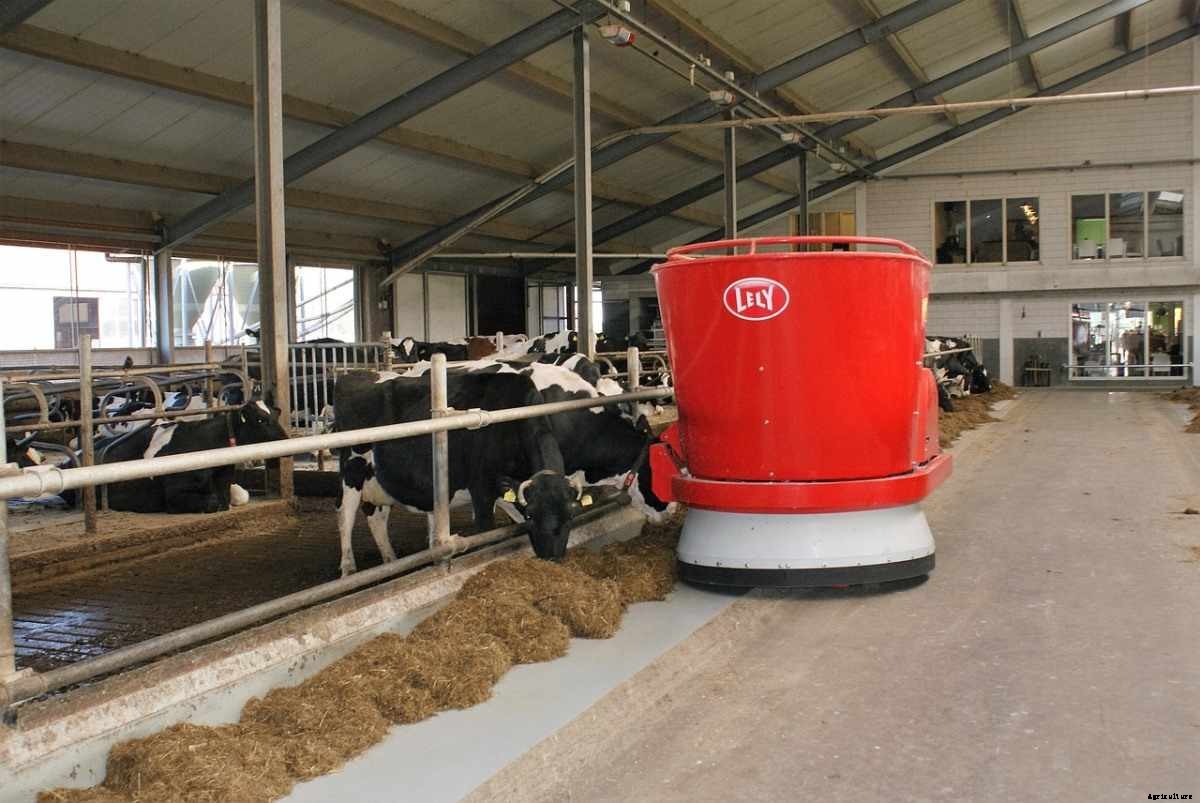
The Main Objectives of Dairy Housing are;
Good dairy housing systems have many simple design features to improve cow and farmer comfort. In hot climates, the below features are very important;
House must be designed to have some points in mind;
Drinking-Water Provision for dairy housing
Housing Plan Preparation for Dairy Animals
Plan preparation is necessary for the construction of animal houses.
Site plan
Floor plan
Elevation
The view of the whole farm building will be shown in the elevation.
Cross-section
Orientation
Roof
Dairy housing sanitation is significantly important in terms of dairy cattle health management. The amount of dung and urine produced by animals is variable due to differences in feed and water intake, which in turn is strongly related to body weight and production intensity. A large amount of dung and urine are excreted by dairy cattle due to the types of feed they fed on and their unique digestive system. If it is not timely and properly cleaned the dairy house, manure becomes a source of disease-causing agents to both humans and livestock and a threat to clean milk production. On the other hand, a clean barn is critical to the cattle health, for clean milk production and profitability of the farm. So, the objective of this section is to provide the trainee with a basic skill of hygienic measures of dairy barn and disposal of wastes, and the benefit, management, and utilization of manure.


