
Welcome to Modern Agriculture!

Animal feed is the food given to animals which are domestic often refers to fodder in the course of care and management of dairy farm animals by humans for profit. Supply of quality feed ensures the health of dairy animals.
Here we discussed,
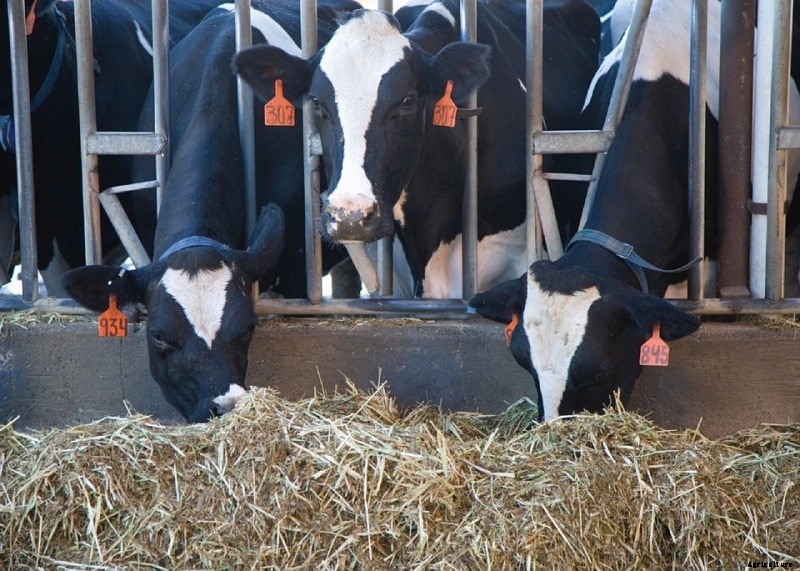
Feeding is a very important aspect of dairying as it accounts for around 70% of the total cost of milk production. Different types of dietary feed ingredients for dairy cows and buffaloes contain concentrates such as compound cattle feed, oil cakes, grains and their byproducts like brans and chunnies; cultivated green fodders and grasses; crop residues like straws and stovers.
Following sections are explained about feed management in dairy animals;
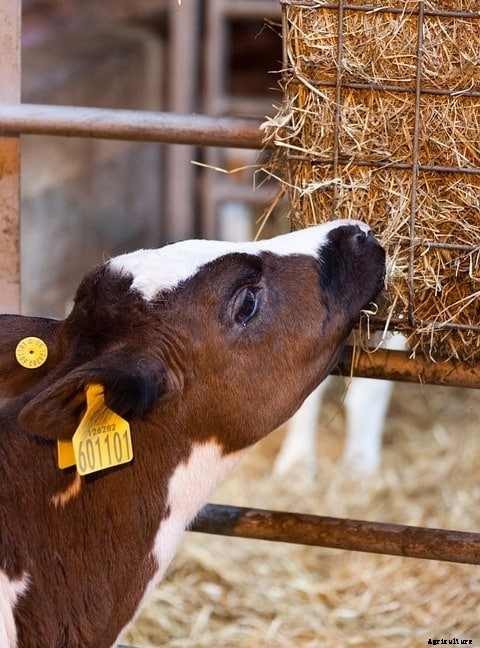
You may also check Taiwan Guava Cultivation Profits.
Dairy farmers and herd nutritionists aim for 50 to 60% of the diet as forage. Forage is simply plants that are consumed mostly by grazing livestock, like grass or hay.
Groups of forages are two types. They are wet and dry. The main example of wet forage is silage, (fermented forage). Commonly, silage on a dairy farm could consist of barley, corn or alfalfa. Dry forages are consisting of pasture (fresh forage) or high-quality alfalfa hay, alfalfa-grass mix hay, grass hay or straw. Some dairy farmers will feed a mix of both silage and hay, while others might feed silage or only feed hay, depending on the farm.
The other half of the diet is known as concentrate. The concentrate is comprised of carbohydrates, proteins, fats, minerals, and vitamins.
Energy
Ruminants need a daily supply of all nutrients required for maintenance and production that are milk, meat, growth, and pregnancy. Quantitatively any type of nutrient can limit performance levels, but the most probable to be in short supply are energy and protein, this is especially true for high and average yielding cows. Both energy and protein should be considered. For energy, the feeding organism uses the metabolizable energy (ME) in the feed as a basis to formulate rations. The metabolizable energy is the energy remaining in the digested foodstuffs after the loss in feces, urine, gases and body heat. The essential unit used to measure the energy content is the Megajoule (N4J).
Carbohydrates
Primary sources are barley, corn, oats, wheat, molasses, beet pulp, and soy hulls. Most dairy farmers produce their own barley, corn, oats, and wheat and will often process these grains to be fed to the cows. Molasses, beet pulp, barley, and soy hulls are purchased from a feed mill. Not all of these carbohydrate sources are used as other sources are required to complement the forage to meet the nutritional requirements of the cows.
Protein
Primary sources are canola meal, distillers grains, soybean meal, and corn gluten meal.
Fat
Primary sources are vegetable oil, tallow, and protected fatty acids.
Minerals and Vitamins
Primary sources are Calcium, Phosphorus, Magnesium, Sodium, Chloride, Potassium, Sulfur, Iron, Zinc, Manganese, Copper, Cobalt, Iodine, Selenium, Vitamin A, Vitamin D, E, and some B-vitamins too. They are necessary for the health and productivity of the cows and farmers and nutritionists will make sure all of these nutrients are balanced. Prebiotics and probiotics are often used to help with digestion and as another way to ensure cows are healthy.
The carbohydrates, protein, fat, minerals, vitamins and feed additives are mixed together at a feed mill and brought to the dairy farm to be fed to the dairy cows.
Many of the ingredients are standard, but some dairy farmers that are closer to large centers can get the advantage of by-products from commercial food processors, such as potato waste, fruit and vegetable waste, etc. Dairy cows are recyclers and can take unwanted by-products that have great nutritional value and use them in diets though reducing the number of grain cows eat. Dairy animal care is taken on selecting ingredients that are healthy for dairy cows to remain productive and sustainable.
You may be interested in Dragon Fruit Farming Profit.
Farmers feed their animals based on their traditional knowledge and information passed through generations with crop residues, locally obtainable one or two feed ingredients like brans, oil-cakes, chunnies, grains, etc. and seasonally obtainable green fodders. They rarely offer mineral mixture to their animals or in a very less quantity of 25 – 50g per day. In most of the cases, the quantity of feed or fodder offered to animals is either more or less than the requirements. This leads to an imbalance of protein, vitamins, energy, and minerals in their ration. Animals on such imbalanced ration generate milk sub-optimally, cost of milk production is higher and it affects the health and fertility of animals. Therefore, it is essential to educate farmers on the feeding of balanced ration.
Farmers feeding balanced ration in different areas of the country have experienced an increase in their net daily income in the range of Rs 15 to 25 per animal.
Benefits of Ration Balancing Programme
Bypass protein is also called as rumen escape or undegradable protein. It is the portion of the protein from a feedstuff that are corn, soybean meal, blood meal, etc. that escapes from being broken down or digested in the rumen by microbes (bacteria, protozoa, etc.).
Bypass protein feed is a new generation dairy feed in India and is manufactured by a special chemical treatment, developed by the National Dairy Development Board (NDDB).
Importance of bypass protein feed
Minerals are essential for good metabolic functions. The mineral mixture contains all the necessary minerals in the required quantities. Feeding area specific mineral mixture must be preferred.
Benefits of feeding mineral mixture
You may also check the Growing Tomatoes for Profit.
Urea molasses mineral block is prepared by mixing urea, molasses, mineral mixture and other ingredients in an appropriate proportion. It is a readily obtainable source of energy, protein, and minerals for the dairy animal. Supplementing an animal with UMMB would give the adequate quantity of these nutrients and slow ingestion of urea leads to efficient microbial protein production and improved digestibility. NDDB has developed ‘cold process’ of manufacturing UMMB licks (three kg blocks) and the technology is being present to dairy cooperatives, private organizations, and other agencies. UMMB is useful for milk producers in green fodder deficit areas.
Water Intake
Daily intake of water will vary according to an animal’s age, size, level of activity, and stage of productivity. Environmental temperature, humidity, water availability, and water quality can impact water intake. It should be recognized that a portion of the cow’s water comes from her ration. Less water quantity will be drunk from the water tank, as the ration gets wetter.
Water is required for;
Recommendations:
The animal must have free access to clean drinking water round the clock.
During summer, crossbred cows and buffaloes must be given bath twice daily and at least 100 liters of water per day to manage heat.
Here we explain pregnant dairy animals care and recommendations;
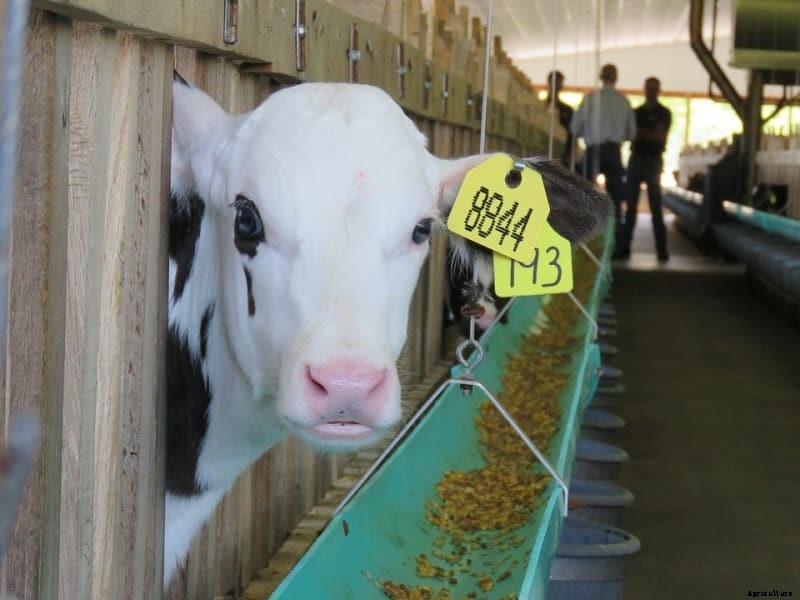
Recommendations:
You can also check Goat Pregnancy Signs, Symptoms.
Let us find out what is Total mixed rations and its benefits;
A TMR is a process of feeding cows that combines feeds formulated to a specific nutrient content into a single feed mix. The mix contains the following mentioned feeds.
Total mixed rations help dairy cows achieve maximum performance and are the most ordinary method for feeding high producing, indoor-housed dairy cows in the world.
Advantages of TMR:
Below we mentioned advantages of TMR;
That’s all folks about the feed of dairy animal and their nutritional management.
You may be interested in Growing Hydroponic Cucumber.


