
Welcome to Modern Agriculture!

Today, we discuss the topic of pig fattening guide.
The Pig fattening has an intensive diet to maximize its growth at the best cost, in respect of the environment. The feed is, normally formulated on the basis of the average requirements of the batch (depending on the average weight of the group, its genetic type and the distribution organism of the farm) and the costs of the cereals. The diet can then be badly adapted to the individual need and causes an imbalance of the flora, which can cause developmental disturbances and heterogeneity in the batch. What to feed pigs to fatten them up? Whatever you choose, 50% of feed should be yellow corn. The remainder of your pig’s feed must be a mix of barley, wheat, and sorghum. Feed your pig various grains and observe which it likes best. Use the pig’s favorite grain in abundance in order to increase pig weight.
Feeding pigs in the fattening phase depends mostly on two factors:
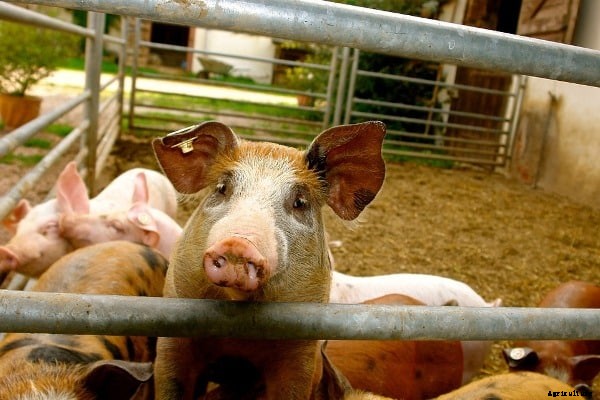
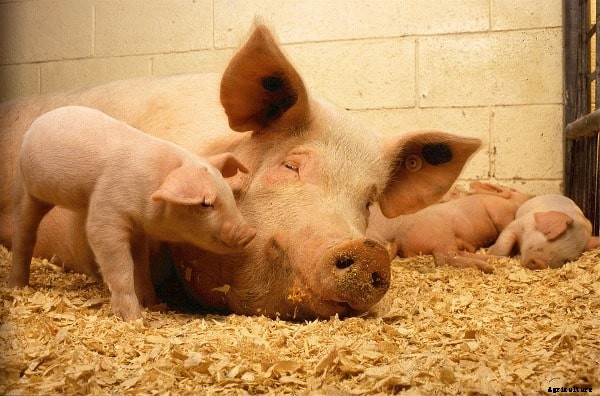
This is determined by the class of the pig. Permanent pig houses must be cool, durable and easy to clean. The floor must be made of concrete, while roofing could be made of corrugated iron sheets covered with bamboo leaves, grass or Adex. The free-range system could be used for the fattening, but the range will need to partition with fencing materials into paddocks of suitable sizes. The farrowing pen is designed to have the sow and the piglet. With less restriction and occurrence of guard rails (open pens) or in a confined space immediately before, and after farrowing. A pregnant or dry sow can be kept in pens designed to accommodate 3 to 5 animals (3 m x 2 m). An open pen with feeder running from the wall, so that individual sows have stalled and feeding area and a common passage should suffice.
The boar pen is of related design to accommodate a boar and a sow at mating. Fattening pens should be such as to minimize loss of feed resulting from spillage and contamination. A typical fattening pen must be big enough to accommodate 8–12 pigs of the same age and weight. Pens 8m x 4 m with feeder running from wall to wall.
Crude fiber: An important part and one that frequently receives little consideration in balancing rations for fattening pigs is crude fiber. This comprises the woody part of the feeding stuff and consists mainly of cellulose, which is much less digestible than other constituents of the feed. It is a very high content of crude fiber that makes a ration bulky.
Protein: The protein question is always very important in pig feeding as nearly all the common grains are deficient in protein. Some of the cereal by-products have enough protein, but not of the proper quality. It becomes essential, therefore, to supply this lack with some feed that contains a high percentage of protein and in which the protein is the proper kind. Such feeds are tankage, the oil meals, skim milk, and buttermilk and within certain limit alfalfa. The pig seems to need animal or legume protein, but when once the protein requirements of the animal are met it is of no advantage to adding more; in fact, it could be a disadvantage. The highest values often obtained from tankage or skim milk is not to be obtained when these feeds are given in larger quantities than enough to furnish the required protein. The optimum quantity of digestible animal or legume protein for a fattening pig is about one-fourth pound a day.
Minerals: Our definite information on the value of minerals for hogs or pigs is limited. It is known, however, that the hog must be given some minerals to supplement the grain rations since the grains are deficient, particularly in calcium, or lime.
Water: The pig needs excellent clean water accessible at all times. Water in the feed and water in the trough are the same to the pig supply there is not too much in the feed so that he has to consume too much water in order to obtain enough feed. It seems that the entire ration for a fattening pig must not contain more than 60 percent water and that if it does contain more than 60 percent the pigs will not consume enough feed and will create slower gains and take on less finish.
Vitamins: Pigs that are running outside and are on green pasture will obtain plenty of vitamins, but pigs that are shut inside are very apt to endure from lack of vitamins. The vitamins likely to be lacking in a pig’s ration are the fat-soluble vitamins A and D. Both these vitamins are abundant in cod-liver oil. Vitamin A is abundant in butterfat. These oils and fats are not economical sources of vitamins for pigs or hogs. Alfalfa meal is about the best supply of vitamins for pigs in dry lot. A small quantity daily of some green crop such as kale can be used to advantage by the pigs in dry lot.
Nutrition:
The feed is the biggest cost factor in pig production and can amount to 60 – 80 % of the total cost of production. Correctly fed pigs or hogs will ensure:
Read: Pig Farming Loan, Subsidy in India.
Read: Sheep Fattening Business Plan.
Soya-bean oil-cake meal and sunflower oil cake meal are plant protein feedstuffs generally included in pig feed mixtures. Soybean oil-cake is of a higher and improved quality protein and contains considerably less fiber than sunflower oil cake.
Full-fat soya-bean and sunflower seed meals have high oil content. The resulting oil in soft fat in pig carcasses.
Hence, the inclusion of these two feedstuffs, if fed in combination with maize, should be limited in rations for finishing pigs. Full-fat soya-beans should be heat treated before use to destroy a substance (trypsin inhibitor) which reduces the growth rate of pigs.
Fish meal is the most frequently used and best protein source to contain in feed mixtures.
Feed lime is a very good calcium source and is not very expensive, but it contains no phosphate. Monocalcium phosphate, dicalcium phosphate, and bone meal are generally included as sources of phosphate. These sources contain calcium, but in smaller quantities than feed lime.
Read: Winter Gardening Care, Techniques.


