
Welcome to Modern Agriculture!

Lots of folks are perfectly happy to incubate their chicken eggs to produce healthy chicks. But some homesteaders really want to work with their broody hens to hatch eggs. Author Amy Fewell shares her experiences and lots of suggestions for efficient hatching with a broody hen.
I can still remember thinking that all chickens must want to hatch their own eggs. It only seemed natural, right? My goodness, was I wrong. So there I sat, years ago, with a lot of chickens, and not a single one wanted to hatch eggs for me. It wasn’t until months later I realized that there were certain breeds that retained their natural instinct to hatch and raise their own chicks (brood), while others were just here to give us fresh eggs every day (without the brooding).
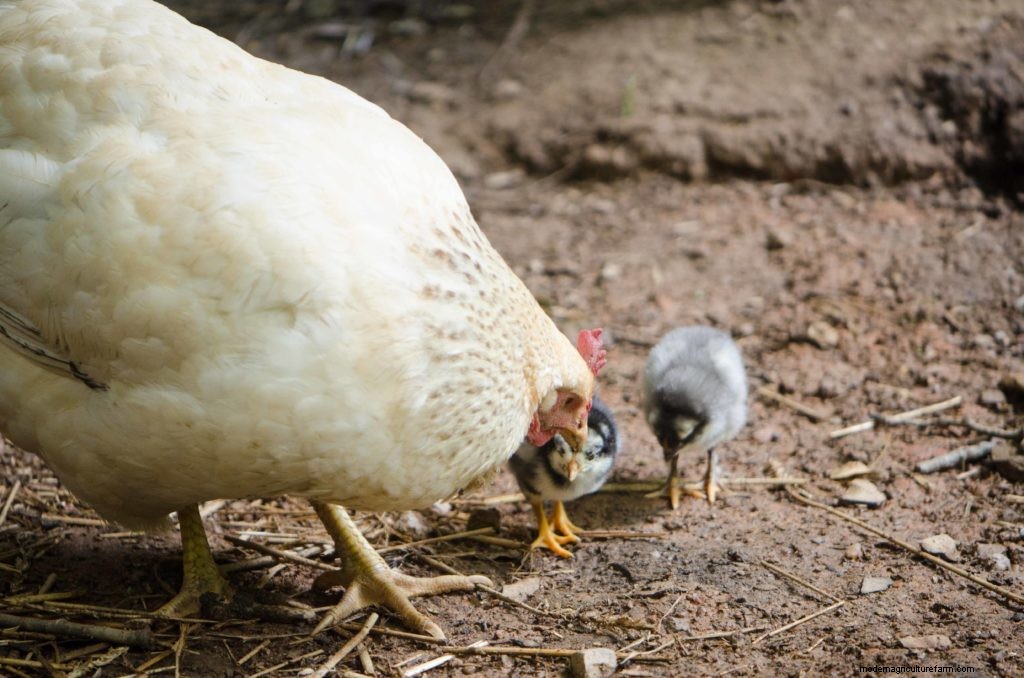
Young Chicks with their mother. Photo by author.
Our first broody hen experience was a disaster. The eggs cracked (lack of good bedding), the hen didn’t want to get back on her nest after 10 minutes; it was a stressful experience for everyone. Over the years, I’ve learned some tips and tricks through trial and error, and I now enjoy sharing them with others. Hatching eggs with a broody hen is one of the most beautiful experiences you’ll ever have.
Many homesteaders — and I’m one of them — want self-sufficient livestock that breed and brood on their own. This means that you never have to rely on modern amenities, such as an incubator or heat lamp (which means you don’t have to worry about it catching fire), to raise healthy chicks. Your hens will keep their eggs warm, safe, and dry.
However, efficiently hatching eggs with a broody hen isn’t always as simple as some may think. Some hens are excellent at hatching and raising their young, while others simply “think” they want to hatch eggs, but then leave the nest after a day or so. Broody hens have some typical behaviors (outlined below) that will let you know they’re ready to try. If you’re interested in letting your hens brood, you’ll need to prepare in advance to make sure your broody is safe, cozy, and not distracted.
Some of the most common broody breeds are Cochins, Orpingtons, Brahmas, Silkies, Sussexes, and Marans. Also, many landrace chickens, such as the Icelandic chicken, are excellent brooders. There are other common heritage breeds that will go broody (Cornish, Barred Rocks, Wyandottes, and Turkens, to name a few), but you may have more trouble keeping them on the nest. The bottom line is, if you want to hatch eggs without an incubator, don’t take your chances on regular breeds. Instead, get broody breeds!
It’s exciting to walk into the coop and notice that the same hen has been sitting on the nest for quite a while. You might instantly think, “she’s broody!” But that isn’t always the case. In fact, it’s often not the case. Sometimes hens just get tired and lay in the box to rest. Others abandon the nest after 24-hours. Let’s look at the true signs of a good broody.
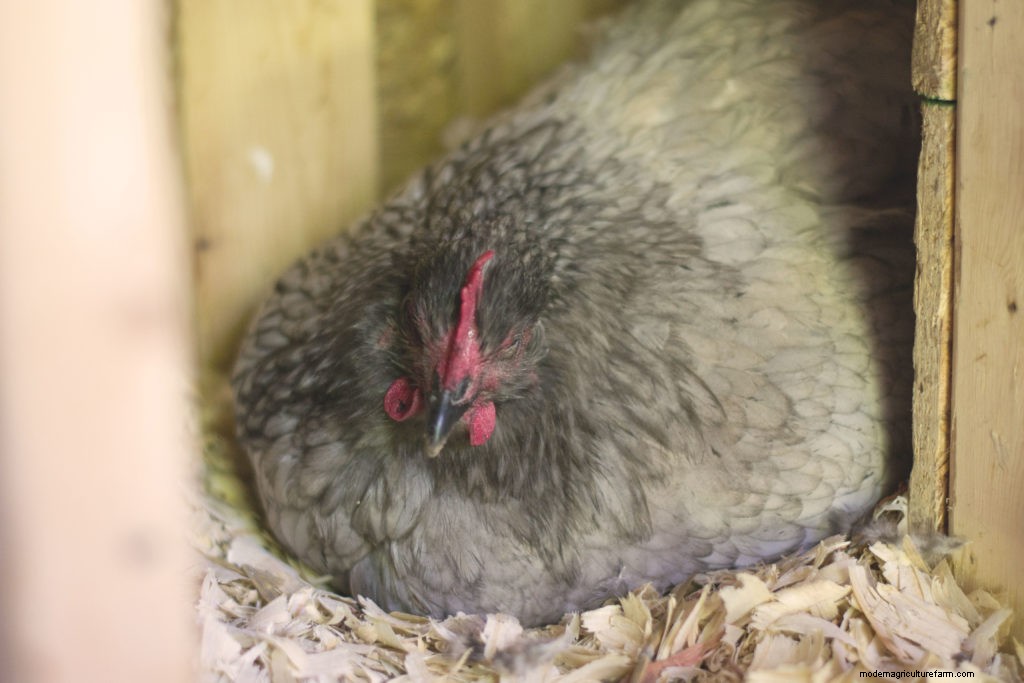
Broody hen on her nest. Photo by author
The most important point of all of these, however, is point number 1: A good brooder absolutely will not leave her nest under any circumstance. The only time she might leave is to eat and drink, but she’ll hop right back on the nest in about 10 minutes. However, a brooding hen can be bullied off her nest, which brings us to our next important point of efficiently hatching with a brooder: the set up.
While you could certainly leave your broody hen in with the rest of the flock, there are some things you’ll need to consider if you want each hatch to be successful. I have successfully allowed broody hens to hatch in my regular chicken coop right alongside my flock. The transition for the chicks has been easier, and I much prefer it. However, I still section off a portion of the coop in order to protect my broody and the chicks at all times.
If you’re hatching with a broody hen for the first time (for her or you), I suggest setting up a separate area either in your coop, or away from it. Once you become more experienced, you’ll come to know each broody hen well, you’ll learn her intuitions, and you can set her up in a space in your coop.
If you are going to use a separate brooding area, I suggest moving your expectant mother at night because she can’t see very well, and she’ll be easier to handle. A night move will also give her normal roosting time to settle into the new nest, rather than trying to go back to the old one.
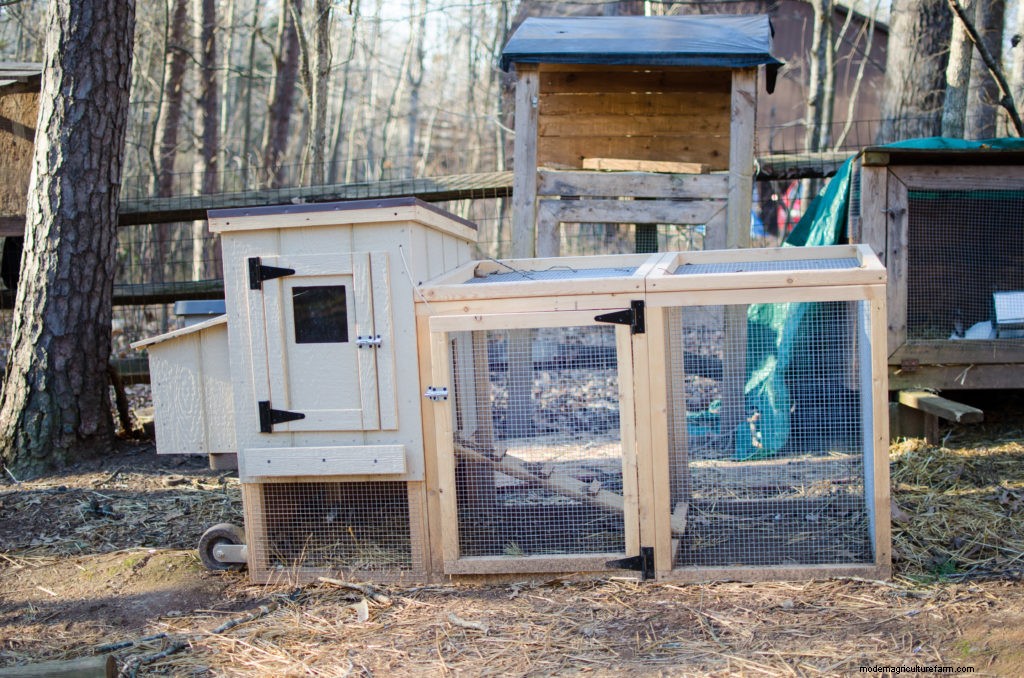
Small brooder coop. Photo by author.
Create a nest for her, place the eggs in the nest, and then set her on top. It’s best to leave her in a dark space, if at all possible, for at least 15 hours. You can do this by draping a blanket or tarp over the designated area, or by creating a space that has very little light in it unless a door or window is opened. Otherwise, move her as soon as the sun sets for best effect.
Things you can use as a separate broody area:
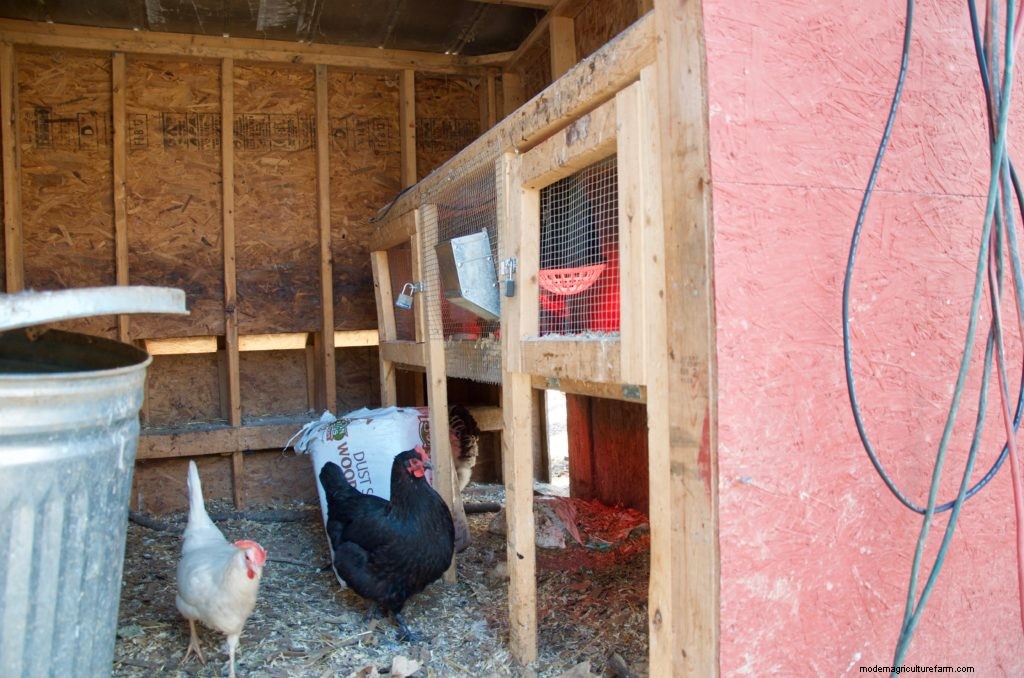
Brooder tucked into the chicken coop. Photo by author.
If you feel comfortable setting up your brooder in the coop, it’ll make your daily chores a bit easier. Once the chicks are born, there will also be less moving and fuss to introduce them to the flock. Because most hens start going broody in the nesting boxes, I’ve found a way to section off the nesting box so that the broody hen can stay in her original spot, but the other hens can’t bother her.
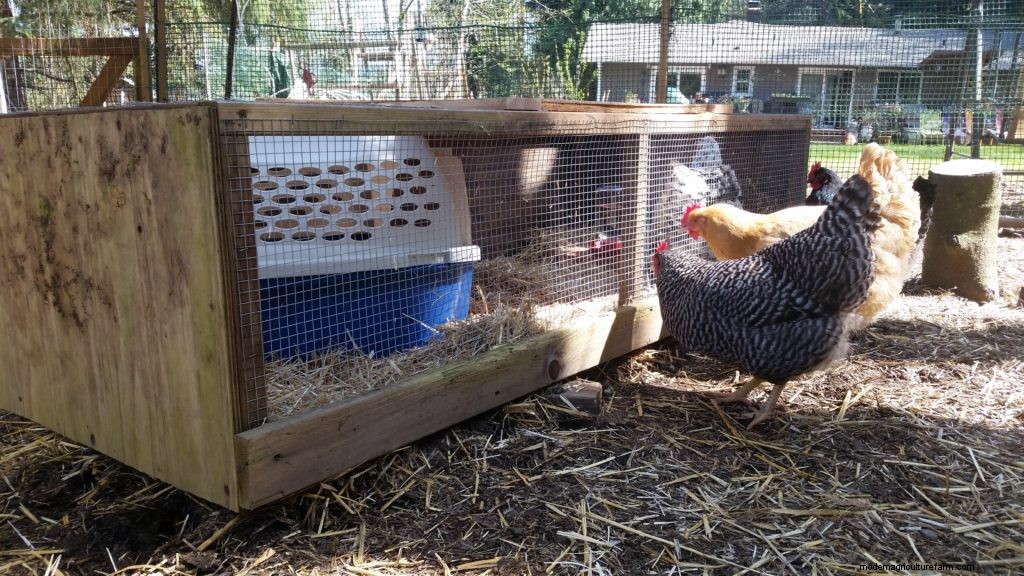
Brooder set-up. Photo by Ann Accetta-Scott.
Of all these set-ups for a broody hen, I have to admit that my favorite is a large rabbit hutch inside the run where she can brood and raise her babies while still seeing the rest of the flock. The hutch can be set directly on the floor of the coop or chicken run, or raised on supports. I’ve done both with good success.
Now that you’ve chosen your set up, it’s time to hatch those babies!
1. Bedding. Make sure she has plenty of fresh straw in her nesting area, deep enough to protect the eggs from hard surfaces.
2. Give Her Plenty of Food and Water. Now that your broody is set up in a nice nesting area, give her plenty of food and water. Place the food and water near her nesting spot to encourage her to get up once or twice a day. This will let her relieve herself away from the nesting area and grab a drink and bite to eat before hopping back on the nest. It also helps you clean up after her more easily and keeps the eggs clean.
3. Make Sure She Gets Back on the Nest. This step is important, especially if you’re brooding in the chicken coop. You’ll need to let her out of her brooding area after the first day or so to mingle with the flock and take a dust bath if necessary. She’ll do most of her mingling and bathing within 10 minutes. But make sure no one is messing with her nest while she’s gone, and that she hops back on after 10 minutes or so. If she doesn’t, encourage her by gently placing her on the nest or by using treats to lure her back in place.
4. Hatching. It takes about three weeks for eggs to hatch. Note the day that she starts going broody. About halfway through the incubation, you might consider candling the eggs to weed out any non-viable ones. Candling at night is usually easiest.
Once the chicks start to pip (crack the shell), keep an eye on them. Most will hatch on their own, but you’ll want to be on hand to deal with any hiccups from babies or mom.
5. Refusing to Hatch the Eggs. Sometimes, things happen. Maybe the eggs weren’t fertile, or maybe they cracked because there wasn’t enough nesting material. You can try again immediately by placing new eggs under the hen, but if that doesn’t work, it’s best to give her a few weeks in between brood times so she can build up the nutrients in her system.
Congratulations! You’ve efficiently hatched with a broody! But, now what? If your broody hen is inside of the coop, she’ll transition her chicks over into the flock very easily. Just keep an eye on them the first few days of life.
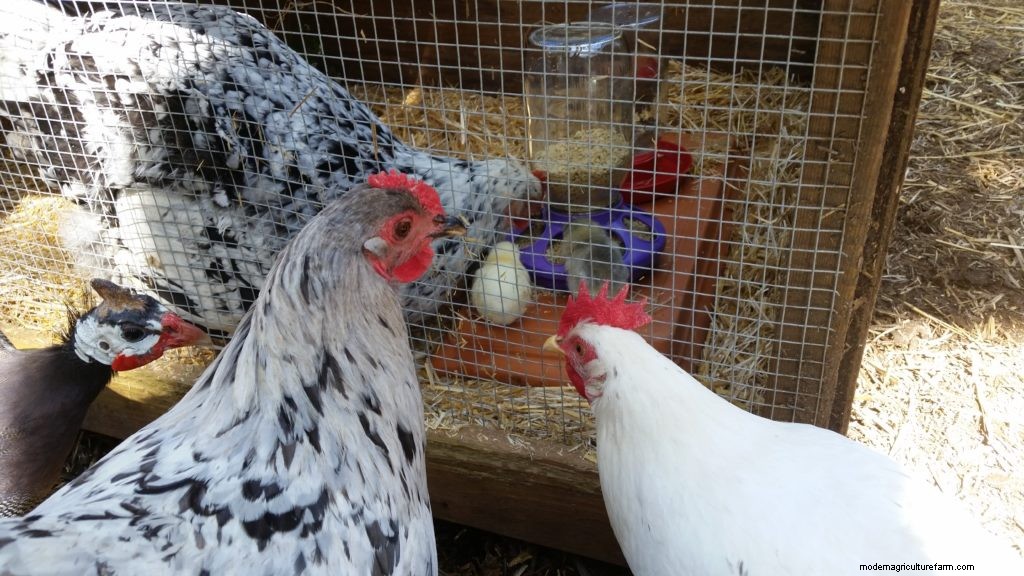
Transitioning your broody hen and her chicks back into the flock. Photo by Ann Accetta-Scott
If you hatched with the broody away from the flock, then you’ll need to transition them back in over the course of a week or two. You can do this by placing the brooder into the chicken run and allowing them to acclimate to each other. Or you can simply place the chicks and broody into a large dog crate and let them acclimate to one another for several hours a day in the coop or run.
Once they’re used to each other, broody mama will take care of her chicks in amazing ways. She’ll chase off bully chickens, protect her chicks from predators, and more!
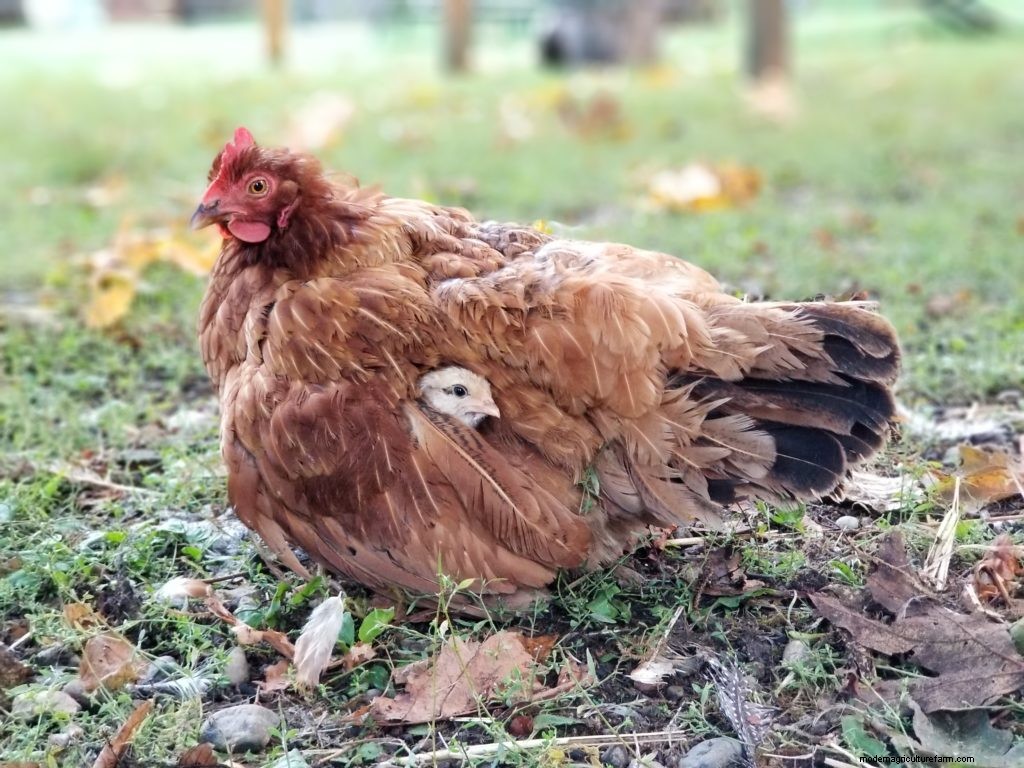
Mom and Baby. Photo by Ann Accetta-Scott.
Hatching chicks with a broody truly is an incredible experience. If you can set her up properly for success, she’ll be a good mom for years to come! It’s easy and natural for hens to raise their chicks, and it’s fun for humans to watch the babies grow up with their mama and learn her instincts and abilities. There’s so much joy in watching a mama hen call for her babies when she has found food, or watching the chicks cuddle up under Mom’s wing. It’s a beautiful experience, and one that I hope you can enjoy one day!
Amy Fewell is an author, homesteader, and the founder of the Homesteaders of America. She’s the author of The Homesteader’s Herbal Companion and The Homesteader’s Natural Chicken Keeping Handbook. She lives in the foothills of the Blue Ridge Mountains in Virginia, where, along with her family, she holistically and naturally raises livestock, gardens, and mini-homesteaders! You can follow her doings at The Fewell Homestead.


