
Welcome to Modern Agriculture!

Traci DeLore shows how to identify and treat bumblefoot in poultry.
Bumblefoot is a funny name for a condition that’s no fun to have in your flock. Simply put, bumblefoot is a bacterial infection in the foot of a chicken, duck, or other type of fowl.
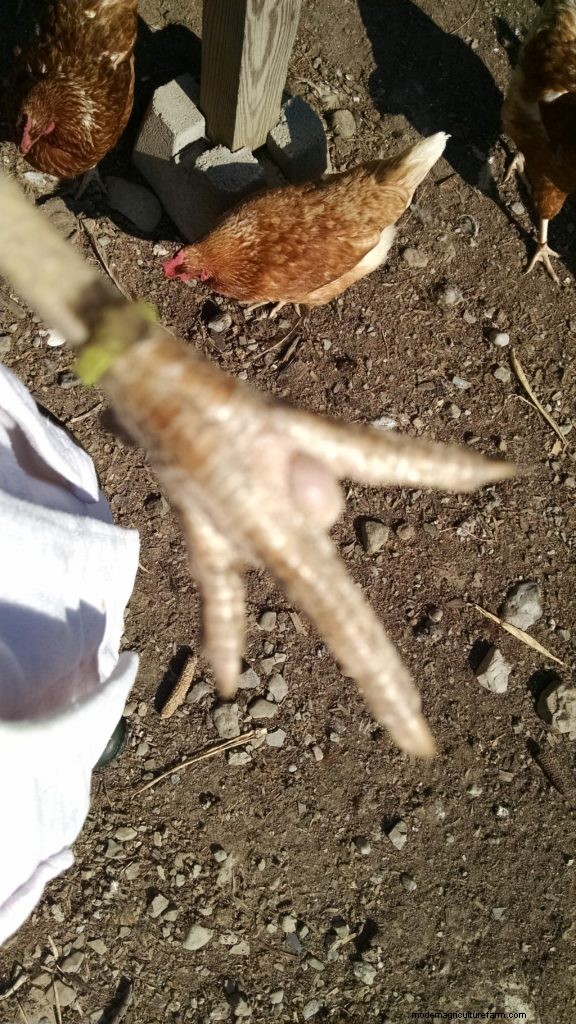
See that big lump between her toes? That’s a sure sign of bumblefoot.
You’ve noticed one of your chickens limping. The chicken has a big lump on its foot. The lump has an ugly dark scab on it. Bumblefoot has struck.
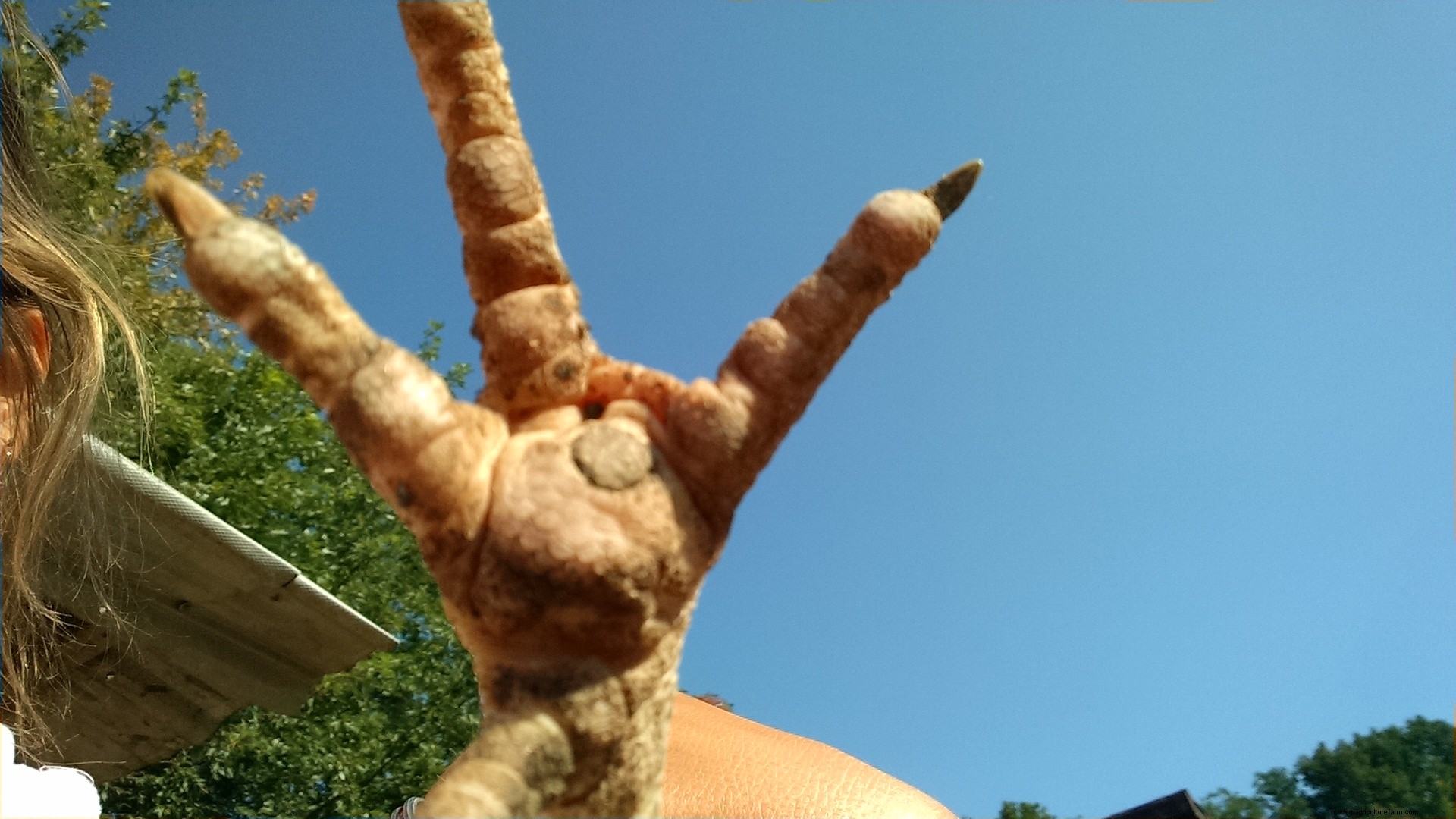
The telltale scab that comes with a bumblefoot infection.
Bumblefoot occurs when the outer layer of skin on the foot is compromised enough to allow bacteria inside, according to PoultryDVM.
How do you treat bumblefoot? If you are fortunate enough to have a veterinarian for your flock, make an appointment. However, if you’re like me and there aren’t any vets around you that treat poultry, you’ll want to learn how to treat this yourself.
Here is the treatment plan that works best for my flock. Grab your first aid kit!
Fill the dishpan with warm water and some Epsom salts deep enough to cover the chicken’s feet. You want the feet to soak for about 20 minutes to both clean the foot and loosen up the scab.
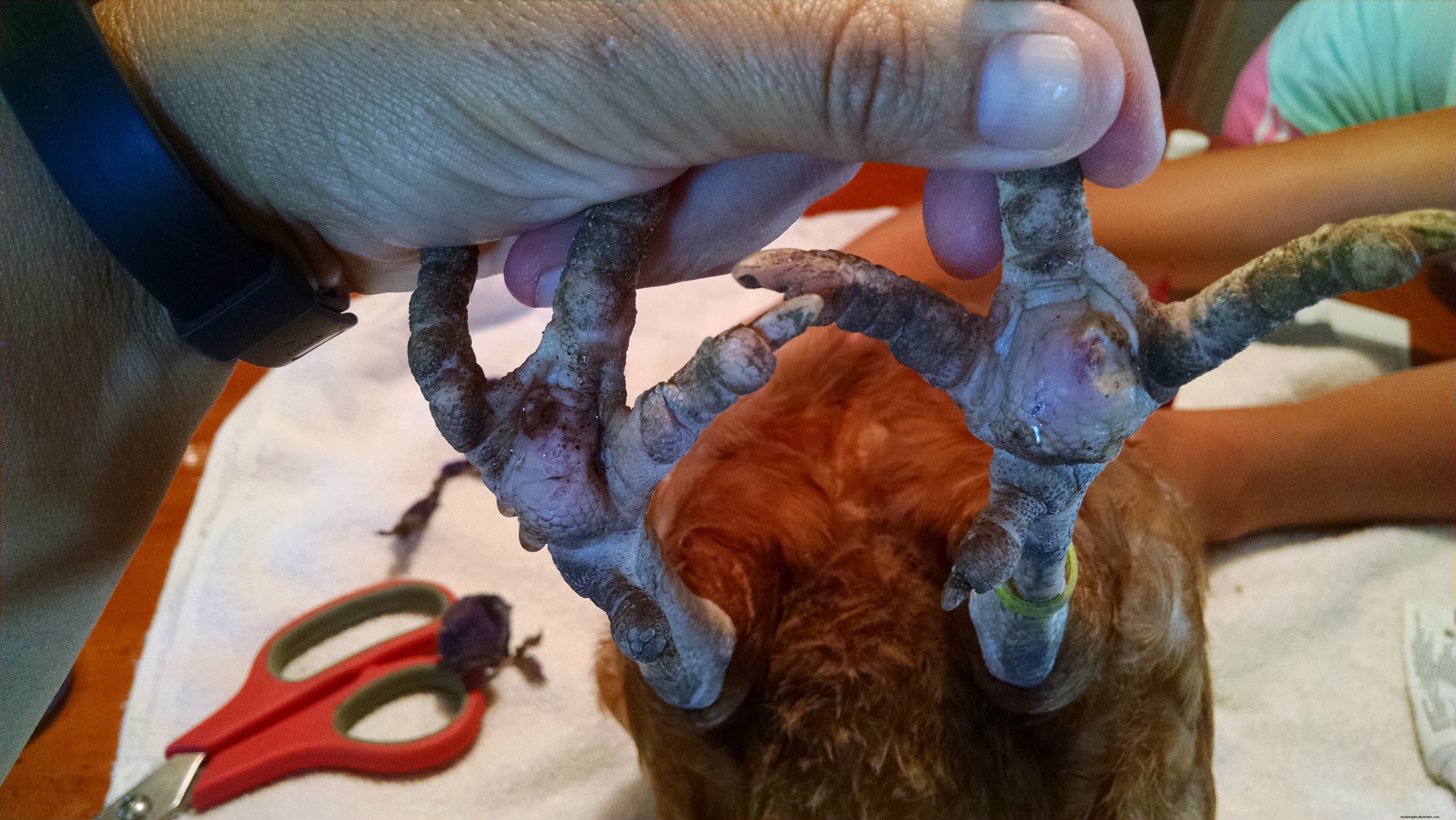
After soaking the feet, it’s time to remove the bumblefoot infection.
Once the feet have soaked, it’s time to get to work. Make sure to put on those gloves to protect yourself from whatever infection is inside that foot.
The easiest way I’ve found to work on the foot is to lay the chicken on its back. To do this, I start by laying the chicken on its side on the towel and using a corner of the towel to cover the chicken’s head and face. This seems to keep the chicken calm so I can roll it onto its back and begin work. If someone is available to hold the chicken still, that’s even better.
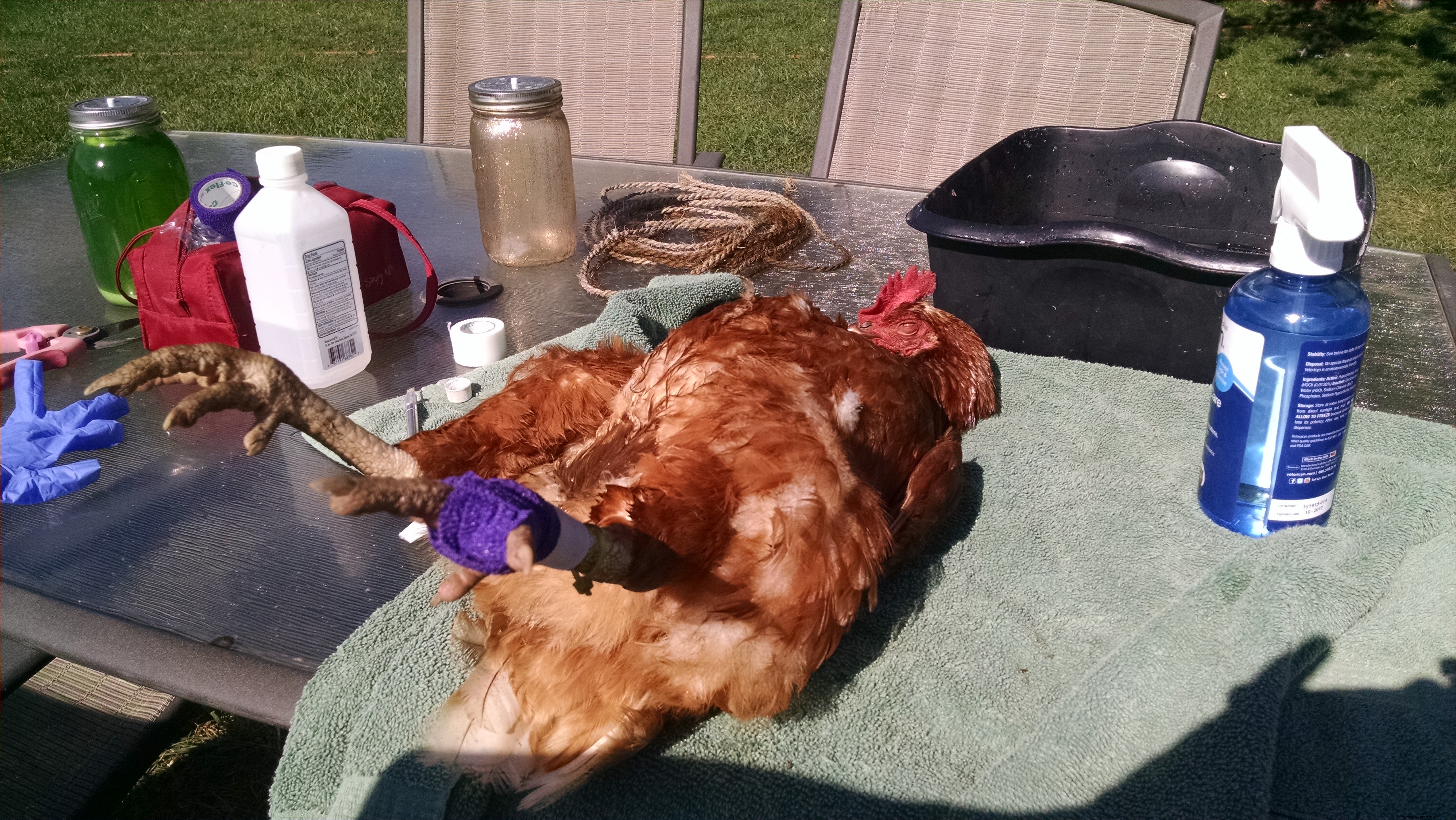
I find laying the chicken on its back the easiest way to work on the feet. Not all of my chickens are as cooperative as Penny is here.
Now, remove the scab. I like to work the tip of my scalpel around the edges of the scab to loosen. Then I use the edge of the scalpel or the tweezers to lift one side of the scab. This allows me to remove the scab in one piece. Be forewarned, this is going to leave a hole in your chicken’s foot.
Sometimes you get lucky and the kernel, which is basically a whitish blob, comes out with the scab. When it doesn’t, I squeeze the area to pop out the kernel. There’s no other way to say it – it’s kind of like popping a big zit.
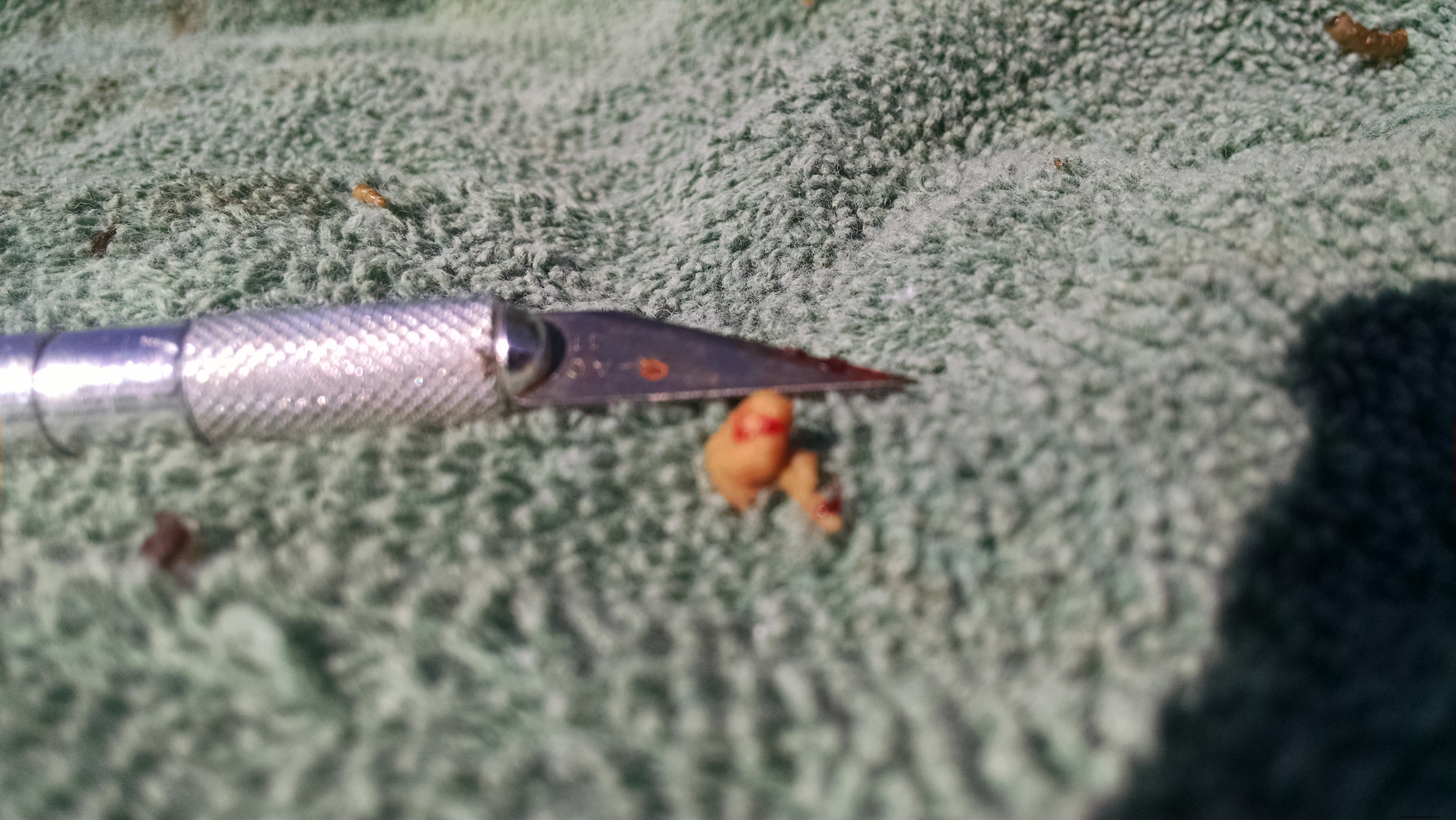
This is the kernel of infection that needs to be removed in order to successfully treat bumblefoot.
I let the wound bleed for a few seconds to help flush it out. Then, I spray an antiseptic spray into the wound and apply pressure with some gauze until the bleeding stops. Next, apply antibiotic ointment to the wound and cover with non-stick gauze and veterinary wrap.
Finally, wrap the gauze in place. I use one length of veterinary wrap cut into three narrower strips. The first strip goes between two toes and around the foot. The second strip goes between the other toes and around the foot. To hold everything in place, the third strip goes over the ends of the first two strips to hold them down, around the foot, and a little way up the leg. The wraps should be snug enough to hold the gauze in place, but not so tight they affect circulation. Check your chicken’s foot a few minutes after wrapping it. If the foot feels cold, the wrap is too tight. Remove it and start over.
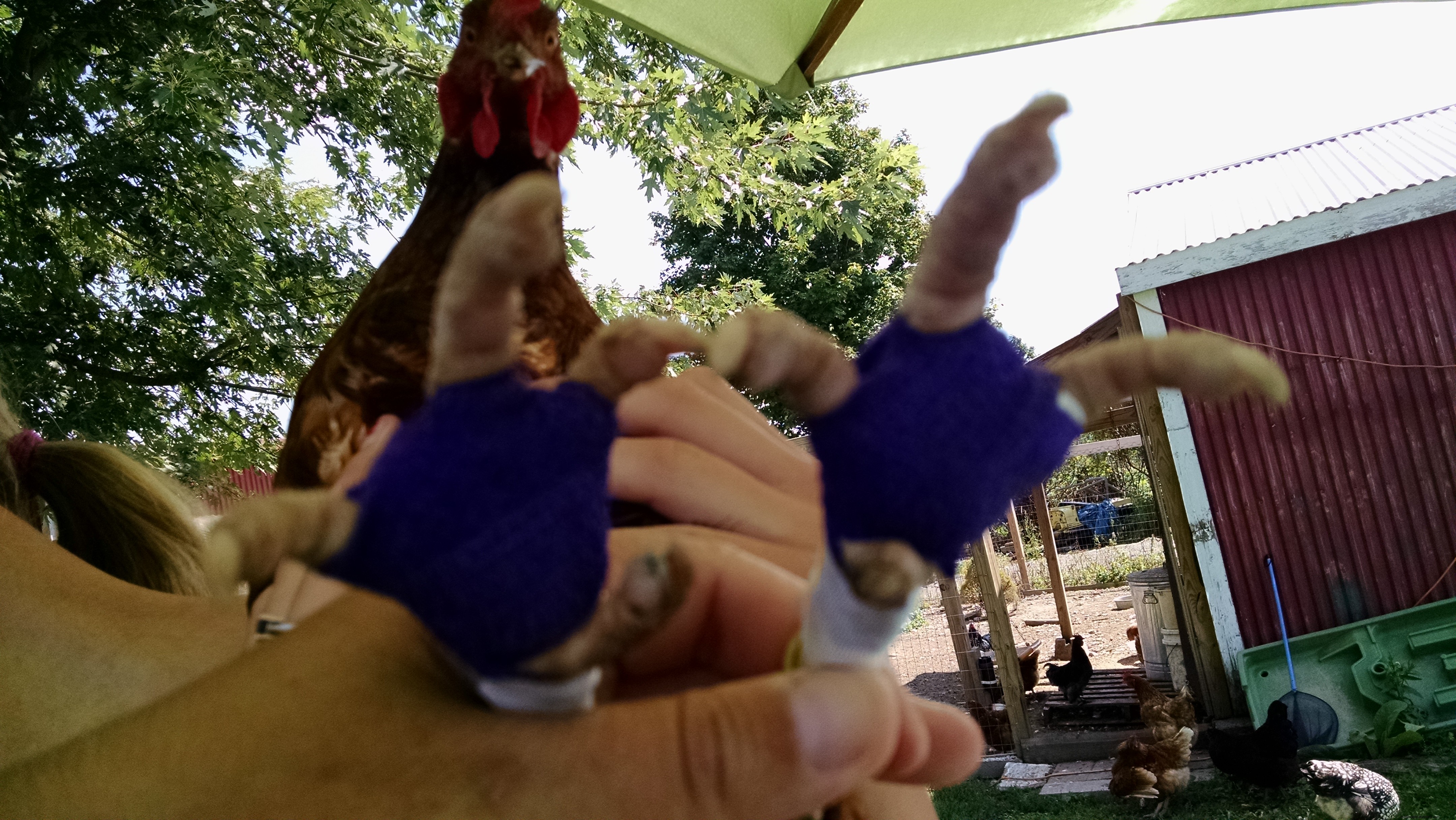
This hen had bumblefoot in both feet. Here she is wrapped and ready to rejoin the flock.
I typically leave the bandage in place for two to three days before changing it. If it’s raining, you might need to change the dressing every day. Check your chicken daily to make sure the bandages are intact and not causing any issues. If you notice more kernel during a bandage change, remove it and bandage things back up.
I have found that seven to 10 days is the average recovery time where I need to keep the foot bandaged. Once the wound closes and is completely covered by new skin, you can stop.
To help prevent bumblefoot, keep your coop and run clean and free of objects that could cut your flock’s feet. Make sure roosts are smooth and remove debris that could cut the skin. Monitor your flock’s feet regularly. Watch your chickens while they walk around and make sure to inspect their feet on a regular basis. The earlier its caught, the easier bumblefoot is to treat.
Traci DeLore grew up around chickens on her family’s farm, but didn’t start keeping her own chickens until she was in her 40s. Her desire to keep chickens came from a desire to have her own fresh eggs from chickens she knew were well cared for and happy. Traci started with six chickens – and then chicken math took over. These days, she has about 60 chickens — and three “rotten” ducks. (I say this because having ducks is like living with toddlers.) Traci also raises and processes her own meat chickens on occasion.

