
Welcome to Modern Agriculture!

Adobestock/Iaroslav
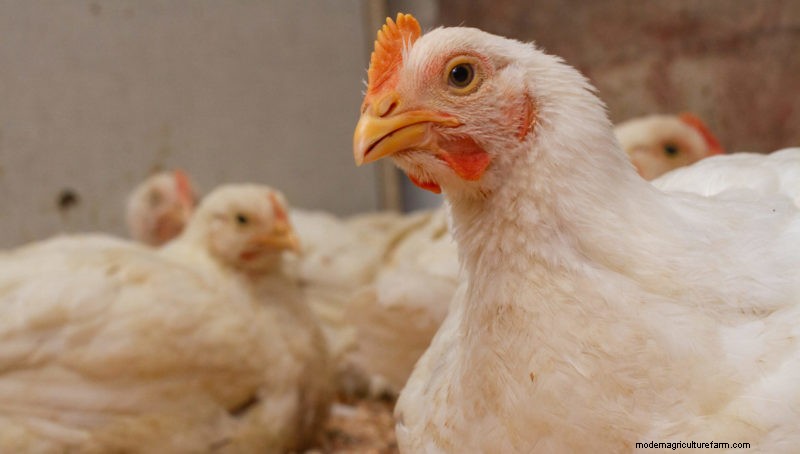
Over the years, through trial and error, I’ve tried just about every method and approach to raising Cornish Cross broilers. I’ve experienced flips and poor weight gain and struggled with all that manure until I finally landed on methods that closely mimic commercial growers – and they have produced by far the best results. The following sections detail my approach in raising Cornish Cross broilers, with the goal of raising healthy meat birds of good finish weight with optimum taste and tenderness.
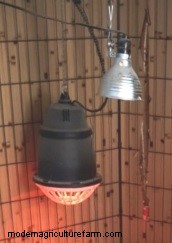
The day before the Cornish Cross chicks arrive, I get the brooder set up and working. I test the brooder lamps, replace bulbs if necessary, make sure the heat holds at a constant 100 degrees Fahrenheit, and hang a 5-1/2-inch lamp with a 4-watt LED night light to provide illumination over the feeder and drinkers. I empty 50 pounds of starter feed (unmedicated) into a galvanized can (protects against rodents and insects) and place it near the brooder. Then, I fill the drinker, which is supplemented with electrolytes, vitamins, and minerals. Finally, I fill the feeder. All is readied for the chicks.
Several years ago, I learned a farm tip for struggling chicks stressed from shipping. I make sure to have a couple hard-boiled eggs on hand so I can crumble the yolks with starter feed – a boost for weak or struggling chicks. They gobble it up, which stimulates drinking, where the electrolytes can make a difference. Cornish Cross chicks coming out of that shipping box are hungry. When I see a chick not eagerly going at the feeder, I mix up the yolk/starter crumble and feed to the chick. In no time, the chick is right in there with the others at the feeder.
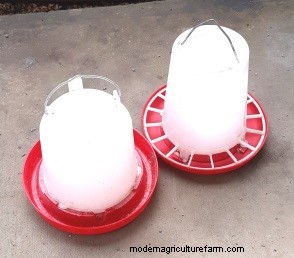
Cornish Cross chicks look like ordinary day-old chicks, but that’s where the similarities end. You can actually see their growth doubling and tripling over the first two weeks. I can’t emphasize enough the importance of larger-capacity feeders and drinkers to accommodate this rapid growth. They drink and eat a lot! I start with a 5-quart drinker and a 7-pound feeder for the first couple of weeks. Within their first week, the 25 chicks are drinking a gallon per day, and soon consume 2 gallons per day! By the third week, I add an additional 5-quart drinker rather than filling one drinker several times per day.
The brooder area is 16 square feet, with an attached run equal in area for the chicks to access by the second week. (See “Set Up for Cornish Cross Success.”) The brooder set up for Cornish Cross chicks is supersized, because their water and feed consumption is exponential. As they grow, I raise both the feeder and the drinker by a few inches to encourage standing and muscle development. I also separate the feeder from the drinker to promote movement and muscle building.
By the third week, the chicks’ appetites are voracious. The 7-pound feeder is swapped for a 36-inch trough feeder with reel. The trough legs lift the feeder, which keeps litter out, and the reel discourages chicks getting on top and fouling the feed. The 3-foot trough feeder provides 6 linear feet of space, allowing chicks to all feed at once side by side – no jockeying for position. And, it eliminates filling the feeder multiple times per day.
When the chicks are transferred to the grow-out pen on the fourth week, I add a bell auto drinker to provide constant access to clean water. It can be easily adjusted higher as the pullets grow.
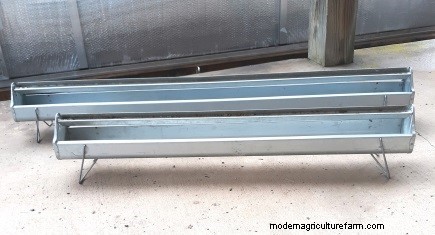
The 3-foot trough feeder is swapped for a 4-foot trough feeder, providing 8 linear feet of feeding space and reinforcing positive feeding behaviors, since they all can feed side by side. Feed is stored in galvanized steel cans within the grow-out pen, enabling quick feeding.
Remember that raising Cornish Cross is very different from raising layers. You need a strategy to meet their needs and reduce the work necessary to maintain them.
My Cornish Cross chicks are started on 28 percent game bird crumble for the first few weeks. I never use medicated feeds because I order coccidiosis inoculant spray on all chicks. From the fourth week to finish, chicks are transitioned to 22 percent broiler crumble formulated for their nutritional needs, and are fed on a 12/12 hour feed restriction. I never feed cracked corn or scratch of any kind, nor do I add fiber such as grass clippings or garden waste to their diet; this can promote diarrhea, which can harbor and spread coccidiosis. With this approach, I don’t experience sudden death “flips” or broken legs in any of my Cornish Cross chicks. Any mortalities experienced are shipping-related.
Here’s my maintenance and feed strategy for Cornish Cross broilers:
I find 25 Cornish Cross pullets will consume approximately 450 pounds of feed from Day 1 through Week 8 while on a 12/12 feed restriction schedule. Cockerels only or a mixed pullet-cockerel flock will consume more.
I track weights and feed ration weekly, which allows me to compare results across years. Below is my chicken math for the 2019 Cornish Cross broilers. Was it worth the effort?
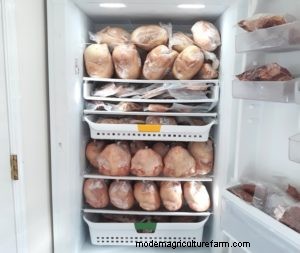
By raising Cornish Cross broilers in two batches, I can finish 25 pullets in the grow-out pen while starting 25 chicks in the brooder, spreading out the effort over 16 consecutive weeks, and spreading out the work so that I can handle it by myself. During hot summers, I split the batches into “spring” and “fall” groups, because, at 2000 feet elevation, Cornish Cross broilers have difficulty with the heat. Also, 50 Cornish Cross broilers take up quite a bit of refrigerator space for a three-day cool-down; I only have space for 25 chickens. Typically, I process at two finish weights: one batch at 8 weeks for 6-pound fryer weight and a second batch at 6 weeks for 4-pound rotisserie weight. Fifty birds just about fill my 21-cubic-foot upright freezer. It’s all about managing resources. It’s never fun to start processing 50 Cornish Cross broilers and find out you have no place to put them!
It’s worth mentioning that when ordering, I always include coccidiosis spray on all ordered chicks, and have never suffered a coccidiosis event or pasty butt. Like commercial growers, I find the coccidiosis spray hugely reduces compromised chicks and promotes optimum health and weight gains.
Like everything else, flock owners will have differing opinions. I prefer to raise pullets only, even though cockerels outweigh pullets at finish by several pounds. I find pullets produce more tender meat than cockerels, most noticeable if finished to full 8 weeks. Cockerels can sometimes be aggressive at 6 to 8 weeks and bully at the feed trough and drinker, which can result in shy pullets being pushed away and suffering from poor weight gain. In my experience, same-gender flocks typically finish at more uniform weights, making processing a lot easier.


