Welcome to Modern Agriculture!

How can you ensure you purchase a hormone-free turkey this year? What is a heritage turkey, and why is it so expensive for being so small? Are standard turkeys raised humanely?
Each year, as Thanksgiving rolls around, I put out my public service announcement on Facebook: “Hormones have been banned in the production of poultry for more than 50 years. But go ahead and spend money on the label, if it makes you feel better.”
There are so many options available for our Thanksgiving dinners, and as many reasons why each option may better suit your needs and your conscience. But what does each label really mean?
Let’s start with the most obvious.
You see, it has never been legal to use hormones in the U.S. to grow poultry or pork. In 1956, the FDA first approved growth hormones for beef cattle. At the same time, hormone use in poultry and pork was banned. The current five beef hormones are approved as growth implants. These palletized implants are surgically implanted behind the animal’s ear (a non-food-producing body part) when it enters the feedlot. Over the course of 100-120 days, the implant dissolves and releases the hormone.
You can find more information on beef hormones and the lack of poultry hormones on this site.
Not only is it illegal, but hormones are not used for poultry because:
Second of all: There is no such thing as a hormone-free turkey. All animals have hormones. We have hormones. They occur naturally within our bodies. “No added hormones” can be an accurate label, but “hormone-free” poultry does not exist.
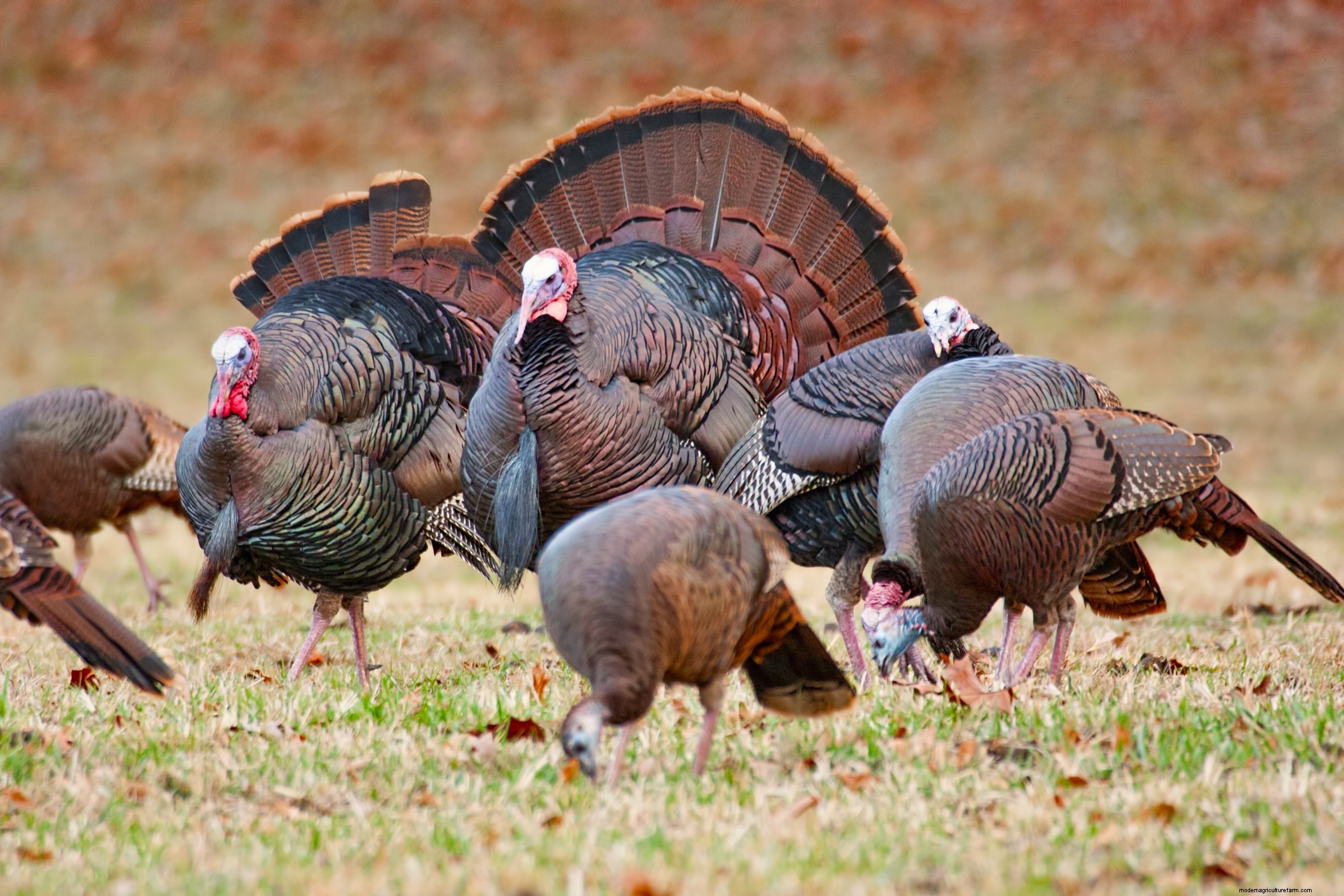
If you buy a Thanksgiving turkey without paying extra for a heritage breed, you are probably buying a broad-breasted white. Two types of broad-breasted turkeys exist: white and bronze. When you see images of pretty brown turkeys on classroom walls, you are looking at a broad-breasted bronze. White turkeys are used more frequently because bronze turkeys have a pocket of dark, inky melanin around each feather. During processing, as these feathers are plucked, someone must wash down the skin after this melanin oozes out and stains everything around it. (Trust me: We raised turkeys growing up. It was disconcerting if you didn’t know what it was.) Raising the white turkeys eliminates this problem.
A broad-breasted turkey has been bred specifically for that: a lot of breast meat. Males can easily reach 50 lbs if fed a high-quality of food. This provides a lot of meat within two short seasons. These turkeys do not move around much, but are not crammed into battery cages. Production is relatively humane, if you’re fine with a turkey that’s kept in a pen with about 4 square of feet per bird. However, because the breast is so large, these turkeys cannot breed.
Broad-breasted turkeys have to be artificially inseminated. If you raise broad-breasted turkeys, you have to purchase poults from a breeder. You cannot keep them year after year and breed your own.
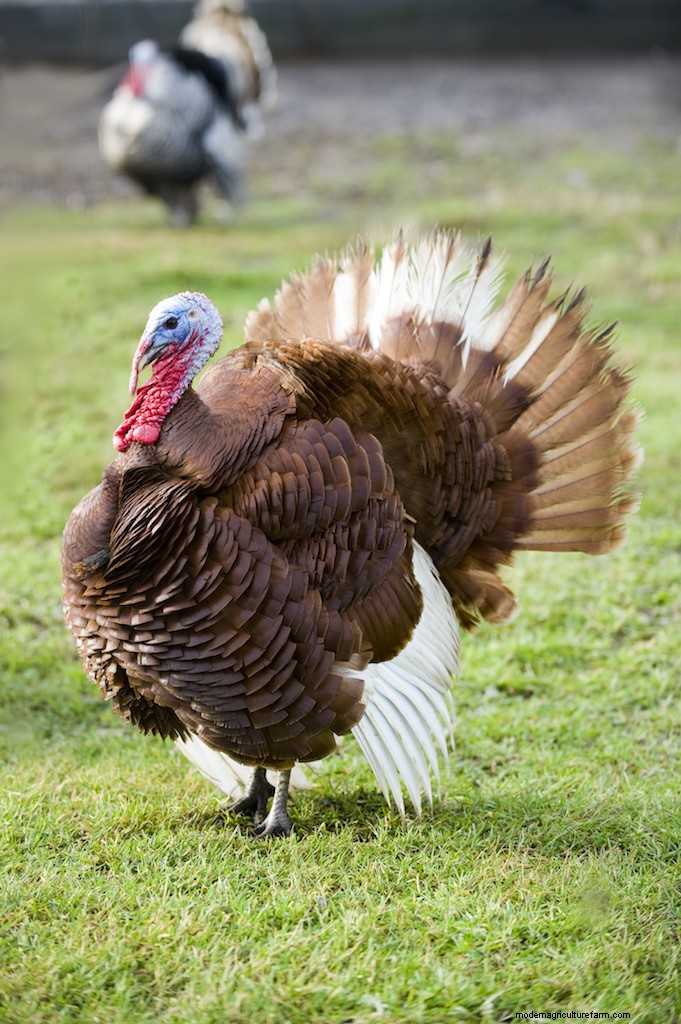
The turkey breeds you’ll find on a heritage turkey farm have been developed from wild turkeys, and maintain the natural body structure. You can breed them and raise them out in a pasture, though you may have to clip wings because natural turkeys can fly. But these turkeys will not reach 50lbs. You can’t use one to feed your family of five plus their 20 children and still have freezer bags of meat leftover. The breast meat is much thinner.
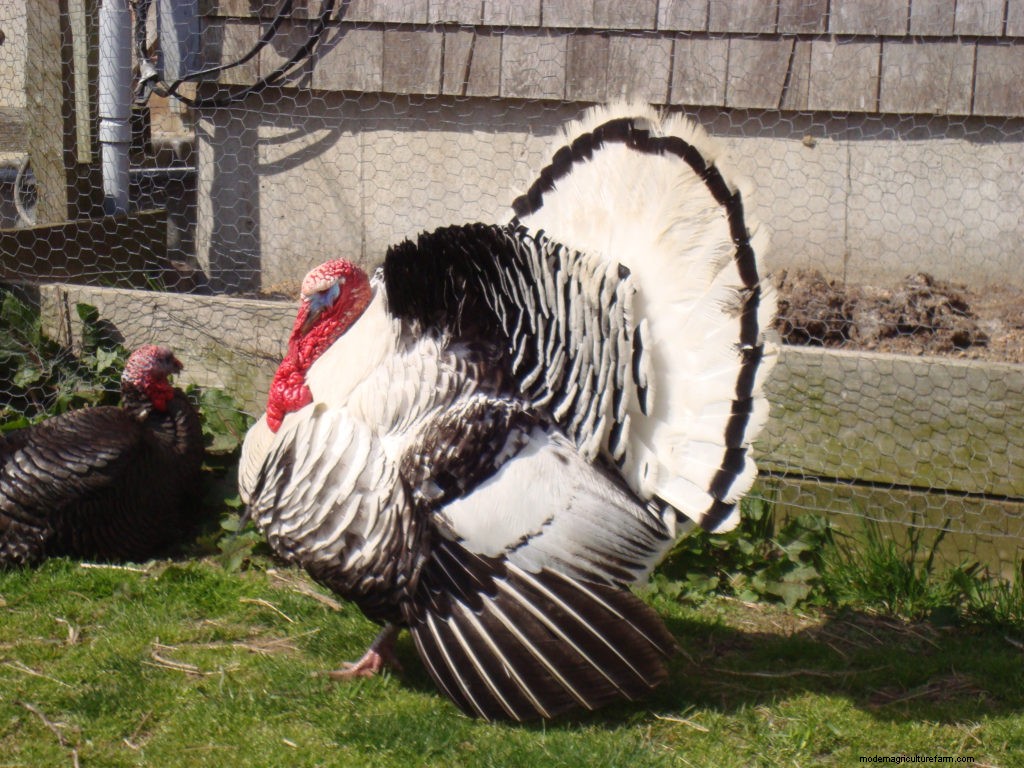
Often, heritage turkeys are raised more humanely. This isn’t a constant rule, but it goes along with “pastured” eggs. Producers pride themselves on the quality of the meat and the tradition of the bird itself, so they ensure the animal receives the highest quality food and care. Because of this, and because heritage poults are expensive and the resulting meat is much less than that of a broad-breasted turkey, expect to pay a much higher price per pound.
Several types of heritage turkeys exist, including:
More varieties of heritage turkeys are becoming available! A recent search of “rare heritage turkey poults” revealed Silver Auburn, Fall Fire, Silver Dapple, Sweetgrass and Tiger Bronze!
If you have a moment, look up some of these breeds. They are stunning. You can also read about heritage turkeys and efforts to revive the strains on the Heritage Turkey Foundation website.
Now that you have an answer to what is a heritage turkey and what does hormone-free mean, what type of turkey will you buy this year? Do you raise your own turkeys? What are your experiences with them?