
Welcome to Modern Agriculture!

Chicken breeds that lay colored eggs are also called Easter Eggers – and as the name implies, is one of the many chicken breeds that lay very cool colored eggs.
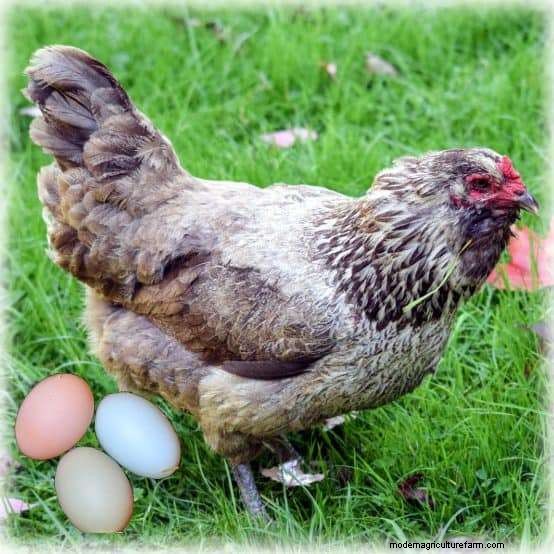
When picking out our latest batch of little girls at the local feed store, our son – the family’s true chicken wrangler – decided he wanted to take home a brownish fluff ball from a breed known as Americana.
Cute little “Easter” is a good-sized pullet now. With her unique facial features – she looks like a falcon to us than a chicken – we can’t wait to see whether her eggs live up to their billing.
Americans are all too familiar with the factory farm white and brown eggs found at their favorite grocery store.
About 90% of the time, those white ones have been laid by White Leghorns.
It’s not hard to see why: This breed cranks out between 280 and 320 eggs a year, and their eggs actually get bigger as the chickens get older.
Ironically, Light Brown Leghorns also produce white eggs, as do Austra Whites – which are a cross between Black Astralorps and White Leghorns.
Other breeds producing white eggs include Ancona, Andalusian, Buttercup, California White, Catalana, Crevecoeur, Dorking, Egyptian Fayoumis, Holland, Hamburg, Houdan, Polish, Silkie, and Sumatras.
And white is alright – -but why not add some color to your carton or basket if you can?
As it turns out, all chicken eggs start out white.
How so? Let’s take a quick look at the simple science behind egg development and color.
Yolks develop in your hen’s ovaries, and when they become the right size, begin their journey down her oviduct. You can check out the full trip here. (Hat tip, 4-H)
In the semi-rare instance, when two yolks are released at the same time, you get an egg with – you guessed it – double yokes.
Once the yolk reaches the hen’s magnum in her oviduct, that’s when the albumen – or egg white — is added in a three-hour process.
Eventually, inner and outer shell membranes are added in what’s called the isthmus.
When all this material reaches the shell gland, it may spend as many as 20 hours as a white eggshell formed around it.
Genes inside some breeds then generate the release of certain pigments on the egg and – voila – you get colors.
Some pigments – such as brown – aren’t able to permeate the shell and so the inside remains white.
Others, such as blue, do, turning both inside and outside a very interesting and Easter-like pastel shade.
Although the many different chicken breeds lay colored eggs with their own particular color. The shell’s shade doesn’t have anything to do with the taste of the final product.
If you’re new to the backyard barnyard, what you will discover is that the fresh eggs coming from your birds. They are far tastier than any you’ve ever bought at the supermarket.
If not, you already know the delicious difference. And, if the girls have been allowed to free-range, served nutritious, soy, and GMO-free feed. They haven’t been treated with antibiotics, their eggs are healthier for you as well.
What follows are many of the breeds that lay colored eggs. They are broken down by shade carefully plucked from the Livestock Conservancy’s Guide to Heritage Chickens.
Note: Your color experience may vary.
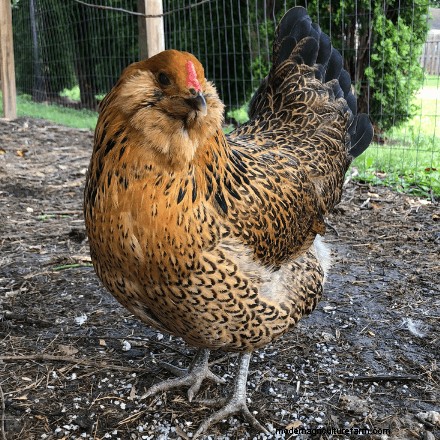
Before we continue our colored egg tour, we thought you might appreciate this pro tip: Even if you don’t know a bird’s breed, you can learn to spot a white egg or brown egg layer quickly. Check out their earlobe – that’s right, earlobe — below their ears. If it’s white, they will most likely produce – you guessed it – white eggs. If it’s dark, you can be pretty sure she’ll lay brown eggs.
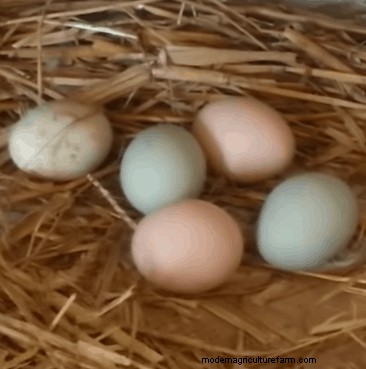
Araucana – A bird that does well in both heat and cold, the Araucana will produce 200 medium to large light blue eggs a year.
Arkansas Blue – Developed by the University of Arkansas, this species will lay 250 to 300 medium to large eggs a year. Their eggs may look pretty, but it’s said these chickens don’t like to be handled.
Cream Legbar – A cross between Cambars, Barred Plymouth Rocks, Leghorns, and Ameraucana. You can expect about 200 medium eggs a year from the Cream Legbar. It’s said they’re friendly and love to free-range.
Easter Egger – A prolific producer who can lay 300 large eggs a year, light blue is just one shade that can be produced by an Easter Egger. Our “Easter” is on the shy side and will actually walk away when our other pullets are scrambling for treats.
Whiting True Blue – Named after the developer of the breed — poultry geneticist Dr. Tom Whiting — these birds are said to produce medium eggs at first and then, with adequate nutrition, will lay large eggs.
Isbar – Another breed that’s said to be friendly, these hens will produce 150 to 200 medium eggs a year.
Olive Egger – This “breed” isn’t a breed at all. Olive Eggers are created when you cross a blue egg-laying hen such as an Easter Egger with a rooster from a breed that’s a dark brown/chocolate egg layer, such as a Marans or Welsummer. Some will produce about 240 large eggs a year.
Easter Egger – Some Easter Eggers will produce green eggs as well as brown, cream, pink, rose, and even sage, You just never know.
Since we’re talking colors, we’ve saved perhaps the most uniquely shaded bird for last. It’s called the Ayam Cemani. And with bluish-black feathers, beak, comb, tongue, organs, toes, and even meat, this creature from Indonesia is a sight to behold.
The color of its eggs? They’re described as pale cream with a pink tint.
A footnote here on color “fastness.” Whatever color eggs your girls create when the first lay, they rarely will change – except for minor variations.
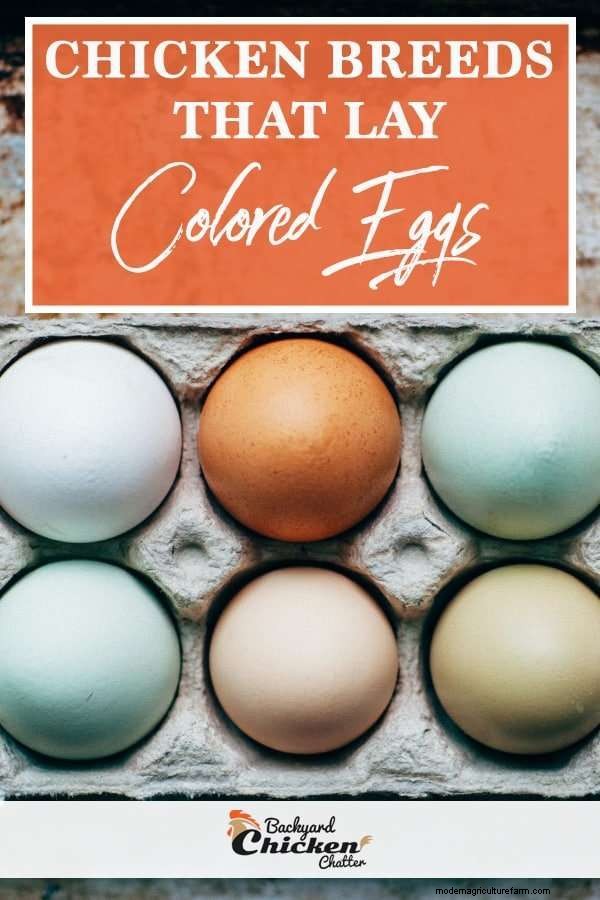
Below is a Pinterest friendly photo…. so you can pin it to your Doodle Board!!
![What Type of Chickens Lay Large Eggs? [The complete list]](https://modernagriculturefarm.com/article/uploadfiles/202111/2021112915563992_S.jpg)

