
Welcome to Modern Agriculture!

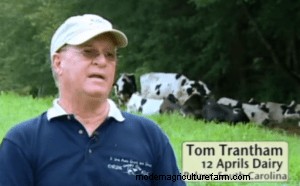
In 1987, Tom Trantham was going through bankruptcy proceedings for his dairy farm. His sons and daughter had already left, because there was no future for them there. Tom was days away from packing it in.
Then, his herd broke through a fence and got loose. Tom disowned his cows, saying to himself “those were not my cows”. The bank was going to own them soon enough. He went inside and turned on the TV, hoping to escape the present moment for a little while.
After watching what he called one of the worst TV shows ever, he regrouped. He figured that as long as he still had his cows, he ought to milk them.
So he brought them in from the overgrown pasture that he had been planning to plow up and plant to crops. And he milked them. They smelled better, he thought to himself. More than that, they gave 200 lbs more milk.
Farmer Tom had worked really hard to give his herd the best feed they could get, and then they give him 200 lbs more milk on some overgrown pasture? Holy Cow!
He looked at the pasture, and saw they had grazed the top halves off of all of the plants in there. Well, he figured they could go in there and eat the other half the next day. The next day, though, they only ate the top half of what was left. That was the second lesson he learned from his cows. The top halves of the plant are great feed, but the bottom halves are not. He would have hayed that field taking it down to the ground. The top half would have given 22% protein, but the bottom half was only 6-7%. The cows figured it out, and showed Tom that the top half was the part worth eating. Holy Cow #2!
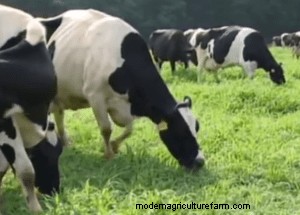
You can watch Tom tell his story in this 16 minute video. At 4:52, he describes his “12 Aprils system,” and how he works on recreating the flush of April’s growth every month by double brush hogging and no-till seeding into pasture. He’ll tell you about another on of his “Holy Cow!” moments when, he accidentally brush hogged a pasture twice before seeding. The extra pass meant the new plants didn’t have to compete with existing forage, and he’s been doing it ever since. At 9:00, he explains the experimenting he did to figure out the best way to make lane ways for his herd. Geotextile, and careful grading make a solid and stable base for lanes that hold up to herd traffic and heavy rains.
Now Tom runs a grazing dairy and he looks at his pastures as crops. His cows average 22,000 lbs of milk, because he gives them high quality feed in every one of the farm’s 29 paddocks. Holy Cow! He’s glad he learned from his herd!
Here it is for our tablet readers.
Thanks to a couple of our On Pasture readers, Geralyn Devereaux and Stein, for sharing this video with us so we could share it with you!


