
Welcome to Modern Agriculture!

Outbreaks of avian flu may have declined a bit over the summer since the virus doesn’t do well in the heat. But with cooler temperatures the danger rises again. In addition, one of the ways that Avian Flu may travel is via migrating birds, especially waterfowl. And since this is the time that migration occurs, it means its also a good time to take extra steps to protect your pastured poultry.
The flu can travel on manure, egg flats, creates, farming materials and equipment, and with people who have unknowingly picked up the virus on their clothes, shoes or hands. Poultry that come in contact with any of these contract the disease and then continue its spread. Here’s how to recognize the flu, how to prevent it and who to call for help.
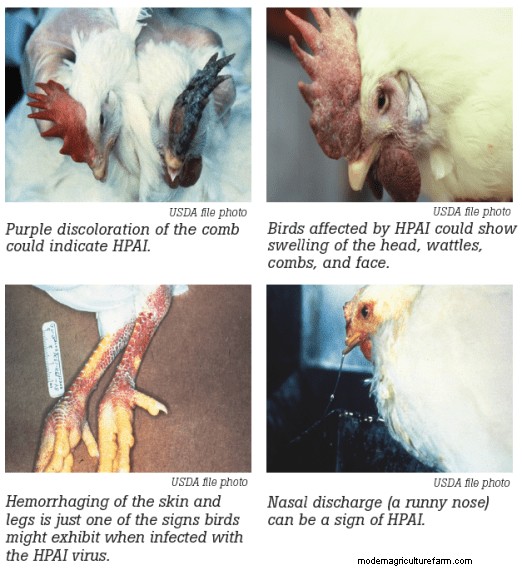
Birds that have contracted avian flu will show these symptoms:
• Lack of energy and appetite
• Decreased egg production and/or soft-shelled or misshapen eggs
• Swelling of the head, eyelids, comb, wattles, and hocks
• Purple discoloration of the wattles, combs, and legs
• Runny nose, coughing, sneezing
• Stumbling or falling down
• Diarrhea
• Sudden death without any clinical signs
Biosecurity steps are actually pretty straight forward, and they are things you should do all the time, whether or not there’s known threat heading your way. Here’s what the experts recommend:
1. Keep Your Distance.
Restrict access to your property and your birds. If visitors have birds of their own, do not let them near your birds. You should also do your best to keep your birds from having contact with wild birds and migratory water fowl that can carry germs and diseases.
2. Keep it Clean.
Wash your hands before and after working with your birds. It’s also recommend that you wear clean clothes, scrubbing your shoes with disinfectant, and cleaning and disinfecting equipment that comes in contact with your birds. Clean clothes and disinfected shoes and equipment is something that we all probably balk at.
3. Don’t haul disease home.
Buy birds from reputable sources. Then keep new birds separate from your flock for 30 days. If you take your birds to the fair on an exhibition, keep them away from your flock for 2 weeks after the event.
4. Don’t borrow disease from your neighbors.
Don’t share garden equipment or poultry supplies with your neighbors or other bird owners. If you have to borrow things, clean and disinfect them before they reach your property.
 5. Know the signs and report sick birds.
Don’t wait! If your birds are sick or dying, call your local cooperative extension office, your veterinarian, or your State Vet or animal/poultry diagnostic laboratory. You can also call the USDA at 1-866-536-7593 and they can put you in touch with a local contact who can help you.
According to the US Department of Agriculture’s Animal and Plant Health Inspection Service, the United States has the strongest AI surveillance program in the world. Federal and State partners and the poultry industry respond quickly to evidence of the disease focusing on:
1) Quarantines – restricting movement of poultry and poultry-moving equipment into and out of the control area;
2) Eradication – affect flocks are humanely euthanized to prevent the spread to other areas;
3) Disinfecting – kills the virus in the affected flock locations;
4) Testing – confirming that the poultry farm is AI virus-free. and
5) Monitoring – wild and domestic birds are tested in a broad area around the quarantine area. USDA also is working with its partners to actively look for and test for the disease in commercial poultry operations, live bird markets and in migratory wild bird populations.


