
Welcome to Modern Agriculture!

We got questions about how well cattle do on snow as a winter water source so we headed out to find some answers for you.
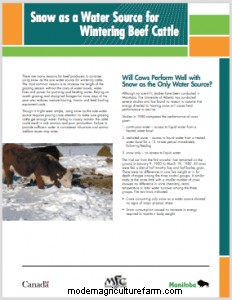
This fact sheet from agricultural agencies in Canada provides some comparisons between cows with access to water and cows using snow as their water source. Researchers in Alberta expected that eating snow would increase energy use, so that cows would not maintain body condition, and their temperatures would be lower. But that’s not what they found at all. The differences in weight between water cows and snow cows was not significant, nor were body temperatures different. Researchers concluded that cows could eat enough snow to meet their water needs and they didn’t need any additional energy from their food to melt the snow and bring it to body temperature.
But what about calves? Researchers checked that out too. They compared weights for 9 to 10 month old calves where one group drank water and the other relied on snow. At the end of the trial, the snow calves were 4 pounds lighter than the water calves, and their feed to gain ratio was slightly higher, but the difference wasn’t considered significant.
But that doesn’t mean you can just send your stock out there and expect them to do well right off the bat. As this fact sheet notes, eating snow is a learned behavior:
You also need to have clean snow, and an alternate water source in place in case conditions change and the snow on the ground is no longer adequate for your herd. It takes about 10 cm (4 inches) of snow to get 1 cm of water (1/2″) and ice-crusted, wind-blown or trampled snow sources are not adequate for your livestock. Please download the fact sheet for more information on how to manage your cattle for snow feed. And here’s another On Pasture article on the topic as well.


