Welcome to Modern Agriculture!

Owls, with their mysterious nocturnal lives and remarkable hunting skills, are both fascinating and fearsome. They are apex predators during the night and also play a crucial role in balancing ecosystems. Just think, without owls, this world might be overwhelmed with rodents and smaller birds. However, backyard chicken keepers do not always have a loving relationship with owls, for these nocturnal predators sometimes prey upon their chickens. Do owls eat chickens? Sometimes. Let’s delve deeper into what you need to know about owls attacking chickens, including how to keep your flock safe.
Owls are masters of the night sky. No, that’s not just poetry; it’s the truth. Owls are Strigiformes, a group of creatures that hunt during the night. Strigiformes include other nocturnal birds of prey with hunting prowess. Owls also have adapted to their nighttime life. Perhaps their most iconic feature is their large, forward-facing eyes, which grant them exceptional night vision and an uncanny ability to spot even the slightest movement in the dark. These eyes are optimized to gather as much light as possible, enabling owls to navigate and hunt in low-light conditions with astounding precision.
One of the most awe-inspiring attributes of owls is their ability to fly silently through the night. This stealthy flight is facilitated by special feather adaptations that reduce noise during flight, allowing owls to approach their prey with virtually no sound. This silent approach gives them a distinct advantage, enabling them to surprise their prey without giving away their presence.
What is more fascinating is the shape of their heads. Owls possess something known as a facial disc, which is composed of specialized feathers. These facial discs play a critical role in capturing and focusing sound waves, acting as an auditory radar that aids in locating prey even in complete darkness. Additionally, their feather patterns and cryptic colors allow them to blend seamlessly into their surroundings, rendering them nearly invisible to unsuspecting prey and potential predators.
Owls are carnivorous predators with a diet that primarily consists of small mammals and birds. Their hunting strategy is built upon their remarkable senses of sight and hearing, which allow them to detect even the faintest movements of potential prey. The majority of owl species are opportunistic hunters, meaning they seize the chance to feed on whatever is readily available. In this, they are similar to chickens, who are opportunistic eaters, grabbing anything that is edible when they can.
The typical owl diet includes:
Do owls eat chickens? Owls of various species generally rely on smaller prey, including rodents, insects, and small birds (baby chicks, too). This is because not all owls are large enough to take on anything much bigger. However, there are instances where larger owl species target adult chickens and other poultry. The two most common species that pose a threat to your flock include:
Being that owls are active in the evening, around the same time chickens are getting sleepy, the most vulnerable time is at night. This is one of the reasons why you do not want your chickens out in the open in the evening. While owls are opportunistic predators and chickens aren’t a staple part of their diet, keeping your chickens protected at night is a proactive measure against potential attacks. To mitigate this risk, it’s crucial to ensure your chickens are safely enclosed within their coop once evening sets in.
This may be a bit gruesome to discuss, but it is an important topic to cover when you are trying to keep your chickens safe. When an owl is hunting for food and sets its sights on a chicken, a dramatic and quick sequence of events unfolds. Owls do not like to let their prey escape once they are locked in, and so they use the tools they have — talons, sharp beak, and instinct — to deliver a precise and deadly attack.
Here is what an owl attack looks like:
If you suspect that an owl may be targeting and consuming your chickens, there are several signs and clues to be vigilant about. These indicators can help you identify potential owl attacks and take appropriate measures to protect your flock.
One of the most poignant signs that it’s an owl after your chickens is that your chickens go missing suddenly and unexpectedly. One minute they are there, the next they’re not.
When an owl preys on chickens, it often plucks feathers cleanly from the body. If you find feathers that have been neatly removed without any signs of struggle, it suggests a potential owl attack.
Owls have unique bite marks that can be identified on feathers they’ve plucked. Look for clean, deep cuts near the base of the feathers. These bite marks distinguish owl attacks from other predators.
Owls defecate at their kill sites, leaving distinctive chalky whitewash or droppings. If you observe such markings near areas where feathers are scattered, it could point to an owl’s presence.
Unlike some other predators, owls tend to consume their prey whole or in larger portions. If you find remains that are limited to a pile of feathers, bones, and perhaps the head of a chicken, it could be indicative of an owl attack.
In some cases, owls may be unable to transport their prey to their nest and have to leave it behind. This means that, while alarming, finding decapitated chickens around the run or coop is also a sign.
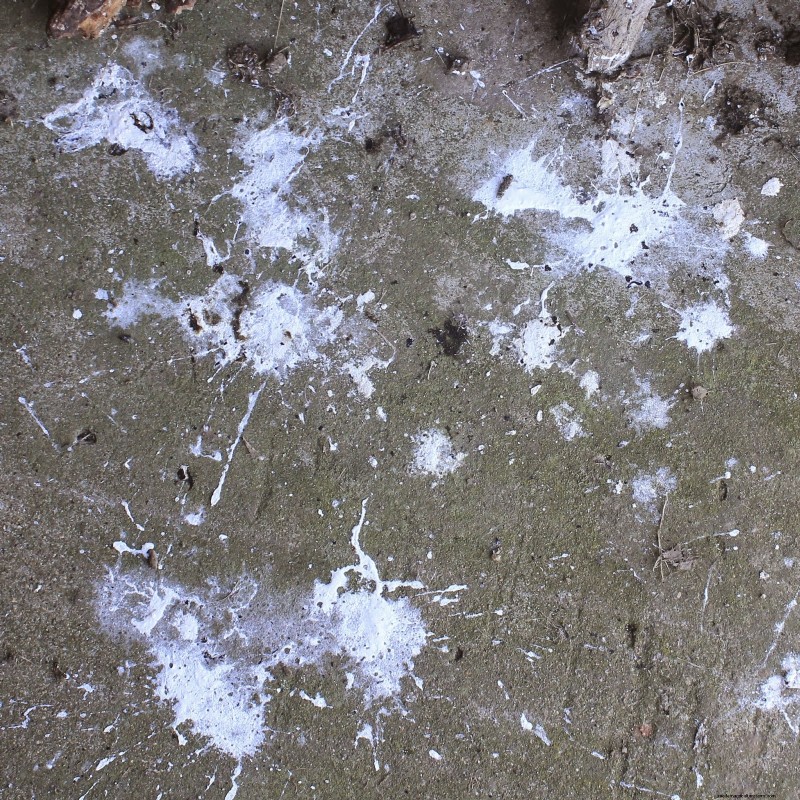 Owl Droppings
Raising chickens comes with the responsibility of ensuring their safety, especially when predators like owls are in the vicinity. Fortunately, there are a number of strategies that you can implement to keep your flock safe from harm.
Invest in a well-designed coop that offers both protection and comfort for your chickens. Ensure the coop has a secure roof to prevent owls from swooping in from above. Owls’ natural hunting strategy involves diving onto their prey, so a roofed coop acts as a physical barrier against these aerial attacks. You may also want to consider covering the chicken run with mesh or wires for an additional layer of protection.
Establish a routine of confining your chickens within their coop as evening approaches. Owls are most active during the night, and confining your chickens before dusk minimizes the risk of owl attacks. Remember that prevention is key, and taking this proactive step can significantly reduce the chances of your chickens falling victim to owls.
Introducing a rooster to your flock can offer an additional layer of protection. Roosters are naturally vigilant and have a strong instinct to alert the flock in the presence of danger. Their crowing can serve as an alarm, warning the hens to seek cover.
If your community does not allow for crowing roosters, there are other options. Dogs make wonderful guardians for your chickens and can protect your yard from more than just owls.
One of the best ways to deter owls is to assault their senses. Motion-activated lights will startle owls and keep them from approaching the coop. The reason for this is the brightness. Owls rely on their night vision, which is sensitive to light. By adding light, you discourage them from hunting on your property. While this strategy can be effective, it’s important to strike a balance between deterring predators and ensuring your chickens have a peaceful resting environment. Make sure the lights do not stay on all night, and do not have them shine directly into the coop.
Utilize natural deterrents to discourage owls from getting too close to your chickens. Some chicken keepers have found success in using decoy owls or reflective objects that mimic the appearance of predators. These objects create the illusion of danger, making owls think twice before attempting to attack your flock.
It is understandable if you are upset that your flock has been targeted by a nighttime predator. That said, it is important to remember that owls are not doing this out of malice; they are trying to survive. Furthermore, owls are a protected species in many jurisdictions, and harming them is both ethically and legally wrong. Attempting to injure or kill an owl can result in fines or legal consequences. Instead of resorting to violence, focus on implementing preventative measures to keep your chickens safe without causing harm to these majestic creatures.
If coexistence is not an option, remove some of the things that attract owls to your property. This includes removing bird baths and other sources of water, cutting long grass, and removing trees that are close to prey.
Do owls eat chickens? While owls are not a common threat to your flock, there is always a chance that one might swoop in unexpectedly. By implementing preventative measures, such as secure coop designs, motion-activated lights, early evening confinement, and utilizing natural deterrents, you can create an environment that deters owls from attacking your flock.

Valerie has been content writing since 2016 for websites and companies all around the world. A traveler, dancer, martial artist, Valerie loves gathering experiences and wisdom. Her travels have taken her to over 20 countries, and she hopes to see more of the world soon.