
Welcome to Modern Agriculture!

You are here: Home / Animals / Goats / Raising Angora Goats for Soft and Sustainable Mohair Fiber
When we decided to leave the city behind and start homesteading, one of the first animals I wanted was goats.
But the breed of goat became a big question. Fainting, Nigerian dwarf, Pygmy –? And then I learned about Angora goats, and I knew they would become our choice.
By this point, we already had alpacas, and adding more fiber animals (that weren’t sheep) made perfect sense. There is a good chance you have never heard of Angora goats or aren’t familiar with their fiber contributions. Let’s explore the breed a bit.
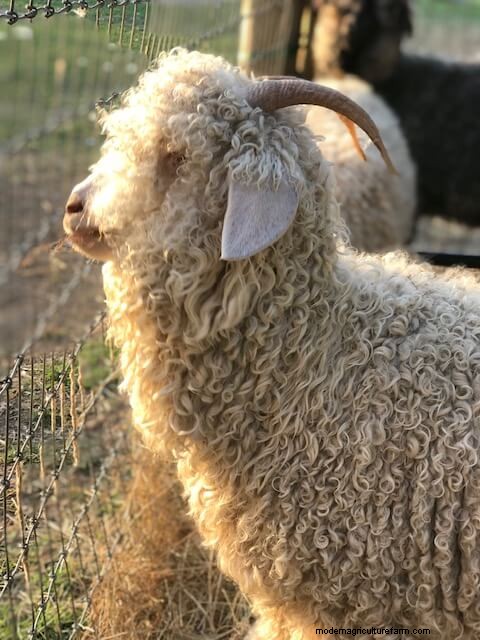
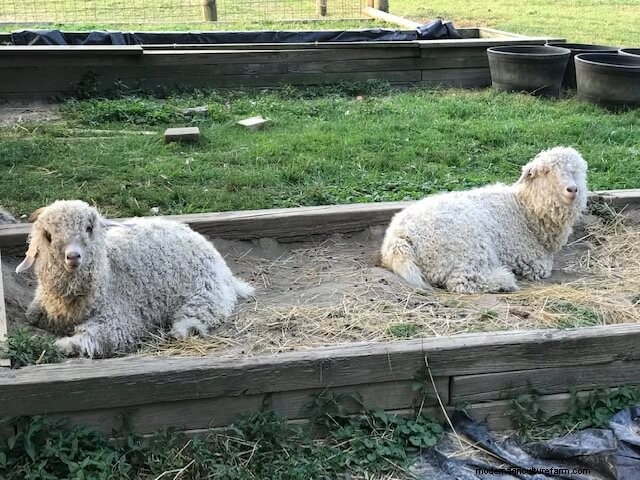
The first question I hear when visitors see my goats is often “Is that a sheep or a goat?” Or in some cases, people just assume they are sheep. This is due to their beautiful, fluffy, curly locks of fiber. They resemble some breeds of Longwool sheep and lack the coarse outer guard hairs of other breeds.
The first Angora goats originated in Asia Minor in the district of Angora, a Turkish province. The first eight goats from Turkey were imported into the United States in 1849.
 Alaura Pittman / Insteading
Physically, the Angora goat is smaller than a standard size goat but larger than some of your “mini” goats. The bucks range in weight from 180 to 225 pounds and sport beautiful curly horns that can reach 3 or more feet in length.
The does top out at 70 to 110 pounds and are also horned, although their horns only grow to about 9 or 10 inches and do not have the same tendency to spiral that the males do. Angoras are not disbudded like many other goat breeds because their horns act as a radiator and cool the goat when they are in full fleece.
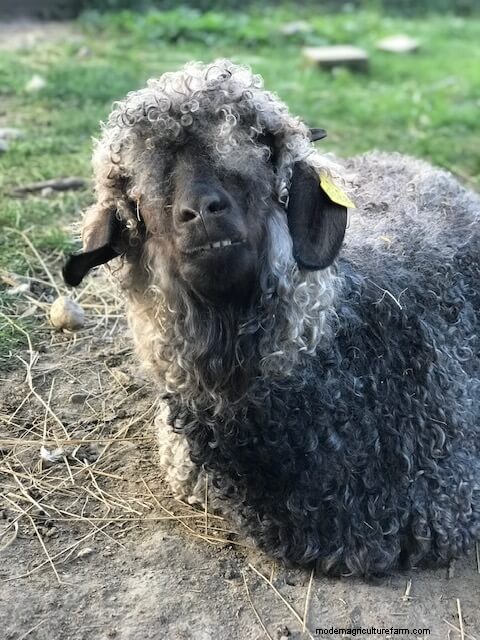
The mohair that Angora goats produce is lustrous with loose crimp, and takes color dye easily. The finest fiber comes from yearling kids, with the mohair growing coarser as the animal ages. The diameter of mohair ranges from between 20 and 40 microns (microns is how fineness in fiber is measured).
These fiber goats are sheared twice a year in spring and fall with males producing 8 to 10 pounds of mohair fleece per shearing, while does produce 4 to 6 pounds of mohair. They are considered to be the most productive fiber animals since they grow more fiber per unit of body weight than other animals.
All that beautiful fiber comes at a price, however. Since angora goats produce mohair continuously all year round, their nutritional levels are high.
The nutrition they receive is channeled first into their mohair production which means if their nutritional needs are not met, they will lose weight rather than slow their mohair growth. It can sometimes be hard to tell if they have lost weight underneath all those beautiful locks, so it is important to test body score hands-on and decide if you need to add extra nutrition.
 Alaura Pittman / Insteading
Angora goats need a baseline protein level of 16% with higher levels needed for growing kids. Hay and forage should be the main staple of your goat’s diet. Grass hay will often need to be supplemented with alfalfa hay to raise protein levels. Added protein supplements can include soybean meal and rice bran.
Rolled grain is a good energy supplement that can include corn, oats, and barley. Pelleted grains can be used, but make sure to read the labels for the nutrient content. You may also consider having a special feed made up at your local feed mill. As with most breeds of goats, free-choice mineral and fresh, clean water should be provided.
A dry shelter is particularly important for angora goats after shearing. In the weeks after shearing, Angora goats can become easily chilled, especially when subjected to cold rain (which seems to inevitably happen after your farm or homestead is full of naked goats).
They tend to be less hardy than other breeds of goats due to their body’s focus on growing mohair above all else. Any time it rains or snows, my entire herd can be found hiding inside their shelter away from the wet weather.
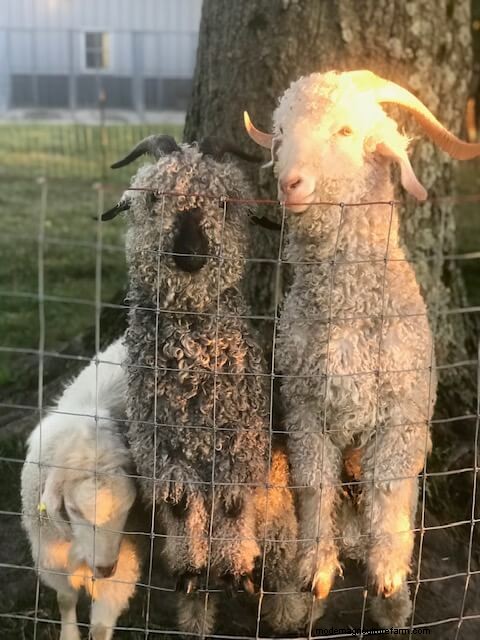
They will also need sturdy fencing, 4 feet of woven wire fencing is what we use, and we haven’t had an issue. Make sure all weak spots are secured because if one goat finds a way out, the rest will surely follow.
As with other breeds of goats, Angoras will need their hooves trimmed regularly. The time between trims will vary depending on the environment where your goats are raised. We have a concrete floor in the doe shelter that helps keep their hooves trimmed down a little.
However, the boys have a softer wood floor and their hooves grow out at a much quicker rate. We trim hooves about every six weeks, although I know some goat keepers that can go for three months between trimming.
 ALAURA PITTMAN / INSTEADING
Hooves are also subject to hoof rot and scald in damp conditions. We live in Southwest Ohio, and spring and fall tend to be very wet in our area. We try to keep the goat area from becoming too muddy and treat hooves at the first sign of scald with drying agents like zinc or copper sulfate.
Trimming of the fiber around the face, beard, and backside (which may be stained with urine or feces) are another part of routine maintenance for Angora goats.
Angora goats are subject to internal parasites in damp conditions, so routine checks of their eye membranes (known as FAMACHA scoring) are necessary to stay ahead of any parasitic infections.
Lice is another issue with Angora goats. We treat for lice after every shearing and when the warm weather starts to arrive. Lice can be especially problematic in the spring and wet conditions (as you can see, dampness is the enemy of the goatherd).
Not only are lice hard on the goat, they can also ruin their fiber, and send months of hard work — from both you and the goat — into the compost bin. Signs of lice on your goat are mohair stuck to the ends of their horns and waxy horn tips which result from the goat scratching themselves incessantly.
You will need to shear your goats twice a year, usually in the spring and fall. We try to get as close as we can to six months between shearing. You will either need to find a reputable shearer in your area or (as we did) learn to shear them yourself.
If you shear them yourself, you will need to invest in good quality sheep shears with a few replacement blades. We shear our goats on a stand that holds their head in place because it is easier to keep them still.
 ALAURA PITTMAN / INSTEADING
You will need a clean barn floor and bags to collect the fiber. Then you will either wash and process the natural fibers yourself or send them off to a mill. There are pros and cons to both.
Washing and processing yourself is cheaper upfront but requires a big-time investment, and you will need to purchase some tools like a carder, and either a drop spindle or spinning wheel. Mill processing has an upfront cost, but they can process much larger volumes of fiber. Here’s a video of the shearing process, just to give you an idea of what it looks like.
Since I enjoy spinning, I usually keep about half of the fiber to process myself, and send the other half out to be mill spun. I will also send some fiber out to be carded into roving. That way, I don’t have to card at home and can spin as soon as I get my roving back.
Once you have the yarn, whether hand or mill spun, you can then sell it or make wonderfully warm clothing, blankets, and accessories. Some handspinners enjoy processing whole fleeces, so another option is to sell the fleece after shearing. The more time and effort you put into the fiber, the more return from your investment you will receive.
Angora goats are a sweet, adorable, and fun addition to any farm or homestead. And with the right planning, their supply of mohair can add a few dollars to your bottom line.


