The season of farm shows and field days offers great opportunities to learn from the experts.
Agronomic Tips and Concerns
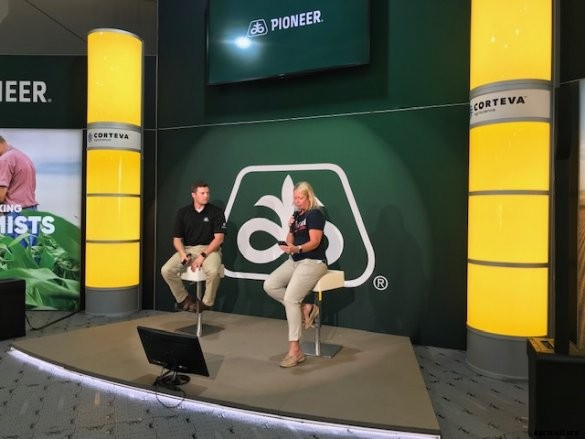
Cody Pettit, field agronomist with Pioneer Seeds, says addressing pH in your soils can be one of the most cost-effective and beneficial strategies to solve soil issues. “Consider liming, putting in tile, and focusing on macronutrients like nitrogen, phosphorus, and potassium. This is the foundation to then take a next step toward correcting additional nutrient needs,” Pettit explains.
Pettit says tar spot is a disease to monitor because it’s here to stay. “Tar spot is the worst I’ve seen it this year,” he says. “It’s a newer disease that is somewhat overlooked by farmers. In northeast Illinois, early applications of fungicide have proven helpful, and it’s important to keep in mind it will overwinter in the soil residue.”
To achieve higher soybean yields, consider planting early soybeans. “Watch your seed treatment and protect the seed if you do plant early,” Pettit says. “Sulfur also has a lot of benefits and you should monitor your levels, especially as we haven’t had the rainfall we normally would, which would bring sulfur to the soil.”
Pettit shares several strategies to help prepare for weather concerns. “Where appropriate, tiling can keep your soil conditions uniform and can pay for itself in one year. I recommend choosing the right hybrid seed for your soil type. And with heavy rainfall, we lose Nitrogen, so consider using a stabilizer, which will help you manage Nitrogen better.”
As fall approaches and you prepare for harvest, Pettit recommends closely monitoring your fields so you can be timely and efficient when getting your crops in.
Market for Land and Equipment
Mark Stock, president and co-founder of BigIron Auctions, says, “Never hesitate to invest in land because the long-term trajectory of land is always uphill. There may be short-lived dips, but land values rebound quickly.”
Stock suggests to anyone contemplating selling land to do so soon. “Consider the facts that we know right now that 1031 exchanges are still in play, we know the estate tax, but there is discussion in Washington, D.C., about changes to these,” Stock explains. “It’s a good time to sell land because we know what the rules are.”
In addition, Stock says equipment is in short supply and high demand. “Farmers are bidding competitively and aggressively for good quality, well-maintained, low-hour machinery because they do not have the option for new.”
Setting up for Success with Minimum-Till Systems
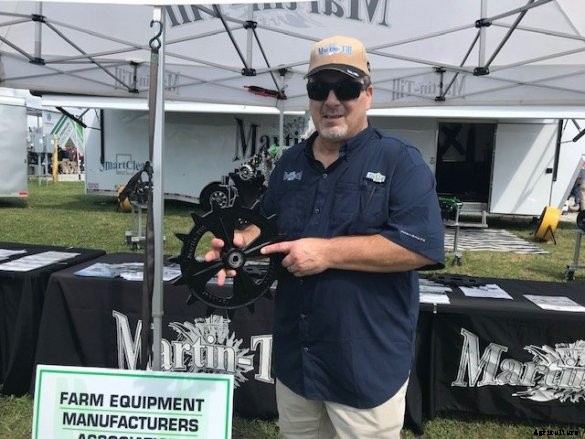
A focus on innovation and serving farmers is what gets Steve Martin, CEO of Martin-Till Equipment, going every day. Martin shares advice on the common issues for setting up a planter in a minimum-till system.
Higher levels of residue on the fields lead to less erosion, more consistent yields, and availability of nutrients in the soil for healthy crops. Martin says taking the time to learn about your needs and the equipment can help you avoid mistakes like setting row cleaners too aggressively, which will move too much soil.
Martin says a good first step for setting up your planter for minimum tillage is to invest in a closing system. This helps to both close the seed furrow without compacting the soil and better achieve consistent germination.
Martin adds, “Make sure your planter frame is level. This affects seed drop as well as planter attachment performance and seed trench closing. In addition, make sure wings have enough ballast so the parallel linkage is level on end rows.” Martin says this is a very common problem and easily misunderstood. “Downforce systems from air bags to hydraulic can easily overcome the wings ballast, causing them to float the toolbar.”