
Welcome to Modern Agriculture!

As the summer comes to a close, farmers are getting ready for corn harvest. And while this time of year is exciting, it often brings a seemingly endless list of things that can be thrown off by the smallest bump in the road. Despite potential problems or even less than ideal weather conditions, it is crucial farmers remain vigilant to achieve a successful harvest season.
As spring fades into summer, it’s time to start thinking about crop planting season, especially when it comes to corn. Corn must be planted two weeks after the last frost date in spring and because it takes a while to grow, producers should get corn planted as early as possible. Let’s take a look at the different types of corn, harvest dates, and more.
There are at least six popular types of corn that are planted and harvested every year. Here are the different kinds:

The data in the above map is based on the United States Department of Agriculture’s “Usual Planting and Harvesting Dates for U.S. Field Crops” report. Below, find the average corn harvesting times by state.
When it comes to growing corn, there are many things to consider in order to have a successful harvest. Let’s take a look at some of these considerations.
If you experience colder climates each year during the winter, you’ll want to plant your corn as early as possible. Considering using varieties of corn that mature quickly will help you have the ability to harvest before fall frost begins.
For successful germination, ground temperatures will need to be above 60°F. One way you can speed up the process of germination in colder areas is by warming the ground with black plastic coverings. Seeds can be planted through the holes in the covers.
It is crucial to check and make sure your machine parts are in good condition. You’ll want to look out for excessive rust, as well as sharp or jagged edges, missing pieces, and more.
The corn head row-unit deck plates must be set less than 1/8th of an inch wider than a typical cob’s diameter. If the deck plates are set too wide, you may damage the kernels on the cob.
For many, corn is present in almost all parts of daily life. Since corn presents itself as such an important aspect of everyday life, it is crucial to also understand the work that goes into the corn harvest every year. Let’s take a look at some of the equipment used to make this harvest happen every year.
The 600 Series Folding Corn Heads work particularly well with John Deere S-Series combines. Here are some of their main benefits:
The 700FC folding corn heads, part of the 700 Series, are two models that corn producers may want to consider utilizing out in the field. Here are some of the main benefits to this model series:
Corn producers continue to show an interest in utilizing extended crop rotations and degree day tracking to improve overall soil health, as well as deter pests. Here is a look at some of the more in-depth considerations to make for the 2021 harvest season.
Members of Iowa State University’s departments of sociology and agronomy have researched farmers’ perspectives on the benefits, as well as the barriers, of extended crop rotations. This research was then published in the Journal of Agricultural and Environmental Letters.
“Before the widespread use of internal combustion engine tractors and synthetic fertilizers and pesticides, extended rotations were key to soil fertility and pest control,” said J. Arbuckle, professor of rural sociology and extension sociologist at Iowa State. “While the shift to a fossil-fuel-based system of cultivation, fertility and pest control reduced labor needs, over time, it has also resulted in unintended consequences such as contaminated water bodies, pesticide resistance, greenhouse gas emissions, and degraded soils. Use of extended rotations could help to reverse some of those harms.”
Overall, the authors determined that extended rotations can have a positive agronomic and environmental impact.
While there is, unfortunately, no rescue treatment for stalk borers, tracking degree days, while also scouting the field regularly to identify larvae is the most effective course of action for management. If an insecticide must be used, application must be timed to reach exposed larvae before they are able to burrow under the stalk. Producers should begin monitoring the temperatures each day beginning in January.
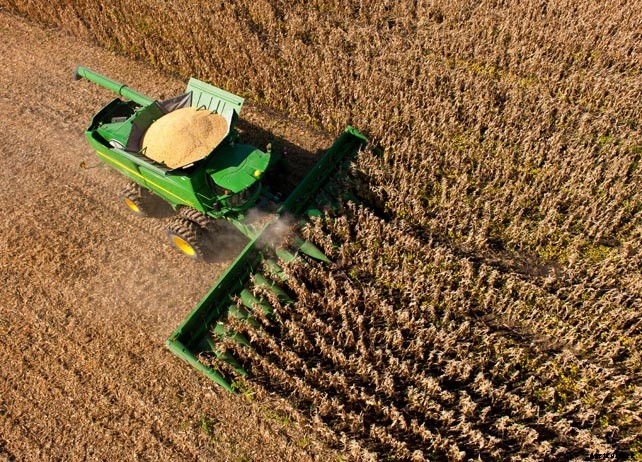
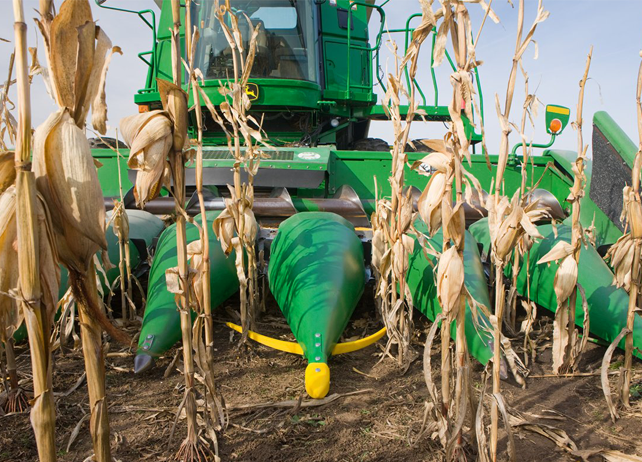
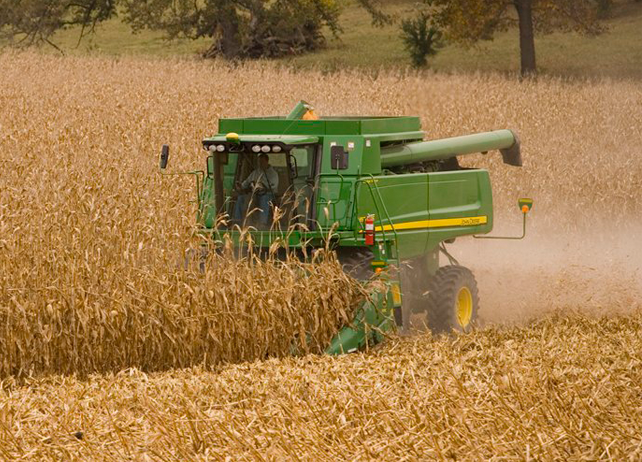
Throughout the corn harvest season, it is crucial to not only start by inspecting your harvesting equipment, but also look for ways to improve the efficiency of your harvest year over year.
If you have any questions about John Deere corn harvesting equipment, such as the folding corn head, you can contact your local John Deere dealer.


