
Welcome to Modern Agriculture!

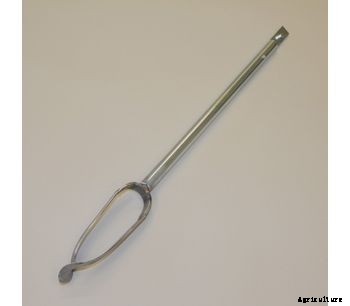
The typical design of the Edelman auger allows for a minimum of friction during penetration into the soil, and the extraction of the auger from the soil, which means less physical effort. To achieve optimal results, the auger type should be chosen in respect of the soil type in question.
Clay soils can be very cohesive; therefore, the blades of the clay type can be narrow. The blades meet with little resistance permitting augering to be done with a minimum of effort, producing a hardly disturbed sample. Wider blades would cause extra friction and the soil material would be difficult to remove.
This auger is available in several diameters, and/or various connections.
Divisible augers are manufactured with the standard bayonet connection or a conical screw thread connection.


