
Welcome to Modern Agriculture!

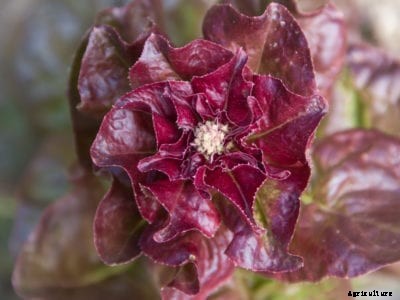
Interestingly enough, flowering and bolting are the same thing. For some reason, when we don’t want vegetable plants to flower, such as lettuce or other greens, we call it bolting instead of flowering. “Bolting” conjures up a slightly negative thought, as opposed to the “flowering.” When our lettuce is flowering, for instance, we are unlikely to say that it’s so pretty. We’re more likely to be aggravated that we did not get it out of the ground soon enough.
Cool season annual vegetables, such as spinach and lettuce, bolt when chilly spring days turn into warm spring days. Bolting lettuce plants become bitter and sharp in taste as they shoot towards the sky. Other crops that are sensitive to bolting include Chinese cabbage and mustard greens.
Lettuce bolt will occur when daytime temperatures go above 75 degrees F. (24 C.) and nighttime temperatures above 60 degrees F. (16 C.). In addition, an internal clock inside lettuce keeps track of the number of daylight hours that the plant receives. This limit varies from cultivar to cultivar, however, once the limit is reached, the plant will send up a flower stalk with reproduction in mind.
Lettuce bolting to seed cannot be reversed, and when it happens it’s time to replace the cool season vegetables with more heat tolerant plants.
Gardeners who wish to keep bolting at bay can do so in a number of ways.


