When do you pick pumpkins form your garden? Which pumpkins are edible and which are ornamental? Learn all about choosing pumpkin varieties, planting pumpkins in time for Halloween, how pumpkins grow, when to harvest pumpkins, how to cure and store pumpkins, and how to cook pumpkins with our pumpkin recipes. It's all in the Almanac's Pumpkin Growing Guide!
About Pumpkins
Did you know pumpkins have been grown in North America for almost 5,000 years? It's a lot of fun to grow this American native. However, note that pumpkins do require a long growing season (generally from 75 to 100 frost-free days) so you need to plant them by late May in northern locations to early July in extremely southern states.
Pumpkins are easy to maintain if you have the space.
Of autumn's wine, now drink your fill;
The frost's on the pumpkin, and snow's on the hill.
–The Old Farmer's Almanac, 1993
Planting
- Pumpkins do best when the seeds are planted directly in the ground. Wait until the plant soil is 70ºF or more before sowing seeds outdoors. Optimum soil temperature is 95ºF. Pumpkins are tender plants which are very sensitive to the cold.
- Pick a site with full sun (to light shade).
- Pumpkins also need lots of space for sprawling vines. Vine varieties need 50 to 100 square feet per hill. However, if your garden space is limited, no worries! Plant pumpkins at the edge of the garden and direct vine growth across the lawn or sidewalk. The vines will only be bothersome for a few weeks. You can also grow pumpkins in big 5 to 10 gallon buckets! Or, try miniature varieties.
- Pumpkins are big, greedy feeders which need very rich soil that is well-drained and not too soggy. Mix lots of compost and aged manure into the planting site before you sow seeds or transplant. Learn more about soil amendments and preparing soil for planting.
How to Plant Pumpkins
- Plant seeds in rows or "pumpkin hills," which are the size of small pitcher mounds. With hills, the soil will warm more quickly and the seeds will germinate faster. This also helps with drainage and pest control.
- Prepare the hills in advance with an abundance of old manure dug deep into the ground (12 to 15 inches). If you don't have manure, loosen the soil and mix in a 2- to 4-inch layer of compost
- Plant the seeds 1 inch deep into the hills (4 to 5 seeds per hill). Space hills 4 to 8 feet apart.
- Your plants should germinate in less than a week with the right soil temperature (70 degrees F) and emerge in 5 to 10 days.
- When the plants are 2 to 3 inches tall, thin to 2 to 3 plants per hill by snipping off unwanted plants without disturbing the roots of the remaining ones.
- In rows, sow seeds 6 to 12 inches apart in rows 6 to 10 feet apart. Snip off plants to thin to one plant every 18 to 36 inches.
Check out this video to learn how to plant pumpkins.
Care
How to Grow Pumpkins
- Use row covers to protect plants early in the season and to prevent insect problems. However, remember to remove covers before flowering to allow pollination by insects!
- Pumpkins are very thirsty plants and need lots of water. Water one inch per week. Water deeply, especially during fruit set.
- When watering: Try to keep foliage and fruit dry unless it’s a sunny day. Dampness will make rot and other diseases more likely.
- Add mulch around your pumpkins to keep in moisture, suppress weeds, and discourage pests.
- Remember that pumpkins are tender from planting to harvest. Control weeds with mulch. Do not overcultivate, or their very shallow roots may be damaged.
- Most small vine varieties can be trained up a trellis.
- Larger varieties can be trained upward on a trellis, too—though it is an engineering challenge to support the fruit—usually with netting or old stockings.
- If your first flowers aren't forming fruits, that's normal. Both male and female blossoms need to open. Be patient.
- Bees are essential for pollination, so be mindful when using insecticides to kill pests. If you must use, apply only in the late afternoon or early evening, when blossoms are closed for the day. To attract more bees, try placing a bee house in your garden.
- Pumpkin vines, though obstinate, are very delicate. Take care not to damage vines, as this can reduce the quality of fruit.
Growing the Perfect Pumpkin
- Pumpkins are HEAVY feeders. Regular treatments of manure or compost mixed with water will sustain good growth.
- Fertilize on a regular basis. Use a high nitrogen formula in early plant growth. Fertilize when plants are about one foot tall, just before vines begin to run. Switch over to a fertilizer high in phosphorous just before the blooming period.
- Pinch off the fuzzy ends of each vine after a few pumpkins have formed. This will stop vine growth so that the plant's energies are focused on the fruit.
- Pruning the vines may help with space, as well as allow the plant's energy to be concentrated on the remaining vines and fruit.
- Gardeners who are looking for a "prize for size" pumpkin might select the two or three prime candidates and remove all other fruit and vines.
- As the fruit develops, they should be turned (with great care not to hurt the vine or stem) to encourage an even shape.
- Place a thin board or heavy cardboard under ripening melons and pumpkins to avoid decay and insect damage.
Pests/Diseases
- Squash bugs and cucumber beetles are common, especially later in summer. Contact your local Cooperative Extension for potential controls.
- Aphids
- Squash Vine Borer
- Powdery Mildew
- Anthracnose
- Poor light, too much fertilizer, poor weather at bloom time, and reduced pollinating insect activity can negatively impact fruit set.
Recommended Varieties
Every pumpkin has a best purpose. When it comes to choosing a pumpkin, think about what you want to do with it. All pumpkins are edible, but some taste better than others. Then there are those that are best for carving. Here are a few of our favorite varieties, with their best use!
Miniature Pumpkins
Jack Be Little’, a miniature variety, is dual purpose. Store-bought shiny (painted) ones make an ideal decoration for a holiday table. Remove the seeds from farm- or home-grown specimens and then bake them for a tiny treat. Vine variety. Days to maturity: 90 to 100 days.
- 'We-B-Little' is an All-America Selection winner, and 'Munchkin' is another great miniature pumpkin. Miniature pumpkins are very productive and easy to grow, sometimes producing up to a dozen fruits per plant.
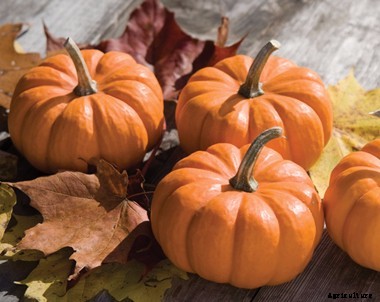
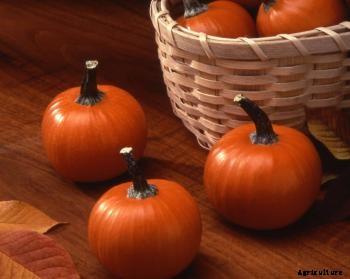
Photo Credits: National Garden Bureau. On the left, 'Munchkin' miniature pumpkins. On the right, 'Wee-B-Little' miniature pumpkins.
Pumpkins for carving
- ‘Autumn Gold’ great for carving, decorating. All-America Selection winner. Vine variety. Excellent for Jack-o-Lanterns. Days to maturity are generally 100 to 120 days.
- The larger ‘Magic Lantern’ and ‘Merlin’ are a;sp great for carving and decorating.
Giant pumpkins
- ‘Dill’s Atlantic Giant’ jumbo variety can grow to 200 pounds. Great for those who want to grow a giant pumpkin. Vine will spread to 25 feet, so space is a must. Days to maturity are 130 to 160 days, so plant early! Thin to the best one or two plants. Feed heavily but keep cultivation shallow. Remove first 2 or 3 female flowers after the plants start to bloom so that the plants grow larger with more leaf surface before setting fruit. Allow a single fruit to develop and pick off all female flowers that develop after this fruit has set on the plant. Take care that the vine doesn't root down near the joints to avoid breakage.
- ‘Big Max’, ‘Big Moon’, ‘Jack O’ Lantern’, and ‘Funny Face’ are some of the best giant pumpkins for carving.
Perfect pumpkins for pies
- ‘Sugar Treat’ and ‘New England Sugar Pie’ are two of the best for cooking and baking. ‘Sugar Treat’ semi-bush hybrid. Days to maturity are generally 100 to 120 days. 'Hijinks' and 'Baby Bear' are both All-America Selection winners and have sweet flesh for pumpkin pie.
- 'Cinderella's Carriage' is also perfect for pies or soups.
- 'Peanut Pumpkin' also produces very sweet flesh and can be great in pumpkin pie or pumpkin puree.
- Heirloom ‘Winter Luxury Pie’ (aka Livingston’s Pie Squash) gets raves for taste but boos for not lasting too long on the vine.
- ‘Baby Pam’; ‘Small Sugar’; ‘Spookie’, a cross between ‘Sugar Pie’ and ‘Jack O’ Lantern’; and ‘Spooktacular’ are great for cooking or carving.
Colorful decorative pumpkins
- 'Jarrahdale' has blue-green skin and makes for great decorations.
- 'Pepitas Pumpkin' is orange and green.
- 'Super Moon' is a large white pumpkin.
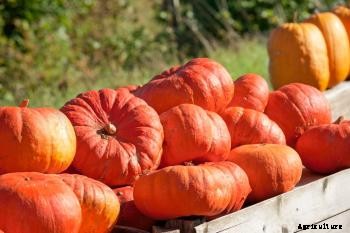
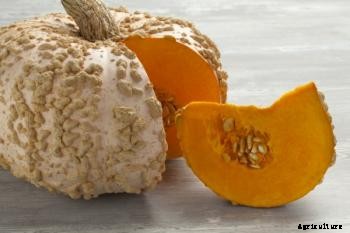
Photo Credits: National Garden Bureau. On the left, 'Cinderella's Carriage' pumpkins. On the right, 'Peanut Pumpkin'.
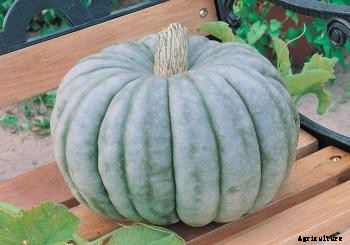
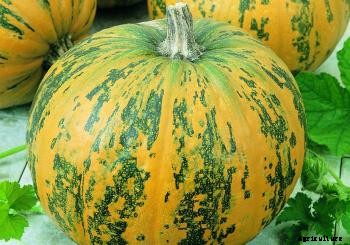
Photo Credits: National Garden Bureau. On the left, a 'Jarrahdale' pumpkin. On the right, a 'Pepitas Pumpkin'.
Harvest/Storage
How to Harvest Pumpkins
- Your best bet is to harvest pumpkins when they are fully mature. They will keep best this way. Do not pick pumpkins off the vine because they have reached your desired size. If you want small pumpkins, buy a small variety instead!
- A pumpkin is ripe when its skin turns a deep, solid color (orange for most varieties).
- When you thump the pumpkin with a finger, the rind will feel hard and it will sound hollow. Press your nail into the pumpkin's skin; if it resists puncture, it is ripe.
- Harvest pumpkins and winter squashes on a dry day after the plants have died back and the skins are hard.
- To slow decay, leave an inch or two of stem on pumpkins and winter squash when harvesting them.
- To harvest the pumpkin, cut the fruit off the vine carefully with a sharp knife or pruners; do not tear. Be sure not to cut too close to the pumpkin; a liberal amount of stem (3 to 4 inches) will increase the pumpkin's keeping time.
- Handle pumpkins very gently or they may bruise.
How to Cure, Store, and Display Pumpkins
- Pumpkins should be cured in the sun for about 10 to 14 days to harden properly. This is a great time to display your pumpkin on the front porch! If you're carving a pumpkin, carve no more than three days before Halloween or the pumpkin will begin to rot.
- Store pumpkins (after curing) in a cool, dry bedroom, cellar, or root cellar—anywhere around 55ºF
- Check out this video for tips on curing and storing pumpkins.
Wit and Wisdom
Pumpkin Trivia
- Pumpkins were once thought to cure snakebites.
- A slice of pumpkin pie before bedtime may help you to sleep. (That's what we tell ourselves, anyway.)
- Pumpkins have been grown in North America for almost 5,000 years.
- Pumpkins are a nutritional powerhouse! Learn more about winter squash's health benefits!
- Cucurbits, such as pumpkins, are subject to an ongoing myth—that planting different family members or varieties will result in strange fruit. Actually, it is the seeds resulting from cross-pollination that are corrupted, so this is a factor only if you are planning to save seeds for next year's planting.
Carving Pumpkins
- Pumpkins have become a traditional Halloween decoration and treat in the United States.
- Inscribe messages on growing pumpkins with a large nail. The letters will scar over while the pumpkins grow and will still be visible at harvesttime.
- See 5 tips for picking the perfect pumpkin for carving!
Recipes
Pumpkin Macaroni and Cheese
Cooking Notes
- See how to clean a pumpkin for cooking.
- Don’t forget about the seeds! Roast them with salt or cinnamon for a tasty treat.


