No annual is more cheerful or easier to grow than the marigold. These flowers are the spendthrifts among annuals, bringing a wealth of gold, copper, and brass into our summer and autumn gardens. The flower’s popularity probably derives in part from its ability to bloom brightly all summer long. Just be sure to deadhead to keep the blooms coming! Learn more.
Marigolds have daisy- or carnation-like flowerheads that are produced singly or in clusters. Although there are some 50 species, most marigolds we see in the garden are one of the following:
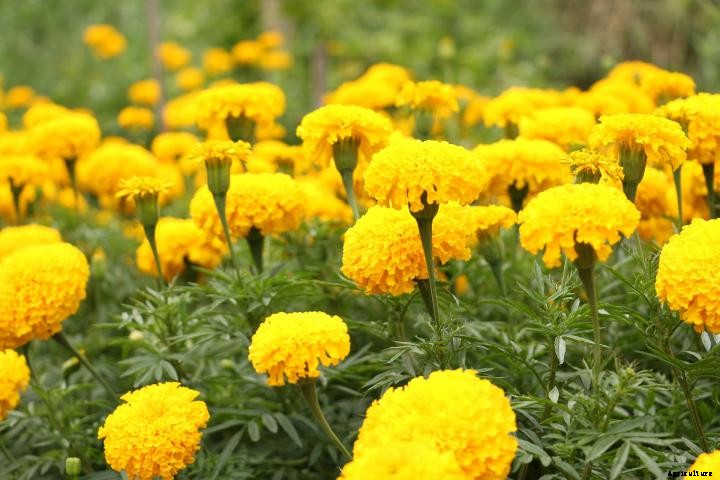
- Tagetes erecta (aka African marigolds, American marigolds, or Mexican marigolds): This species is the tallest and most upright marigold, reaching 3 to 4 feet in height and producing large, full flowers. They're native to Mexico and Central America and will thrive even under drought-like conditions.
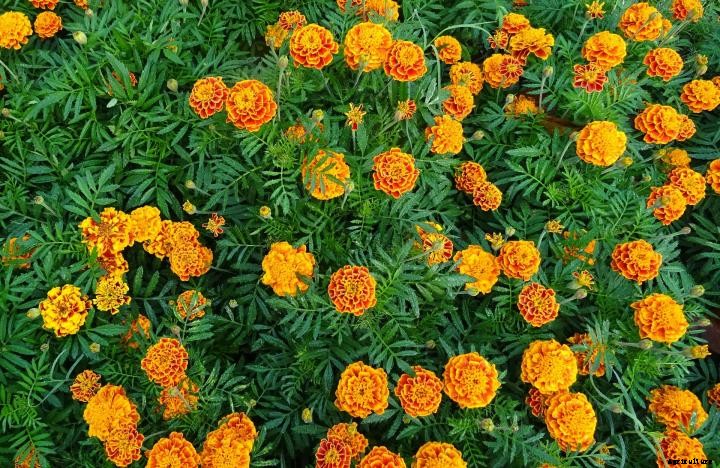
- Tagetes patula (aka French marigolds): French marigolds tend to be smaller, bushier, and more compact than T. erecta. They are often wider than they are tall. Elegant and eye-catching, they have relatively demure flowers and usually grow from 6 inches to 2 feet tall. They are better suited to rainier conditions than the other Tagetes species.
- Tagetes tenuifolia (aka signet marigolds): These petite marigolds do well in hot, dry sites and make for a wonderful edging plant. They rarely reach more than a foot in height.
- Calendula officinalis (aka pot marigolds or English marigolds): A native of southern Europe, this "marigold" is actually not a true marigold, but is an attractive companion plant nonetheless. Its bright flowers are edible—with a tangy, peppery taste—so it is often grown alongside herbs in kitchen gardens.
Check out our video to learn more about the benefits and uses of Calendula:
Marigolds have been stereotyped, but they offer tremendous variety. Both the American and French marigolds are generally aromatic, too.
Planting
When to Plant Marigolds
- Young French and signet marigolds can be planted from spring through midsummer, but the tall African marigolds are best planted right away in the spring (after danger of frost has passed) because they are slower to mature and produce flowers. Find local frost dates here.
- Sow seeds directly into the garden once the soil is warm in the spring. You can start seeds indoors, but they germinate so easily outside that there's really no advantage. The exception is African marigolds, which are best bought as young plants or started indoors about 4 to 6 weeks before your last frost date.
- Marigolds sprout within a week in warm weather and plants typically produce blooms in about 8 weeks.
Choosing and Preparing a Planting Site
- Marigolds thrive in full sunshine and can often withstand very hot summers. African and signet marigolds are drought tolerant, while French marigolds are more tolerant of wet conditions.
- If planted in shade and cool, moist areas, marigolds are prone to powdery mildew and won't bloom well.
- Though they grow in almost any soil, marigolds do best in moderately fertile, well-drained soil.
- Prepare the soil by digging down about 6 inches to loosen it. Remove stones.
How to Plant Marigolds
- French marigolds can easily be started from seed, while African marigolds are best purchased as young plants (when started from seed, they can take a long time to flower).
- Optional: If soil is nutrient-starved, add some slow-release (granular) fertilizer in the planting hole. A 5-10-5 works fine.
- Moisten the soil, then sow seeds 1 inch apart and no more than 1 inch deep.
- While still small, thin the seedlings. Space French and signet types 8 to 10 inches apart. The larger African marigolds should be at least 10 to 12 inches apart.
- If planting transplants, thoroughly water each plant after planting in the garden.
- If planting in containers, use a soil-based potting mix. Either mix in slow-acting granular fertilizer at planting time or plan to water with diluted liquid fertilizer periodically. Take care to space properly; marigolds grown in containers can become crowded.
Care
How to Grow Marigolds
- Once the marigolds have established themselves, pinch off the tops of the plants to encourage them to grow bushier. This will keep the plants from becoming leggy and will encourage more blooming.
- Marigolds don't require deadheading, but if dying blossoms are regularly removed, it will encourage the plant to continue blooming profusely.
- When you water marigolds, allow the soil to dry somewhat between waterings, then water well and repeat the process. Water more in high heat.
- Do not water marigolds from overhead. Water at the base of the plant. (Excess water on leaves can lead to powdery mildew.)
- Do not fertilize marigolds during growth. A diet that's too nitrogen-rich stimulates lush foliage at the expense of flowers.
- The dense, double flowerheads of the African marigolds tend to rot in wet weather.
- Add a layer of mulch between plants to suppress weeds and keep soil moist, especially when plants are young.
How to Deadhead Marigolds
Deadheading is about removing faded flowers by pinching off the flower head. For some plants, including marigolds, pinching off the dead flower heads encourages the plant to produce more blooms rather than wasting their energy on forming seeds, extending the flowering season. Marigolds also look so much better after deadheading.
Deadheading marigolds is very simple. When a blossom starts to go bad, pinch (cut) its stem back to the nearest set of leaves.
Whether you’re deadheading your annuals, be sure to fertilize as well. Annuals are very heavy feeders and will respond well.
Pests/Diseases
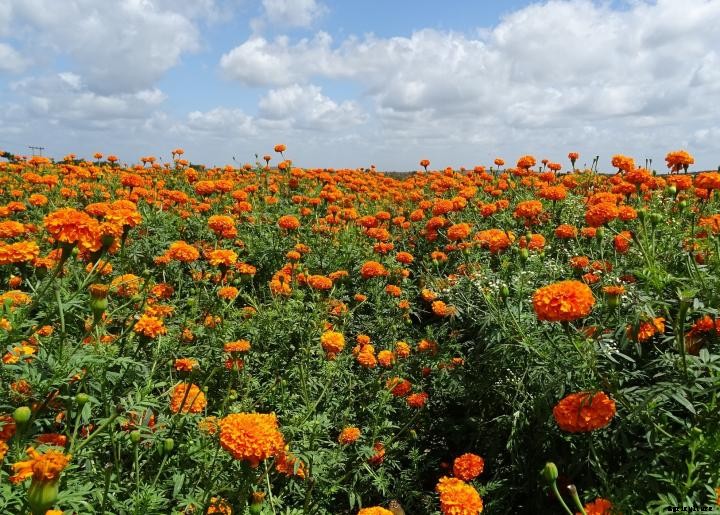
Marigolds have few pests or problems overall, but spider mites and aphids sometimes infest the plants. Usually a spray of water or the application of an insecticidal soap, repeated every other day for a week or two, will solve the problem. Occasionally, marigolds will be affected by fungal diseases such as powdery mildew if conditions are too wet. To prevent fungal issues, avoid getting water on the marigolds' leaves, keep weeds down, and plant in well-drained soil.
Marigolds as Companion Plants
Farmers and gardeners have long known that marigolds make important companion plants all over the garden.
- The underground workings of the French marigold in particular are known to repel harmful nematodes (microscopic worms) that attack the roots of garden vegetables—especially root-knot and lesion nematodes. Crops most impacted include tomatoes, cucumbers, strawberries, snap beans, squash, onions, and garlic.
- To take advantage of this effect, don't plant marigolds directly alongside vegetables. Instead, plant a mass of marigolds in the spring in the area where you intend to grow a fall crop. In mid- to late summer, remove the marigolds and plant vegetables and greens for a fall harvest.
Recommended Varieties
Marigolds come in a range of colors—from creamy white to golden orange—and sizes. French marigold varieties tend to be smaller than American/African varieties.
French Marigolds (T. patula)
- ‘Little Hero’ Series: 7” tall plants with large, double carnation flowers in 7 color combinations of maroon, orange, and yellow.
- ‘Hero’ Series: 10” tall plants with double carnation, large (2” wide) flowers in 7 different combinations of yellow, orange, and maroon.
- ‘Bonanza’ Series: 2” wide, double carnation flowers in 5 different combinations of yellow, orange, and maroon on bushy, compact 8” tall plants.
- ‘Aurora' Series: 1’ tall plants with wide-petaled, anemone-like flowers in shades of maroon, yellow, and orange.
- ‘Janie’ Series: Early blooming. 8” tall plants are perfect for container growing. Double carnation type flowers in 6 different combinations of yellow, orange, and maroon.
- ‘Boy O’ Boy’ Series: 6” tall prolifically flowering plants with flowers in shades of maroon, yellow, and orange
French Marigolds
American/African Marigolds (T. erecta)
- ‘Jubilee’ Series: 2’ tall plants with dense, double flowers in shades of yellow and orange.
- ‘Gold Coin’ Series: 1½ to 2’ tall plants with large (5” wide) double blooms in gold, yellow, and orange.
- ‘Safari’ Series: 1’ tall plants with flat-topped, large flowers in shades of maroon, yellow, and orange.
- ‘French Vanilla’: 3” wide flowers are pure creamy white. Minimal scent. Plants are 1½ to 2’ tall.
Harvest/Storage
- In flower arrangements, strip off any leaves that might be under water in the vase; this will discourage the overly pungent odor.
- Marigolds can be dried for long-lasting floral arrangements. Strip foliage from perfect blossoms and hang them upside down.
- You may see "marigolds" listed as edible flowers. In fact, it's the flowers of Calendula—not Tagetes—that make great additions to a summer dish. Flowers from Tagetes marigolds may be irritating to the skin, so we do not recommend ingesting them.
Wit and Wisdom
- In the late 1960s, Burpee president David Burpee launched an energetic campaign to have marigolds named the national flower, but in the end, roses won out.
- For years, farmers have included the open-pollinated African marigold 'Crackerjack' in chicken feed to make egg yolks a darker yellow.
- Marigolds are one of the October birth flowers.
Cooking Notes
The flowers of Tagetes marigolds are not edible, but those of Calendula are. The bright petals of Calendula add color and a spicy tang to salads and other summer dishes.
- The flower petals are sometimes cooked with rice to impart the color (but, unfortunately, not the flavor) of saffron.


