The nasturtium is a cheerful and easy-to-grow flower! Their bold blooms and edible leaves, flowers, and seedpods make them an especially fun flower for kids to plant and a favorite companion plant in the garden. Here's how to grow your own nasturtiums!
About Nasturtiums
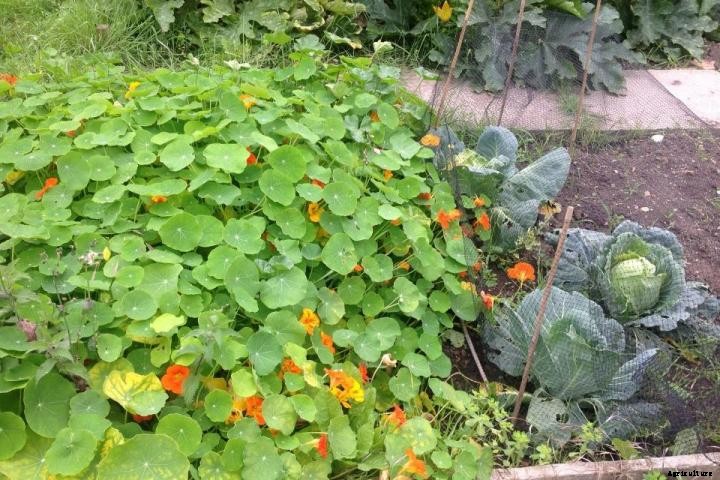
These lovely plants, with their unique greenery and vibrant flowers, grow well in containers or as ground cover around vegetable gardens. In fact, they are often used as a trap crop in companion planting, drawing aphids and other garden pests away from the more valuable vegetables.
- Nasturtium is a friend of: bean, broccoli, cabbage, cucumber, kale, melon, pumpkin, and radish.
Pests aren't the only thing nasturtiums attract, however. They are also a favorite of pollinators like bees, butterflies, and hummingbirds, and their pretty fragrance makes them a good choice for cut-flower gardens, too.
Nasturtiums are grown as annual plants in most areas, though they may perennialize in frost-free zones.
Types of Nasturtiums
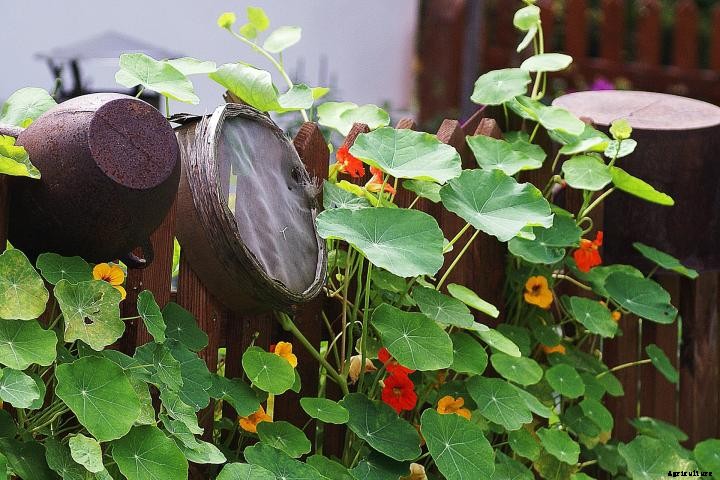
There are many varieties of nasturtiums, which are divided into two main types: trailing or climbing types (Tropaeolum majus) and bush types (T. minus). As their names suggest, the main difference between them is their growth habit, with trailing nasturtiums forming long vines and bush nasturtiums remaining more compact. (Bush types are also sometimes called "dwarf" nasturtiums.)
Trailing nasturtiums are a great choice for growing in a window box or hanging basket, as their vines will drape and climb beautifully. Bush nasturtiums are a better choice for smaller gardens where space is limited.
Edible Flowers
An important feature of all nasturtiums is their edibility! Nasturtiums' leaves, flowers, and seedpods have a peppery, almost mustard-like taste, which makes them lovely as a garnish in salads. The seedpods may also be pickled and used like capers.
Check out our video to learn more about the benefits of growing nasturtiums:
Planting
When to Plant Nasturtiums
Nasturtium seeds may be sown directly in the garden (recommended) or started indoors. Their fragile roots are sensitive to transplanting, so we prefer to direct-sow them.
- Indoors: Start seeds 2 to 4 weeks before your last spring frost date.
- Outdoors: Sow seeds 1 to 2 weeks after your last spring frost date. Soil temperatures should ideally be between 55° and 65°F (12° and 18°C). Plan to protect young seedlings from late frosts.
Choosing and Preparing a Planting Site
- Nasturtiums do well in poorer soils and do not typically need extra fertilizer (unless your soil is extremely poor). Too much nitrogen will encourage more foliage than flowers.
- Soil should be well-draining.
- Plant nasturtiums in full sun (6–8 hours of sunlight) for the best results. They will grow in partial shade (3–6 hours of sunlight), but won't bloom as well.
- Be conscious of the growing habit of the type of nasturtium you're growing. Plan to provide supports for trailing types.
How to Plant Nasturtiums
- Sow the seeds about half an inch deep and 10 to 12 inches apart in the garden.
- Plants should appear in 7 to 10 days.
Care
How to Care for Nasturtiums
- Water regularly throughout the growing season, but be careful not to overwater your plants. Nasturtiums are somewhat drought tolerant, but still prefer to grow in moist soil. Plus, water-stressed plants will have subpar blooms and flavor.
- Cutting off the faded/dead flowers will prolong blooming.
- If you're growing nasturtiums in containers, they may need to be trimmed back occasionally over the growing season. This encourages the plants to produce new foliage.
- In summer, nasturtiums may stop blooming if they become heat-stressed. Their flavor may become more intense, too. Keeping them sufficiently watered can help to mitigate the effects of extreme temperatures.
Pests/Diseases
- Aphids
- Caterpillars
- Flea beetles
- Slugs
- Whiteflies
Recommended Varieties
- 'Alaska Variegated' has variegated foliage and a mix of flower colors.
- 'Salmon Baby', to add a pretty salmon-pink color to your garden.
- 'Variegatus', which is a trailing type with red or orange flowers.
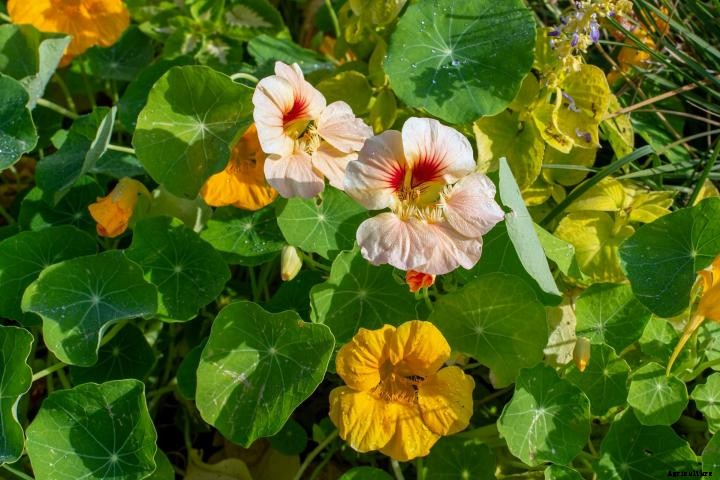
- 'Peach Melba' has creamy yellow flowers with orange-red centers.
Harvest/Storage
How to Harvest Nasturtiums
- Leaves and flowers can be harvested at any time.
- Seedpods should be harvested before seeds have had a chance to mature and harden.
- Snip off leaves, flowers, and seedpods with scissors to avoid damaging the plant.
- If you allow the seedpods to mature, you can save the nasturtium's chick-pea–size seeds and replant them in the spring! Let the seeds dry out on the vine; they'll fall off. Collect them, brush off the soil, dry them, and store them in a paper envelope in a cool and dark place.
Wit and Wisdom
- Nasturtium flowers are said to symbolize patriotism. Find out more flower meanings here.
- Nasturtium flowers are one of several common garden flowers that are edible!
Recipes
Nasturtium and Shrimp Salad Appetizer
Cooking Notes
Leaves, flowers, and immature seedpods are edible and make for a beautiful garnish on any summer meal! The seedpods may also be pickled.


