When we think of clematis, we generally envision the popular clematis vine, a climber with large-flowering, star-shaped blooms. However, there are beautiful small-flowering and shrub-types that few people even know about. Learn more about clematis and how to get this beauty to thrive!
Clematis is a popular perennial climber hardy in USDA Hardiness Zones 4 through 8. They're a great choice for a fence, wall, or trellis.
There is a wide variety of options as clematis come in many colors, flower sizes, and shapes. Some are at their best in sun and some in shade. Certain types bloom in spring and others bloom in late summer. Select the right clematis varieties, and you could have colorful flowers blooming for every season.
Planting
When to Plant Clematis
- Plant potted clematis in spring or early fall. Avoid planting in the height of summer, as the harsh sun and heat can make it difficult for the plant to get established.
Selecting a Planting Site
- Select a site where the plant’s roots can be shaded and cool, but its stems will be in full sun.
- Most clematis varieties need a site with at least six hours of full sun.
- Clematis grows best in loose, well-draining soil. Work plenty of compost into the soil prior to planting.
Planting Clematis
- Dig a planting hole that's about twice as wide as the plant's pot.
- Set the plant in the hole with the crown 2 to 3 inches below the soil surface.
- Cover the soil around the plant with mulch to keep the roots cool.
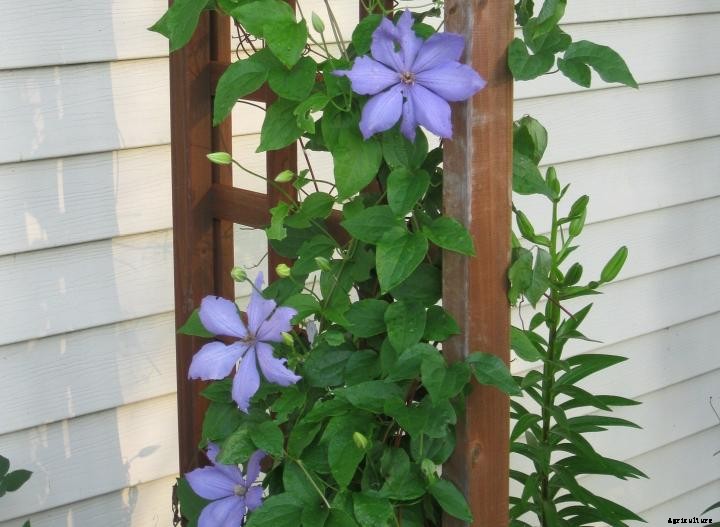
- Clematis vines need a trellis or other support on which to grow.
Care
How to Care for Clematis
- Once the plant is in the ground, don’t disturb or move it.
- Keep the soil moist during the first year by watering weekly during the growing season. Don’t let the soil dry out.
- Fertilize after planting with a liquid seaweed or fish emulsion. In subsequent years, fertilize in spring with a granular organic fertilizer.
- In spring, add compost around the plant.
- On older plants, remove any stems in spring that are 4 years old or older.
Pruning Clematis
Like hydrangeas, different clematis varieties are pruned at different times. Some bloom on new wood and some on old wood.
See our post on how and when to prune your clematis.
Pests/Diseases
The most serious disease is commonly called clematis wilt. It is a stem rot/leaf spot disease caused by a fungus. It mainly affects large-flowered clematis hybrids.
Clematis is also susceptible to powdery mildew, rust, and viruses.
Insect pests include aphids, vine weevils, slugs/snails, scale insects, spider mites, and earwigs.
Recommended Varieties
There are over 200 species and hundreds of hybrids of clematis. Flower shapes resemble saucers, bells, tulips, doubles, and semi-doubles. The small flowering varieties make up for what they lack in size by the abundance of their blossoms. They also bloom longer.
- Clematis viticella 'Betty Corning' is a vine that produces loads of light purple, bell-like flowers all season long. It dies to the ground each winter but puts on an amazing growth spurt each spring climbing up to 10 feet high. It needs a pole or a tall shrub or tree for support.
- C. heracleifolia is a shrub that dies back almost to the ground each winter. In spring it puts out new growth and by summer it reaches about 4 feet in height and width. By August it is covered with small, gorgeous, blue flowers that resemble hyacinth blossoms.
- C. tangutica has bright yellow, bell-shaped flowers. It also produces showy silky seed heads. Display it against an evergreen backdrop.
- 'Sweet Summer Love' grows to about 5 feet tall and is covered with small bluish-purple flowers with white centers in mid-summer. It survives the toughest winters.
- Clematis that bloom early and late, on both old and new growth include ‘Lincoln Star’, a bi-color with raspberry flowers edged with white and 'Elsa Spath', a prolific bloomer, producing lots of single blue-purple flowers.
Visit our post on clematis varieties to see our favorites!
Wit and Wisdom
- The word clematis comes from the ancient Greek word for a climbing vine.
- Many clematis varieties are scented. The most fragrant species is the tender C. armandii.
- Clematis belongs to the buttercup family (Ranunculaceae).


