Jade plants are succulent houseplants, which makes them fairly resilient and easy to grow indoors—plus, they're capable of living a long, long time with proper care! See how to care for your jade plant.
About Jade Plants
With their thick, woody stems and oval-shaped leaves, jade plants have a miniature, tree-like appearance that makes them very appealing for use as a decorative houseplant. They live for a very long time, often being passed down from generation to generation and reaching heights of three feet or more when grown indoors.
Jade plants adapt well to the warm, dry conditions found in most homes. It's important to keep the plant watered during the growing season (spring, summer) and drier during the dormant season (fall, winter). However, even during the growing season, the soil should be allowed to dry out fully between waterings, as jade is very susceptible to rot.
Jade plants may be grown outdoors as landscape plants in areas with a mild, dry climate year-round (typically Zone 10 and warmer). They are very susceptible to cold damage, so in locations where temperatures get to freezing or below, it's best to grow jade in containers and take them indoors when it gets below 50°F (10°C).
Planting
How to Plant Jade Plants
- Choose a wide and sturdy pot with a moderate depth, as jade plants have a tendency to grow top-heavy and fall over.
- Use a soil that will drain thoroughly, as excessive moisture may promote fungal diseases like root rot. An all-purpose potting mix will work, though you will want to mix in additional perlite to improve drainage. A 2:1 ratio of potting mix to perlite is great. Alternatively, use a pre-made succulent or cacti potting mix.
- After planting a jade plant, don't water it right away. Waiting anywhere from several days to a week before watering lets the roots settle and recover from any damage.
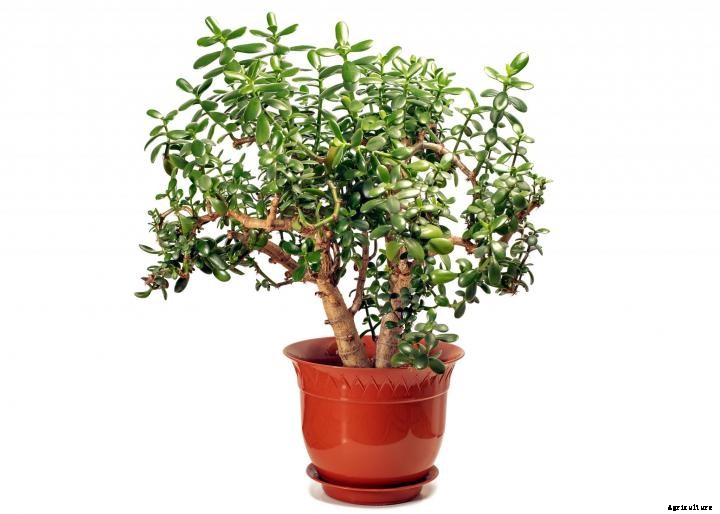
Older jade plants may develop a thick, scaly trunk, giving them their classic tree-like appearance. Photo by trambler58/Shutterstock.
How to Start a Jade Plant from a Leaf or Stem Cutting
As a succulent, jade plants are very easy to start from single leaves or cuttings. Here's how:
- Remove a leaf or take a stem cutting from a well-established plant. An ideal stem cutting would be 2–3 inches in length and have at least two pairs of leaves. Once you have your leaf or cutting, allow it to sit for several days in a warm place; a callous will form over the cut area, helping to prevent rot and encourage rooting.
- Gather your pot and a well-draining potting mix. Use soil that is slightly moist, but not wet.
- Take the leaf and lay it on top of the soil horizontally, covering the cut end with some of the soil. If you have a stem cutting, place it upright in the soil (prop it up with a few small rocks or toothpicks if it won't stand on its own).
- Place the pot in a warm place with bright, indirect light. Do not water.
- After a week or two, the leaf or cutting will start sending out roots. A week or so after that, give the plant a gentle poke or tug to see if it has rooted itself in place. If it hasn't, wait a bit longer, testing it (gently!) every few days.
- Once the plant seems to be firmly rooted, water it deeply and carefully. Use something like a turkey baster to gently water the plant without disturbing the roots too much. Make sure that you don't just get the surface layer of the soil wet, as you want to encourage the roots to grow downward for water, not towards the surface.
- Let the soil dry out between waterings and keep the plant out of intense direct sunlight until it is well established.
Care
How to Care for Jade Plants
Lighting
- Jade plants should receive at least 6 hours of bright light each day. Young plants should be kept in bright, indirect sunlight; large, well-established jade plants can handle more direct sunlight.
- Kitchens and offices with a south-facing window are typically great spots with just enough light, as are western-facing windows.
- Jade plants that are kept in low light can become leggy and top heavy, which makes them susceptible to damage if they fall over or become unable to support their own branches!
Temperature
- Jade plants grow best at room temperature (65° to 75°F / 18° to 24°C), but prefer slightly cooler temperatures at night and in the winter (down to 55°F / 13°C).
- Note: Jade are not frost tolerant, so if you keep yours outdoors during the summer, be sure to bring it inside once temperatures begin to fall to around 50°F (10°C) in autumn.
- During the winter months, move jade plants away from cold windows and keep them out of drafty areas. If exposed to cold temps, jade plants may drop their leaves.
Watering
- Watering jade plants correctly is very important! Improper watering is the number one issue that most people experience with their jade plants.
- In the spring and summer, when the plant is actively growing, it will require more water than at other times of the year. Water jade plants deeply (meaning that the soil gets sufficiently moistened throughout—not just at the surface) then wait until the soil has mostly dried out before you water it again. This means that you could end up watering it once a week or once a month—it depends entirely on how quickly the soil dries out in the environment where you keep your plant.
- In the fall and winter, the plant may go dormant, causing it to slow or pause growth entirely. During this time, it won't need much water. Water it even less often than in the spring and summer, allowing the soil to dry out fully between waterings. Large, well-established jades may not need more than one or two waterings throughout their entire dormancy period.
- Try to avoid splashing water on the leaves while watering, as this can expose them to rot in a humid environment.
- Jade plants can be sensitive to salts in tap water, so water with filtered or distilled water if your tap water is not ideal.
- If the plant starts to drop its leaves, if leaves look shriveled, or if brown spots appear on the leaves, it is an indication that the plant needs MORE water.
- If leaves become squishy and waterlogged, the plant is getting TOO MUCH water.
Fertilizing
- Jade plants don't require high levels of nutrients and should be fed sparingly. Use a diluted mix of a standard liquid houseplant fertilizer or a fertilizer made for cacti and succulents.
Repotting Jade Plants
- Jade plants don't mind being root bound in a small pot. In fact, keeping them root bound will keep the jade smaller and more manageable.
- Repot young jade plants once every 2 to 3 years to encourage growth. With older jade, repot once every 4 to 5 years or as necessary.
- Transplant in the early spring, just before the growing season begins.
- After repotting, don't water the plant for a week or so. Wait at least a month before fertilizing so as not to accidentally burn fresh roots.
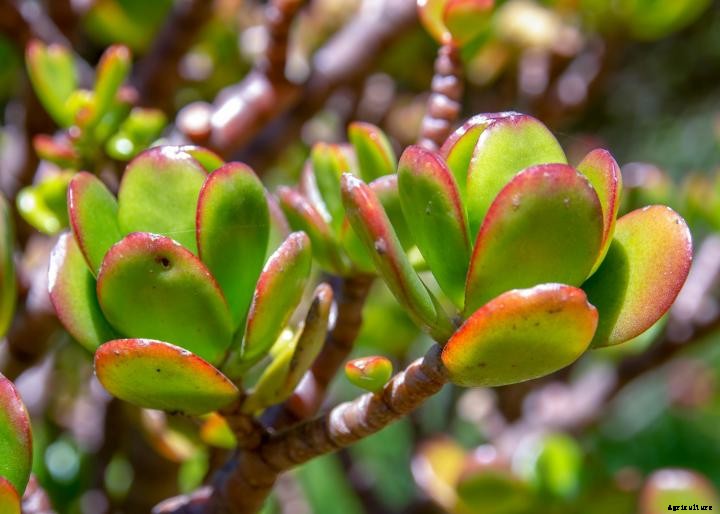
Some varieties of jade may develop red leaf tips if given sufficient lighting. Photo by Mauricio Acosta Rojas/Shutterstock.
Pests/Diseases
- Mealybugs or scale may hide under stems and leaves. To remove the pests, use a spray bottle of water or wipe the insects off gently with a bit of rubbing alcohol on a paper towel or cotton swab. Repeated applications will be necessary to remove the pests' offspring. If the plant is too heavily infested, it may be better to take a clean cutting from it and start anew.
- Powdery mildew can be a problem, but is fairly uncommon indoors.
- Root rot is caused by excessive moisture in the soil. Let the soil dry out between waterings.
- Shriveled or wrinkled leaves are signs of a thirsty plant in need of more frequent or deeper waterings.
- Waterlogged and squishy leaves indicated that the plant is getting too much water.
- Leaf drop is a symptom of watering issues, too.
Recommended Varieties
There are many types of jade plants available—from the standard, green-leafed jade to a number of variegated varieties. Here are a few interesting jades to keep an eye out for:
- 'Hummel's Sunset' has beautiful yellow- and red-tipped leaves.
- 'Tricolor' has leaves variegated with white and cream.
- 'ET's Fingers' has tubular leaves with red tips. An oddity!
Harvest/Storage
- New jade plants can easily be started from the leaves of mature plants. See the Planting section (above) for more info.
Wit and Wisdom
- To persuade a jade plant to flower, keep it root-bound in a small pot and hold back water. Cooler temperatures in the winter promote blooming, too.
- Jade plants are one of several plants with the nickname of "money plant" and are seen by some as a sign of good luck and prosperity.
- Due to their long lifespans and resiliency, jade plants make great gifts that can last a lifetime and be passed from generation to generation.


