
Welcome to Modern Agriculture!

Frontenac Zones 3-8; makes rosé, red, or port.
Frontenac Blanc Zones 3-8; makes very light white wine.
LaCrescent Zones 3-8; makes sweet wine with apricot and honey aromas.
St. Croix Zones 4-8; makes a wine similar to light Burgundy. Harvest starts early, in mid-August.
Swenson Red Zones 4-8; ferment without skins to make a floral white wine. Harvest starts early, in mid-September.
Other plant breeders followed suit, and today there are a number of varieties hardy to Zones 5, 4, and even 3. Now’s the time to plant bare-root vines, but be forewarned: You won’t pick a single grape for three years, and four will pass before you see a robust harvest. Once established, though, vines will bear fruit for at least three decades.
As soon as all danger of frost has passed, plant the bareroot vines in 4- to 6-inch-tall mounds of soil. Space the vines 4 to 6 feet apart in rows 7 to 8 feet apart.
Cold-hardy grapes grow best in sandy or gravelly soils with a pH of 5.5 (about 0.5 to 1 point lower than conventional Vitis vinifera varieties). Have the soil tested and, if necessary, amend it with bonemeal and organic 10-10-10.
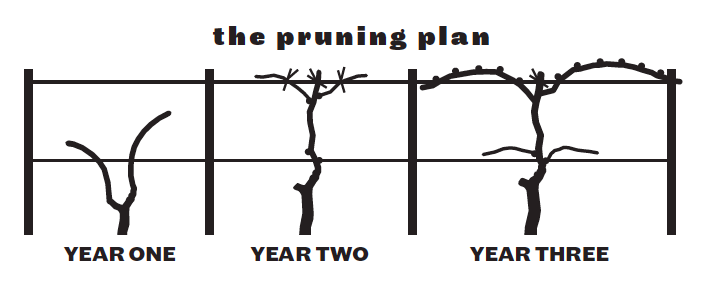
For a simple trellising system, sink heavy wood or metal posts about 20 feet apart along each row, and stretch 12.5-gauge wire horizontally between the posts, 2 feet above the ground.
Then stretch 15-gauge wire parallel to, and 12 to 18 inches above, the 12.5-gauge wire.
Keep an eye out for pests. Grape phylloxera form galls (abnormal growths) on the leaves. Diligent cleanup and disposal of fallen leaves can help keep the aphidlike bugs at bay. Remove Japanese beetles, which can skeletonize grape leaves, by hand in the early morning. If more than 15 percent of the leaves are damaged by beetles, dust the insects with the organic pesticide pyrethrin.


