Welcome to Modern Agriculture!

One of the questions I’m asked most is ‘How often do you water tomato plants?’ Too much water can damage the roots and crack or split ripening fruits. Too little water can reduce yield or cause issues like blossom end rot. Smart watering is a skill anyone can learn and can mean the difference between a so-so harvest and a bumper crop of sweet summer tomatoes. Read on to learn more about how often to water your garden and container-grown tomato plants.
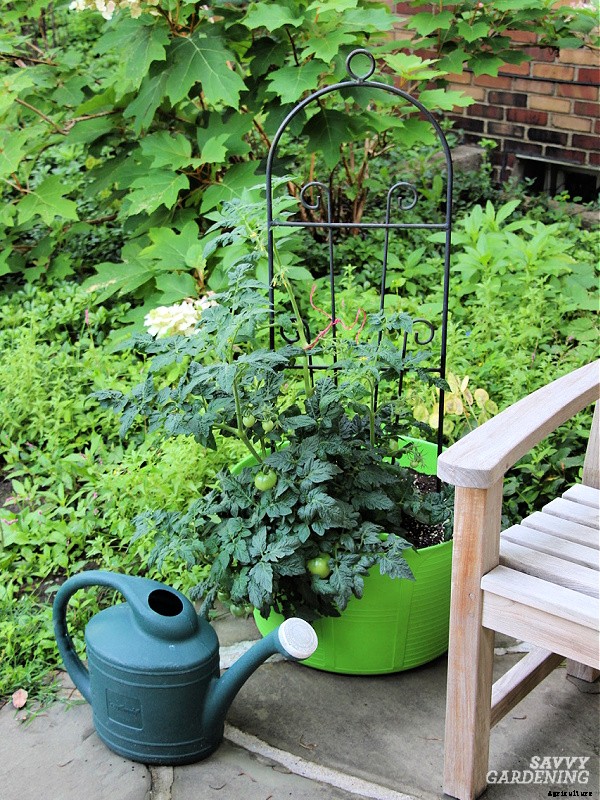
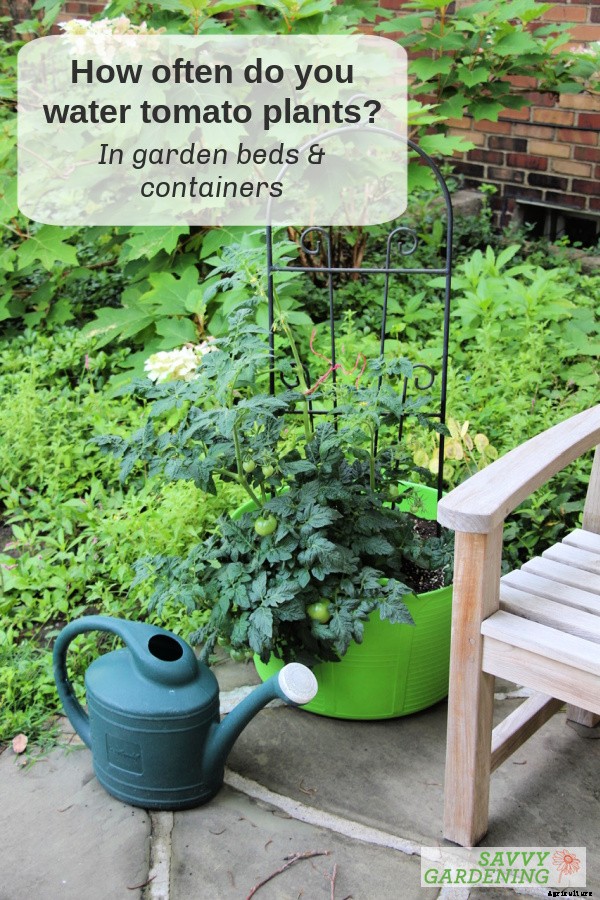
There isn’t a quick answer to the question of ‘how often do you water tomato plants?’ Frequency of watering depends on a number of factors: the growth stage of the tomato plant (a newly planted seedling needs less water than a fully grown plant), soil type (in both gardens and containers), container material if growing in pots, and weather (expect to water more often when the weather is hot and dry).
That said, it’s not hard to figure out when to water your tomato plants. Garden lore says to give tomato plants an inch or two of water each week. I do a quick daily check to gauge whether my tomato plants need a drink. This check consists of two parts: 1) a visual inspection of the soil to see if it looks dry and 2) me sticking my finger into the soil to feel if it’s dry. If it looks and feels dry, I water.
Early in the season when my tomato plants are young I find that I need to water a couple of times a week. Once the plants have matured and begin to flower and fruit, my container-grown tomatoes are irrigated almost daily and garden tomatoes are deep watered once a week. I’ve also learned a few simple strategies to reduce watering which you’ll find detailed below.
It’s important to understand that inconsistent watering of tomatoes is just as bad as too little water. If tomato plants, particular those grown in pots, are allowed to dry out to the point of wilting, the plants can be affected by blossom end rot. To learn more about blossom end rot and how to prevent it, be sure to read Jessica’s excellent article.
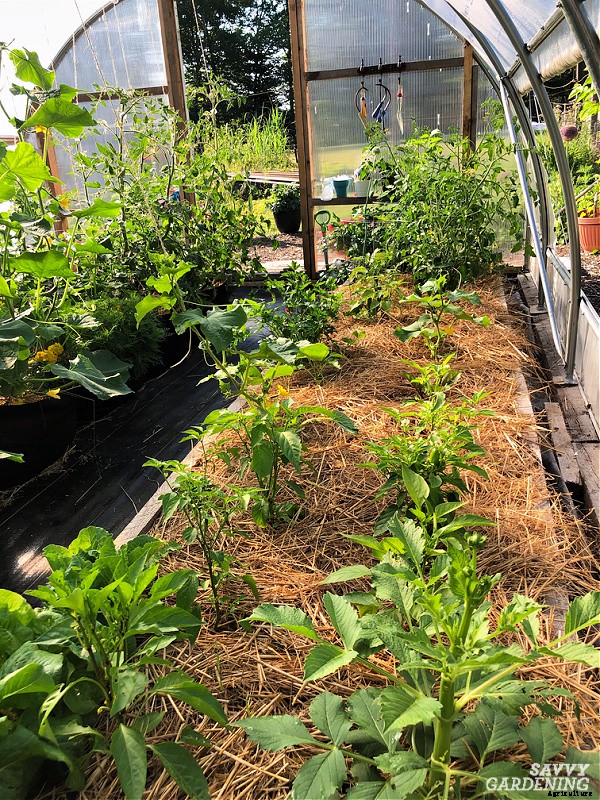
Garden-grown tomato plants need to be watered less often than those planted in containers, especially if the plants are mulched. As noted above, frequency of watering depends on weather and soil type, but also on whether you grow in raised beds or an in-ground garden. Raised beds tend to dry out quicker than in-ground garden beds.
The tomato plants in my raised beds are watered weekly in summer, unless the weather has been cloudy and wet. Mulching the soil around my tomato plants with a three inch layer of straw improves moisture retention and means I don’t need to water as often.
Another factor to consider is the stage of growth. Once my tomato plants begin to fruit in mid to late summer, particularly large-fruited heirloom varieties, I cut back on watering to help concentrate the flavors and reduce splitting and cracking.
It’s a fact; tomato plants grown in pots, planters, window boxes, fabric bags, and other types of containers need to be watered more often than plants grown in garden beds. It’s because they’re grown above the ground where the tops and sides of the container are exposed to full sun. Plus, there is a smaller volume of soil available to the roots of potted tomatoes than those grown in garden beds.
How often container-grown tomato plants need to be watered is based on the size of the plant, the material and size of the container, the growing medium, and the weather. In late spring my newly transplanted tomato seedlings don’t need to be watered as frequently as my late July tomato plants. The young plants are smaller and don’t use as much water as a full-grown plant, but the weather is also cooler. The mid-summer plants are reaching maturity and beginning to fruit. Their root system is dense and thirsty, and those potted plants likely need a daily watering when the summer weather is hot and dry.
There are a number of ways you can help retain soil moisture for container-grown tomatoes. Here are five smart ways to reduce watering:
I recently compared watering notes with Craig LeHoullier, the author of Growing Vegetables in Straw Bales and Epic Tomatoes about how often he waters his straw bale tomato plants. I live in a northern climate and find my tomato bales need a deep watering twice a week, sometimes three times a week in mid-summer.
Craig, who lives in North Carolina, says his straw bales, which are blasted by the sun on the top and sides dry out in the same way containers do. He waters daily after planting when the root system is shallow and the bales are just starting to break down. He continues watering daily during the main growing season because the rapidly growing plants need sufficient water to reduce stress.
The good news is that it’s practically impossible to overwater a straw bale garden as excess water can easily drain out. It’s best to err on the side of watering if you think the bale is on the dry side. Straw bales can be watered by hand or you can set up a soaker hose or drip irrigation system.
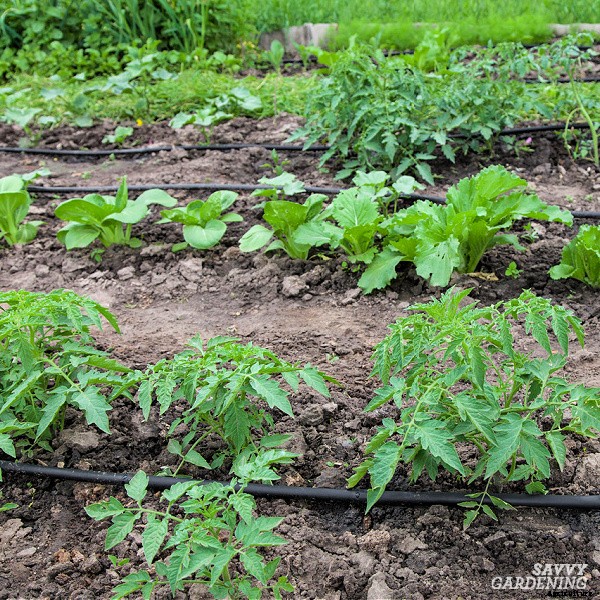
Once you’ve answered the question of ‘how often do you water tomato plants’, it’s time to think about how to water. When watering tomatoes in gardens and containers, water deeply to saturate the soil. Don’t give plants a quick sprinkle of water. Watering deeply, especially in garden beds, encourages a deeper, better developed root system and plants that are more resistant to drought. There are many ways you can irrigate garden beds and containers. Here are five of the most common ways to water:
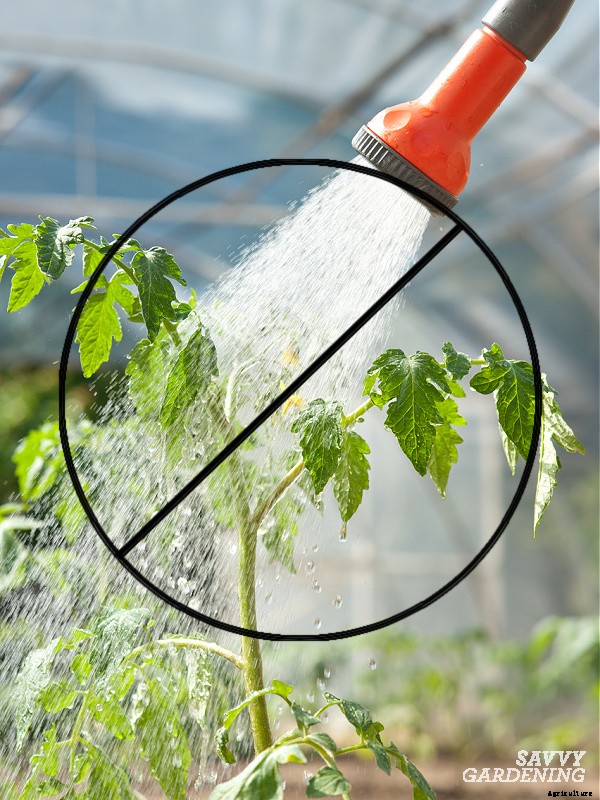
While it may seem like an easy way to water, using a sprinkler to irrigate vegetables is generally not recommended. Why? The biggest reason is splashing water wets the foliage of your plants and can spread diseases. Also, overhead watering, particularly on a hot summer day isn’t very efficient and can waste a lot of water to evaporation or run off. It doesn’t direct water to the root zone of plants, but rather waters everything within its range.
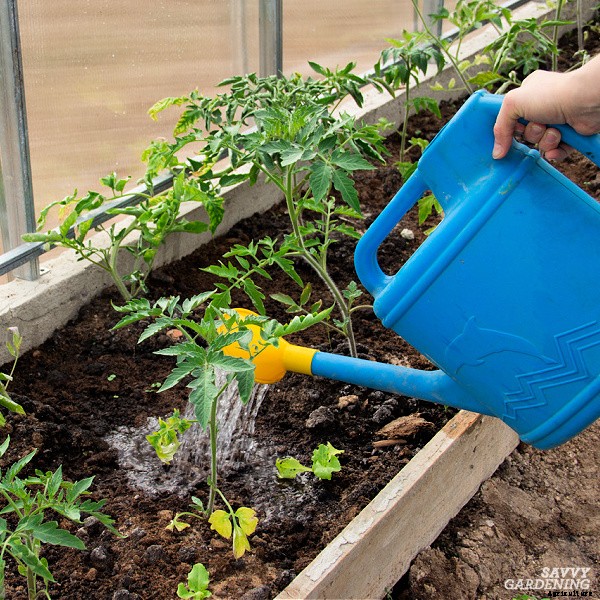
In a small garden a watering can is an inexpensive way to water. Unless you want more cardio, I don’t recommend a watering can in a big garden as it requires a lot of running back and forth to fill up the watering can. You can also set up a rain barrel to fill a watering can. Try to avoid wetting the foliage by watering the soil at the base of the plant.
This is my go-to way to irrigate my tomato plants. I have a hose set up in my garden and one in my greenhouse so I just have to turn on the tap, flip the right switch, and get to work. Watering by hand allows me to keep an eye on my plants (Pests? Diseases? Other problems?) and a long handled watering wand makes it so easy to make sure I’m watering the soil, not the plant.
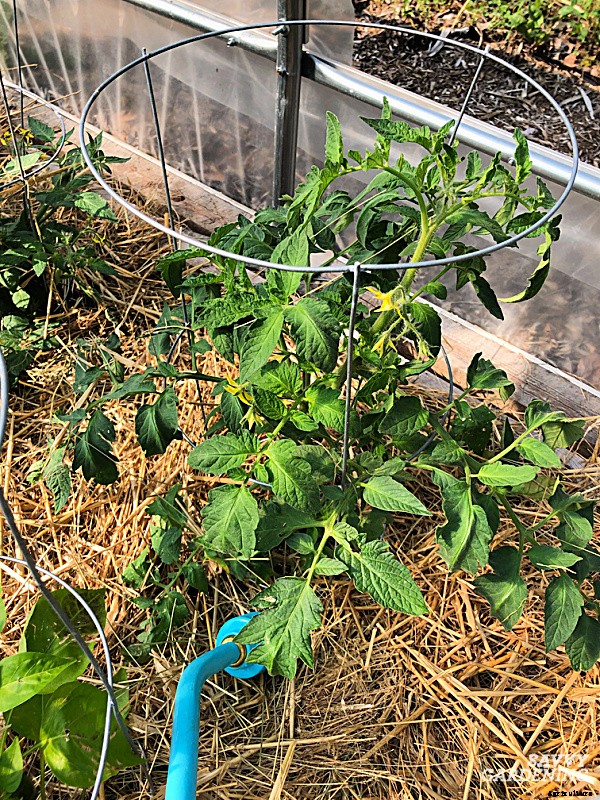
Soaker hoses are a low work way to irrigate tomatoes and direct water exactly where it’s needed. Soaker hoses soak the soil by weeping water along their entire length. They look like a regular garden hose, but are made from a porous material that slowly but deeply waters plants. Because the water is delivered to the root zone, none is splashed on to the foliage or wasted in run off.
Drip irrigation uses hoses, tubes, and emitters to water. Like soaker hoses, drip irrigation waters the base of a plant, not the entire garden bed. It reduces water waste and waters slowly over a long period. Setting up a drip irrigation system requires a bit of work, but once it’s installed it’s an easy and effective way to water plants.
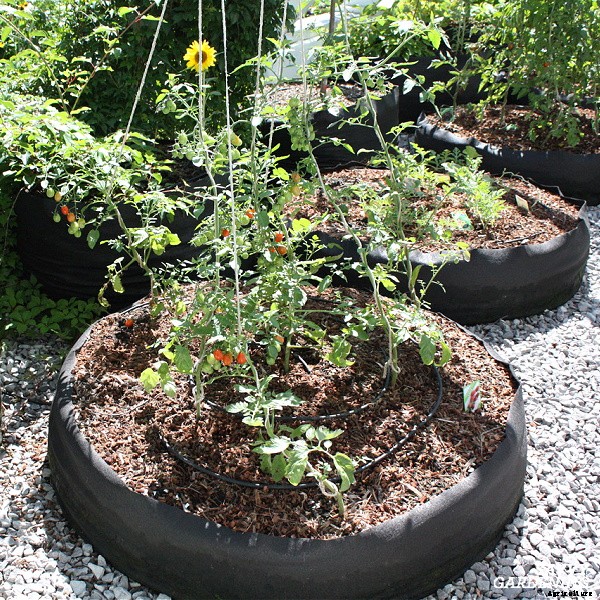
Like most gardeners I don’t want to water my raised beds or containers a couple of times a day. For that reason, I use several few tactics to help the soil retain moisture and reduce the need for me to water.
Is there a best time of day to water tomato plants? I try to water in the morning so that if water does splash on the foliage of my plants it has time to dry before night. That said if you come home from work and notice the soil is dry, water deeply. Just try to avoid wetting the foliage. Don’t allow tomato plants to dry to the point of wilting as that increases the risk of blossom end rot.
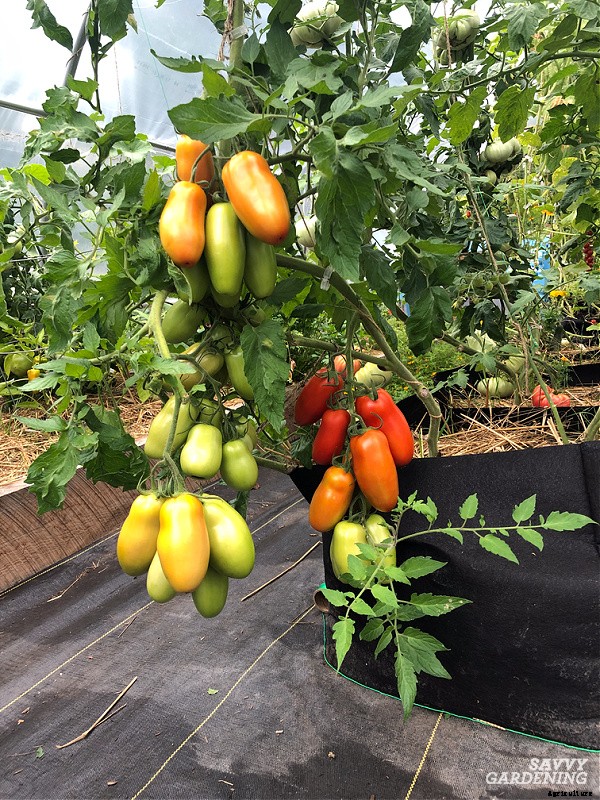
Once the fruits on my tomato plants begin to ripen in mid to late summer, I reduce watering of the large-fruited tomato plants in my garden beds. This helps concentrate the flavors of the fruits but also reduces cracking and splitting which can be caused from too much water. I also slow down watering of cherry tomatoes as too much water means those super-sweet fruits can split. You may have noticed this happening after a heavy rain; you come out to check on your tomatoes and many of the fruits have cracked or split. For this reason I always harvest ripe tomatoes before a rainstorm.
Have I answered the question of ‘how often do you water tomato plants?’