Welcome to Modern Agriculture!

The Armenian cucumber is the one of the most popular vegetables in my garden, but it’s not actually a cucumber. Botanically, it’s a muskmelon and produces vigorous vines that bear long, slender fruits that look and taste like cucumbers; crisp, mildly sweet, and never bitter. Armenian cucumbers are easy to grow, productive, and heat tolerant. Keep reading to learn more about this unique vegetable.
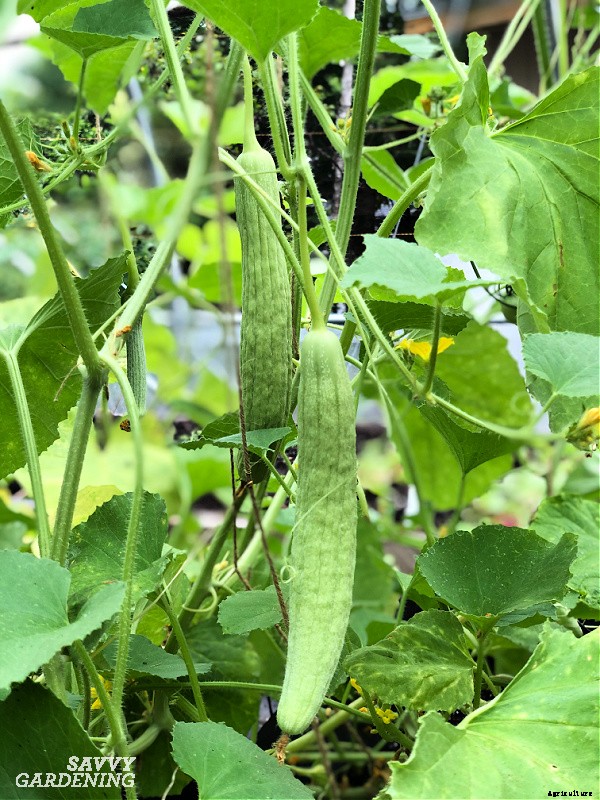
Armenian cucumber, also called snake cucumber, yard long cucumber, and cucumber melon is widely available through seed companies. My introduction to them was through my Lebanese in-laws. In Lebanon, Armenian cucumbers are called metki and they’re a popular crop grown in home gardens. The plants are vigorous, easy-to-grow, and thrive in the heat of summer. I love them so much that I wrote about them in my award-winning book, Veggie Garden Remix!
The most common variety in seed catalogs has pale green skin, but there are also varieties with deep green or even striped skin. And that skin is super thin; no need to peel before eating. The fruits are also fuzzy, especially when they’re young, but the fuzz rubs off easily when washed. We harvest when the cucumbers are between 8 to 10 inches long, but they can grow up to three feet in length. Towards the end of summer I allow one of my fruits to grow to its mature size so I can collect and save the seeds for future plantings. You’ll find more on seed saving below.
I grow Armenian cucumbers vertically on trellises, tunnels, and up twine but the plants can also be allowed to sprawl along the ground. Fruits of plants grown on the ground tend to be curved or curled. Those grown vertically are more straight. Armenian cucumber plants form well-branched vines that can grow 15 to 20 feet, sometimes longer in warm climates.
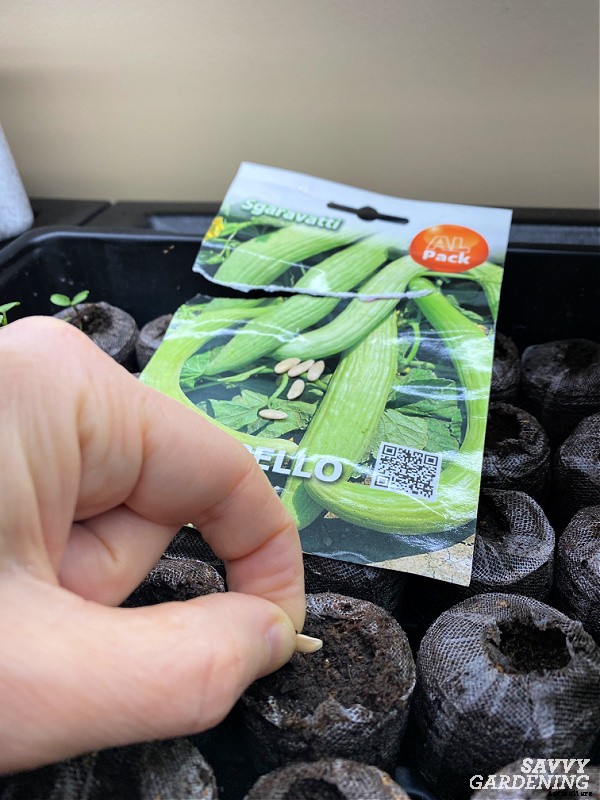
Armenian cucumbers can be direct seeded in the garden or given a head start indoors. The harvest begins about 70 days after seeding, which is about the same amount of time cucumbers require. Around a month before the last expected spring frost I sow seeds in cell packs and trays under my grow lights, using a heating mat to speed up germination for this heat-loving crop. The seedlings are hardened off and transplanted to the garden about a week after the last frost date. I plant them at the base of a trellis or other support spacing them 12 to 18 inches apart. I also transplant them into the Smart Pot Long Beds in my polytunnel, planting four per section. As the seedlings grow, they’ll climb up twine supports that hang from the cross trusses in my tunnel.
To direct sow seeds in the garden wait until the last frost date has passed and the soil has warmed to at least 65 F (18 C). You can pre-warm the soil before planting by laying a sheet of black plastic overtop and leaving it in place for 10 to 14 days. Choose a sunny garden bed and dig in a couple of inches of compost or aged manure before sowing. You can also incorporate a granular organic fertilizer to provide a slow, steady feed all season long. If planting at the base of a trellis or fence, space seeds six inches apart, eventually thinning to 12 to 18 inches apart. If you’re not trellising the plants, sow the seeds 18 inches apart, thinning to 36 inches apart once the seedlings are growing well.
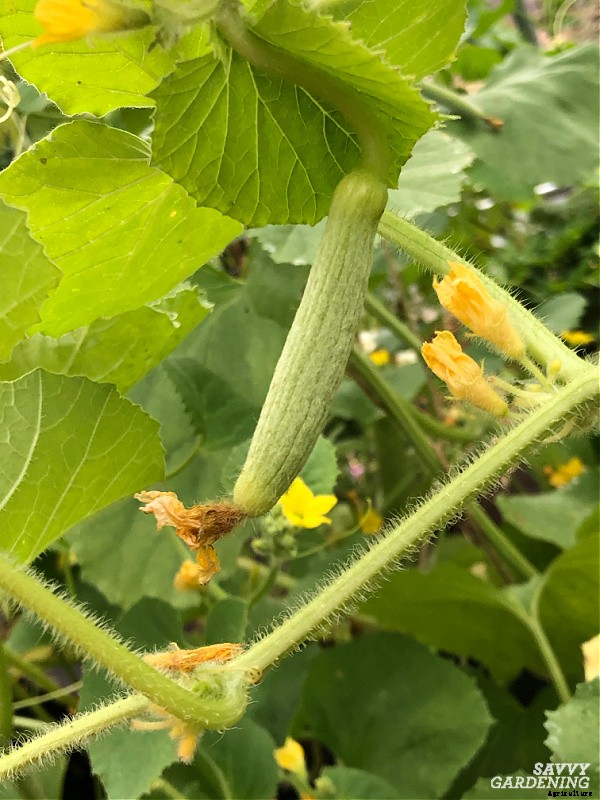
There are many reasons to grow this crop vertically. First, it allows you to maximize your growing space. Armenian cucumbers plants that grow on the ground can take up a lot of room in the garden. Providing support moves the vines off the ground so you can get the most out of your garden. Of course, vertical growing can also reduce pest and disease problems. I also find it easier to spot the fruits when they’re hanging from a trellis versus hiding beneath a tangle of leaves on the ground.
Armenian cucumber plants climb easily with tendrils. I grow them up tunnels, trellises, and garden obelisks in my raised bed vegetable garden and up twine in my polytunnel. If you have a chain link fence and want summer privacy, this is the plant for you! The vines quickly create a temporary living screen and provide you with plenty of tasty fruits from mid summer to frost.
This is a pretty low maintenance crop, but the plants do need a few things to ensure healthy growth and a large harvest.
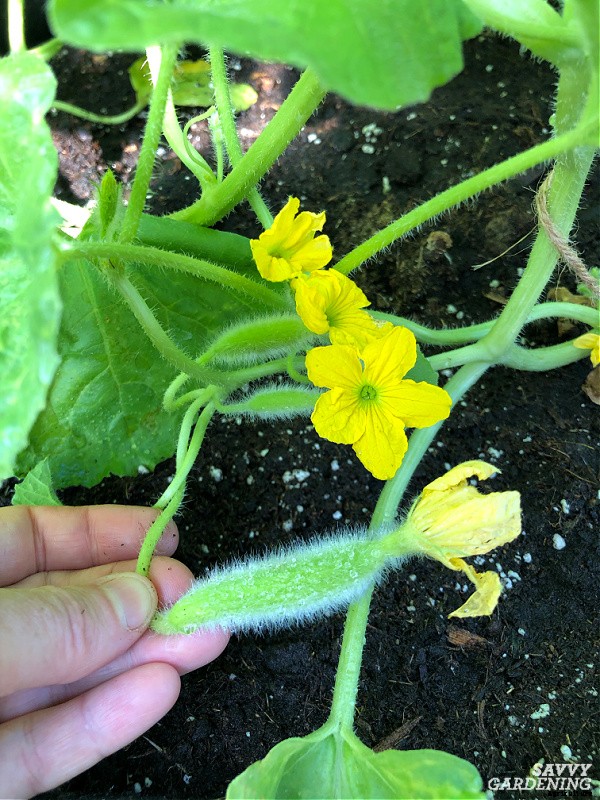
When I first started growing Armenian cucumbers I was getting dozens of female and male flowers but the tiny fruits would turn brown and rot soon after the blooms faded. The problem? My flowers weren’t getting pollinated. While bees and other pollinating insects typically get the job done, I’ve found it helpful to lend Mother Nature a hand and pollinate a couple of times a week. It’s quick and easy to do and ensures I get plenty of delicious fruits. To hand pollinate, use a clean, dry small paintbrush or q-tip to transfer pollen from a male flower to a female flower. Or, pick a male flower and remove the petals to expose the anther. Lightly press it against the female flower to move pollen. Not sure which flower is which? Female flowers have a small fruit under each bloom while male flowers only have a straight stem.
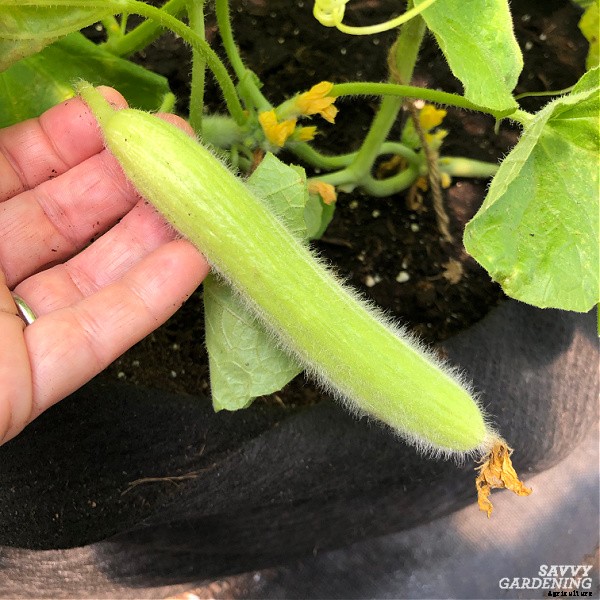
Yes! The Armenian cucumbers in my polytunnel are planted in my 6 foot long Smart Pot Long Beds. The key is to choose a container that is at least 16 inches across. Bigger is better as it holds a larger volume of soil which accommodates the root ball and holds moisture. Use a high quality potting mix combined with compost or aged manure. It’s also a good idea to add a slow release organic fertilizer when you mix the growing medium. Direct seed or transplant once the risk of frost has passed in late spring.
Containers dry out quicker than garden beds so keep an eye on soil moisture and water often. If the plants dry out or are drought stressed, the harvest may be reduced.
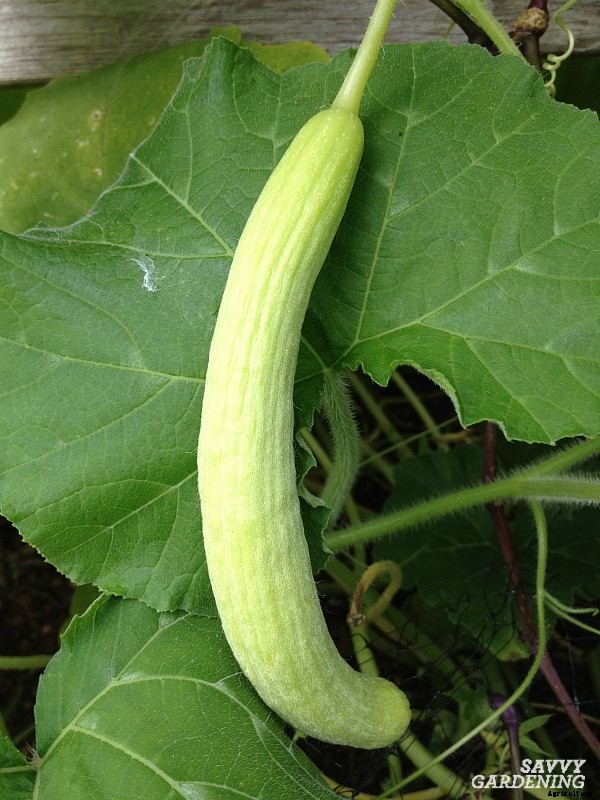
As noted above, Armenian cucumbers should be picked when they’re immature and at peak quality. We aim to harvest our fruits when they’re 8 to 10 inches long, but have also picked those over a foot in length and they were still crisp and delicious. Once they get overmature the flavor changes from a mildly sweet cucumber flavor to one that tastes more like a watermelon rind.
During the main growing season stay on top of the harvest as those tiny fruits size up quickly. If you leave overmature fruits on the vine new flower production shuts down as the plant switches its energy to seed production. Harvest the cucumbers using garden snips; don’t pull them from the plant as that can damage the vine.
Enjoy Armenian cucumbers sliced in green salads and pasta salads, as well as in sandwiches or on a vegetable platter. We love to include them on a mixed plate with feta cheese, olives, cherry tomatoes, and stalks of fresh mint.
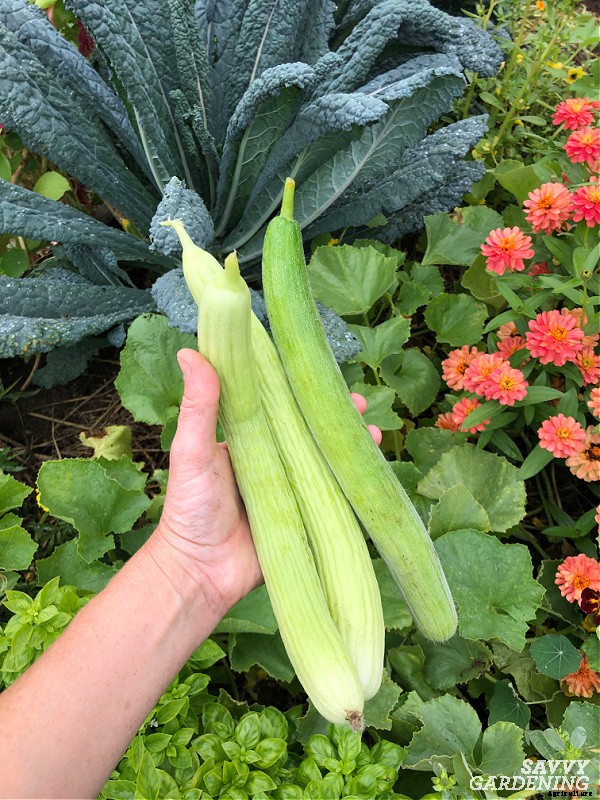
There are several varieties of Armenian cucumbers available from seed companies. If you’re a fan of this vegetable you should also try growing Carosello melons. They’re Italian heirloom melons with that same cucumber flavor.
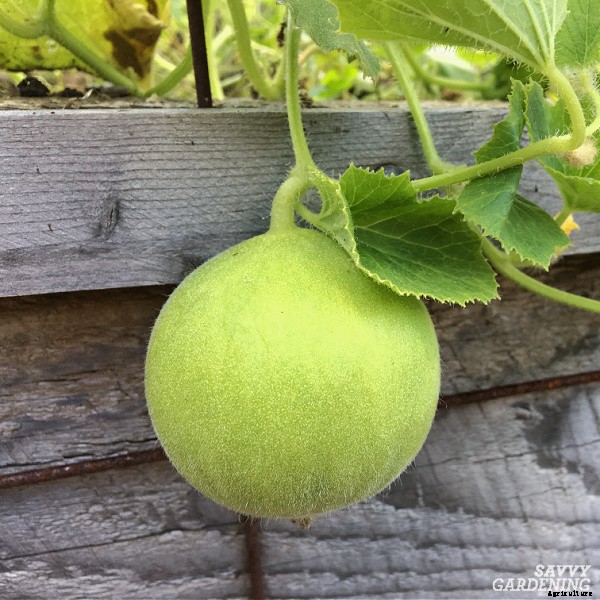
Armenian cucumbers are open pollinated plants and it’s easy to collect and save the seeds for future crops. However, these are members of Cucumis melo and if you grew more than one type, like cantaloupe, your Armenian cucumbers may have cross pollinated. If so, the resulting seeds won’t grow true to type. If you didn’t grow more than one type of melon in your garden, you’re fine to collect and save seeds from your plants.
I always allow one of my Armenian Cucumber fruits to mature towards the end of the season. I call this my ‘seed saver’ and let it grow full-sized, usually 2 1/2 to 3 feet in length. The skin turns yellow and I harvest it once it’s visibly overmature and starting to soften.
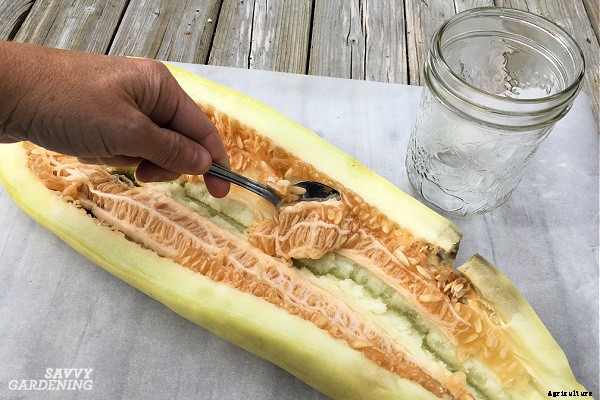
To harvest the seeds, slice the fruit in half length-wise and use a spoon to scoop out the seeds. Place them in a strainer and rinse with clean water to remove any pulp. Once they’re clean, spread them out on newspapers or a screen to dry. Drying time depends on temperature and humidity but mine usually take seven to ten days to fully dry. You can tell they’re ready to be stored when you can snap a seed in half by bending it. Save only the plump, fully mature seeds. There are always some thin, under-mature seeds which should be discarded as they won’t grow. Store the seeds in envelopes in a cool, dry place. Read more about where to store seeds in this detailed article.
While easy to grow, Armenian cucumbers can be affected by the same pests and diseases that afflict true cucumbers. Read more about cucumber plant problems in this excellent article by Jessica.
For more info on growing cucumbers and other related crops, please check out these articles:
Are you going to include any Armenian cucumber plants in your garden?