Welcome to Modern Agriculture!

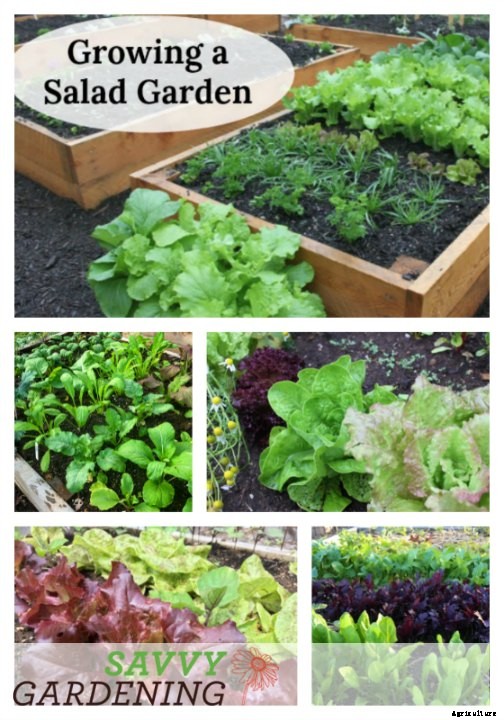
Growing a salad garden is easier than you think. Most salad greens are quick growing and ready to harvest just 4 to 6 weeks from seeding. They can be grown in garden beds or containers, with the majority thriving in the cooler temperatures of spring and fall, although there are also plenty of heat-tolerant greens for summer harvesting. And, there is no shortage of variety when it comes to leafy greens, with trendy mustards and mizuna as popular as the more traditional lettuce and spinach.
Most salad greens are cool weather crops, growing in early spring when the temperatures are in the 50 to 68 F (10 to 20 C) range. Once the heat of summer arrives, greens like lettuce, arugula, and spinach quickly bolt with the plants switching from leaf to flower and seed production. When plants bolt, the flavor also declines as leaves become more bitter.
However, there is good news for those who want to keep growing a salad garden in summer. There are a number of awesome greens that thrive in the heat – New Zealand spinach, Swiss chard, amaranth, magenta spreen, purslane, and orach are all summer superstars and deserve a place in every food garden. As well, most seed companies offer heat-tolerant varieties of greens like lettuce, spinach, and arugula. ‘Astro’ arugula and ‘Jericho’ lettuce, for example, can continue to yield tasty greens throughout the summer months.
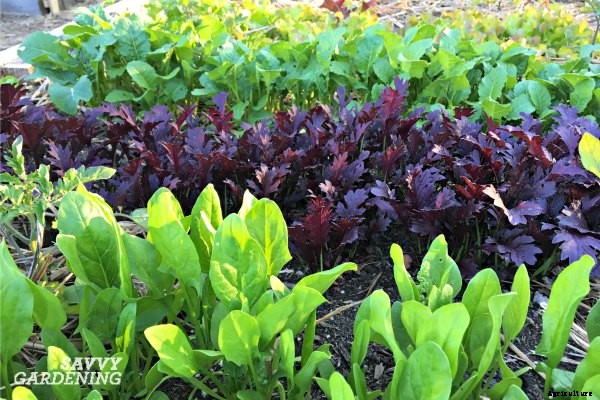
I grow most of my salad crops in my raised bed vegetable garden, but you don’t need a big garden to grow greens. In fact, you don’t need a garden at all! You can grow leafy crops in containers, window-boxes, fabric bags, planters or even a repurposed piece of furniture like Tara’s lettuce table. The majority of fast-growing greens like leaf lettuce, arugula, mizuna, mustard, Tokyo Bekana, and baby spinach are shallow-rooted and don’t need a deep layer of soil to produce a crop.
If you do plant salad greens in a garden, look for a sunny or partially shaded site. In summer, some shading of cool season greens can help delay bolting and extend the harvest. No shade? Create your own by floating a length of shade cloth overtop hoops in the garden. In spring and fall, use those same hoops with row covers to protect from cold temperatures and frost.
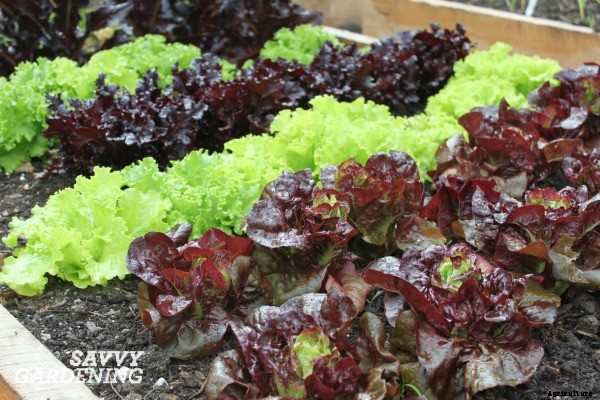

Say good-bye to boring iceberg lettuce! Growing a salad garden allows you to pick from dozens of types of greens and hundreds of varieties. Have fun playing with different colors, textures, and flavors. We love mild tasting salad crops like lettuce, Tokyo Bekana, and spinach, but adding handfuls of spicy mustard, mizuna, turnip greens, and arugula can really liven up a salad. For extra convenience, most seed companies also offer pre-mixed salad green packets for a gourmet salad blend.
Mild flavored greens:
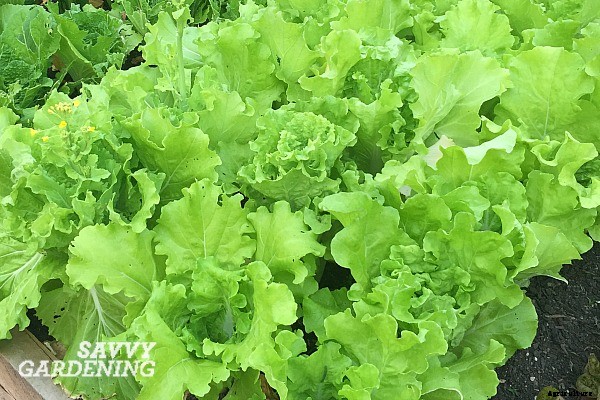
Lettuce – Lettuce is a spring essential and perhaps the easiest green to grow. For the fastest harvest, stick to loose-leaf types like ‘Red Salad Bowl’, but most of the heading types of lettuce are also quick to grow when picked at a baby stage. Tuck clumps of lettuce around the edges of your garden beds for a colorful edible edging or include a few plants in your flower pots. Favorite varieties include ‘Black Seeded Simpson’, ‘Red Salad Bowl’, ‘Outredgeous’, and ‘Lollo Rossa’.
Tokyo Bekana – I fell in love with this looseleaf Chinese cabbage a few years ago after growing it in raised beds and window-boxes. It’s super fast from seed, forming one-foot wide rosettes of frilly, lime green leaves that look just like leaf lettuce. It also has a mild, lettuce-like flavor and makes a great base for a salad of homegrown greens.
Komatsuna – Komatsuna is a turnip relative that forms upright plants with large paddle-shaped leaves. Baby leaves are great for mixed salads, while larger leaves can be added to stir-fries, sautéed with garlic and sesame oil, or used as a wrap for fresh spring rolls or sandwiches.
Spinach – There are several types of spinach for the garden; savoy, semi-savoy, arrow-leaved, and smooth-leaved. I love them all, but tend to grow mostly smooth-leaved varieties like ‘Space’ and ‘Corvair’. They’re super fast to grow and ready to harvest 30 days from seeding. In fall and winter, I opt for savoyed spinach varieties like ‘Bloomsdale’ which are more cold tolerant.
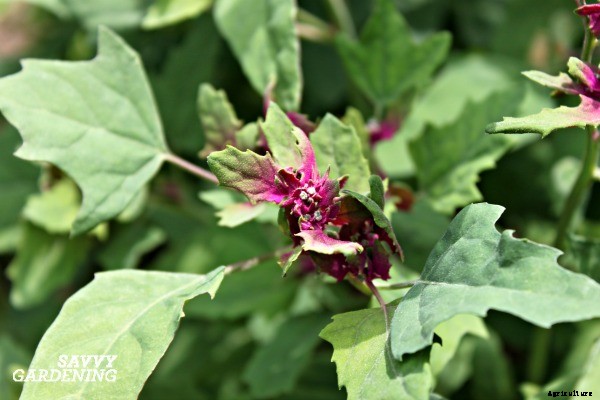
Magenta Spreen – Featured in my book, Veggie Garden Remix, this quinoa cousin is both beautiful and productive. The plants form tall clumps of silvery-green foliage highlighted by a splash of hot pink at the center of each shoot. Plant magenta spreen in late spring, shearing the plants back every few weeks to keep them compact and encourage fresh growth. Eat raw in salads or cook as you would spinach.
Spicy greens:
Arugula – I would never consider growing a salad garden without arugula. This easy-to-grow crop is our favorite salad green with a peppery taste that pairs well with a simple dressing of olive oil, lemon juice, and salt. For a spring crop, sow arugula seed about a month before the last spring frost, planting in garden beds or containers. Repeat every few weeks. Baby arugula leaves have less heat than mature ones so start picking when the leaves are just a few inches long.
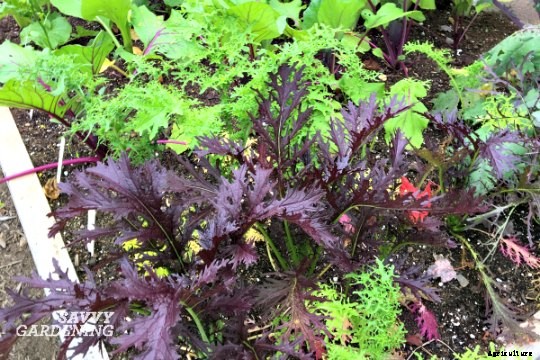
Mustard – I love growing a variety of mustard greens in my spring, autumn, and winter gardens. They’re all very cold tolerant – perfect for cold frames – and they offer so much variety in leaf texture and color. The young leaves have a mild spiciness, but be warned that the mature leaves pack quite a punch! These are best stir-fried to temper the heat. Outstanding varieties include Giant Red, Ruby Streaks, and ‘Miz America’, which has gorgeous deep burgundy foliage.
Mizuna – With less heat than peppery mustard greens, but just as much cold tolerance, mizuna is a good choice for an early spring sowing. The mild, cabbage-like flavor pairs well with other greens in mixed salads, but the mature leaves are sturdy enough to be tossed into stir-fries and wraps. Direct seed mizuna in cold frames 6 weeks before the last spring frost, or in the garden 3 to 4 weeks before the last expected frost.
For more information about growing salad greens, check out these awesome links:
Are you going to be growing a salad garden this year?