Welcome to Modern Agriculture!

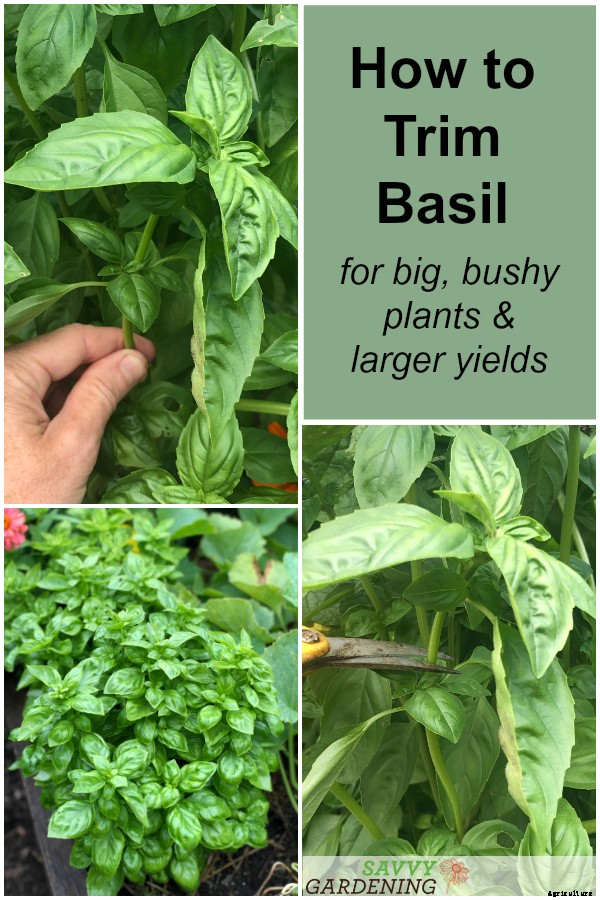
One of the secrets to producing big, bushy basil plants is trimming. Many gardeners are shy about harvesting from their herbs. They don’t want to cut them back in case it damages the plants or reduces yield. I’m the opposite, constantly trimming herbs like basil to use fresh, or preserve by drying or freezing. Are you ready to learn how to trim your basil plants for maximum production?
When it comes to pruning basil, it doesn’t matter if you’re growing basil in containers or garden beds. It doesn’t matter if you’re growing Genovese basil, lemon basil or Thai basil. All types of basil benefit from regular clipping. It’s a quick and easy garden task that pays off big time!
There are plenty of great reasons for pruning back basil plants. Here are my top three:
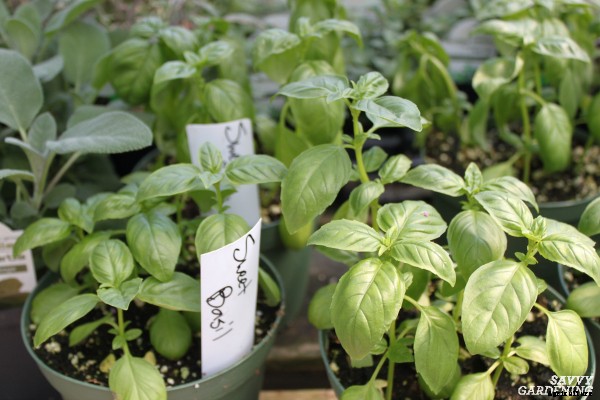
Timing, as they say is everything. And when trimming basil it’s best to start early when the seedlings are about six to eight inches tall and have three to four sets of leaves. At that point, each plant is likely a single stem. I like to pinch that main stem back to a strong set of side shoots, removing about one-third of the plant. This simple trimming DOUBLES your basil harvest by turning single stemmed plants into double stemmed plants. How easy is that?
Once the initial trimming is done, you’ve got a few weeks before you’ll need to pick up your snips again. I prune my basil plants every two weeks or so during the summer to stimulate plenty of growth.
Before I get into the ‘do’s’ of how to trim basil, I think I should first share a ‘don’t’. When harvesting, don’t just pluck off individual leaves. This doesn’t promote new growth. Instead, when you trim, you should be removing top sections of stems. Read on to learn more.
In the above paragraphs I outlined how to trim back basil seedlings for the first time to stimulate growth. But what if you’re not growing your own seedlings? What if you bought basil transplants from the garden centre and they’re already bigger than six to eight inches tall? Don’t worry! You can still trim these back to thicken up the plants and encourage growth. If you can, separate store bought basil into individual plants (there’s often a handful of plants grouped together in the pot). Then, trim the plants back by about one-third, clipping just above a set of side shoots.
Now that your young basil plants have been given their first haircut, let them have a few weeks to grow. The first harvest usually comes about a month after planting when small shoots can be removed. This serves a dual purpose: 1) you get to eat some of your homegrown basil! And 2) you can use this opportunity to stimulate EVEN MORE growth.
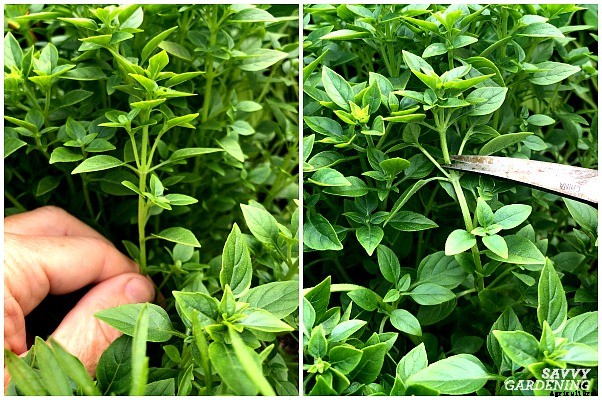
To trim basil for harvesting or to promote growth, you can use your fingers, hand pruners, or herb snips. (These compact, lightweight snips are ideal for cutting herbs back). I often use my fingers for pinching flowerbuds or trimming top shoots of basil, but if you’re cutting the plants back hard, you may need sharp pruners as you don’t want to tear the stems. This can damage the plant and introduce disease pathogens into the tissues.
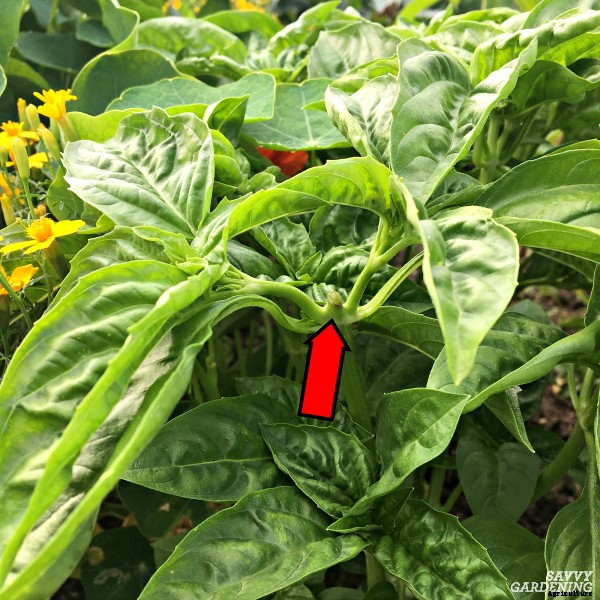
Before you start clipping or pinching, take a close look at the plant. You want to cut central stems back to a lower set of leaves where two tiny leaf buds emerge from the leaf axil. They’re pretty easy to spot. Once you decide where you’re going to trim, cut the main stem about a quarter inch above the leaf buds. You can remove just a few stems to flavor your dinner or cut the plant back by a third to gather enough basil to make pesto or to preserve.
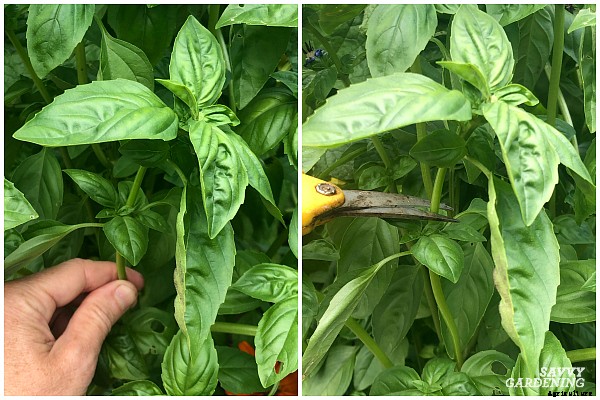
As noted above, another reason to learn how to trim basil is to remove flowers. Stressed out basil plants begin to flower sooner than those given plenty of sunshine, well-drained soil, and consistent moisture. Therefore, aim to keep your basil happy so that it keeps producing leaves, not flowers. But for most types of basil, it’s inevitable that you’ll see flower buds forming by mid summer.
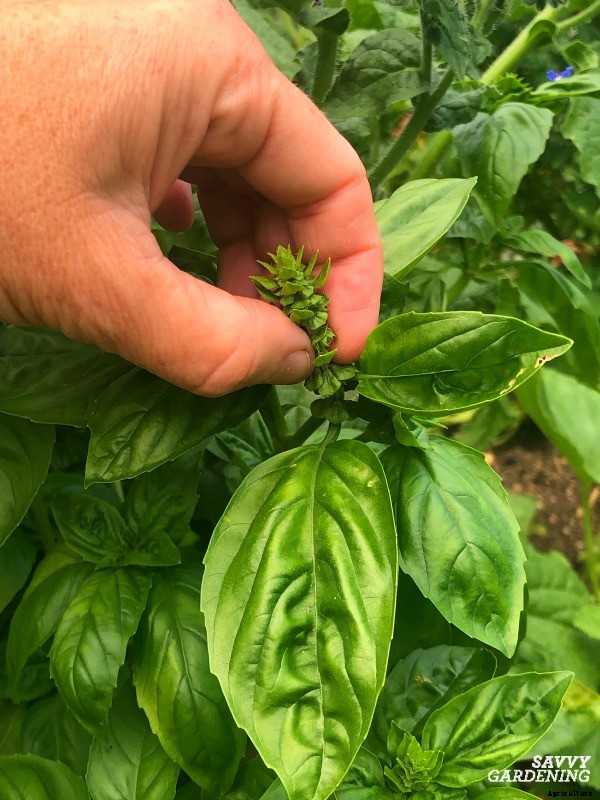
It’s easy to spot flowerbuds on Genovese basil plants. They emerge at the tip of the shoots and look like a dense cluster of tiny leaves. As they grow, the flowerbuds elongate and tiny white flowers emerge (or purple flowers on Thai basil). I like to pinch the buds as soon as I notice them forming. That way, the plant doesn’t expend unnecessary energy on those buds.
You can use your fingers to trim off flowerbuds or you can use garden snips. Whatever you find most comfortable. After that initial flower pinching, you’ll need to check every week or so for new flowerbuds and remove those as they appear.
Greek basil plants form tight, tidy balls that grow up to a foot wide and tall. They have many small leaves with flowerbuds forming at the tips of each shoot. Hand pinching buds or flowers from these plants takes some time so I cheat a bit by using my mini herb snips or even garden shears. Just shear the flowers off like you would shape a boxwood hedge. The plants respond to this type of trimming by continuing to pump out more foliage.
Finally, as you pinch basil flowerbuds, don’t toss them in the compost, instead use them in the kitchen. They have a wonderful basil flavor and can be used in pesto or sprinkled on salads, dressings, pastas, and pizza.
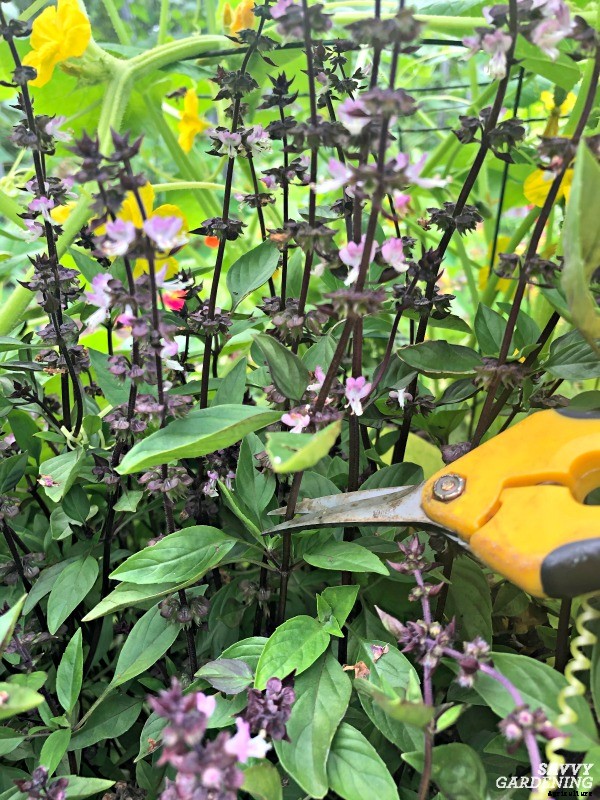
Watch Niki prune her basil in this video:
Now that you’ve trimmed back your basil plants, you’ll need to use that delicious bounty ASAP or preserve it for future meals. Basil leaves can be dried or frozen.
Of course you can also make pesto with your fresh basil, pureeing pine nuts (or walnuts or almonds), parmesan cheese, and garlic with your basil harvest. Here is a great pesto recipe.
For more information on growing basil, check out these articles:
Do you trim your basil plants regularly?