
Welcome to Modern Agriculture!

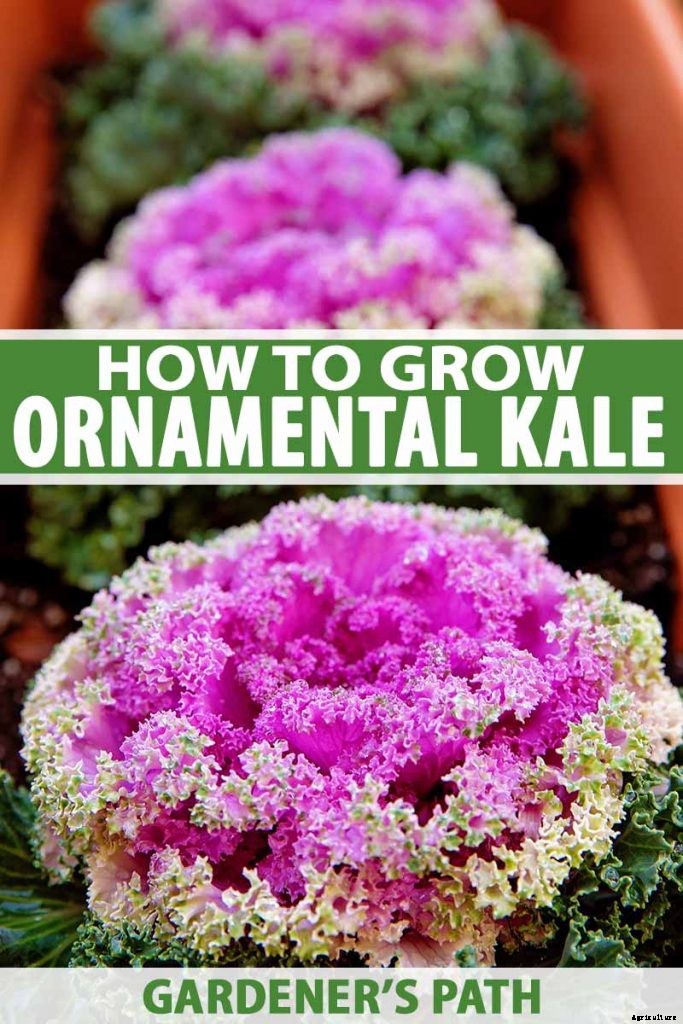
Flowering kale, Brassica oleracea var. acephala, is a cool-weather biennial in the Brassicaceae family that includes broccoli, cabbage, cauliflower, kale, and kohlrabi. It is usually grown as an annual in the cool gardens of fall, and winter.
Bred to look attractive, it is edible, but generally has a bitter flavor.
A biennial plant is one that blooms in the second year. Since ornamental kale is typically grown as an annual, there is no true flower formation during its one year of vegetative growth.
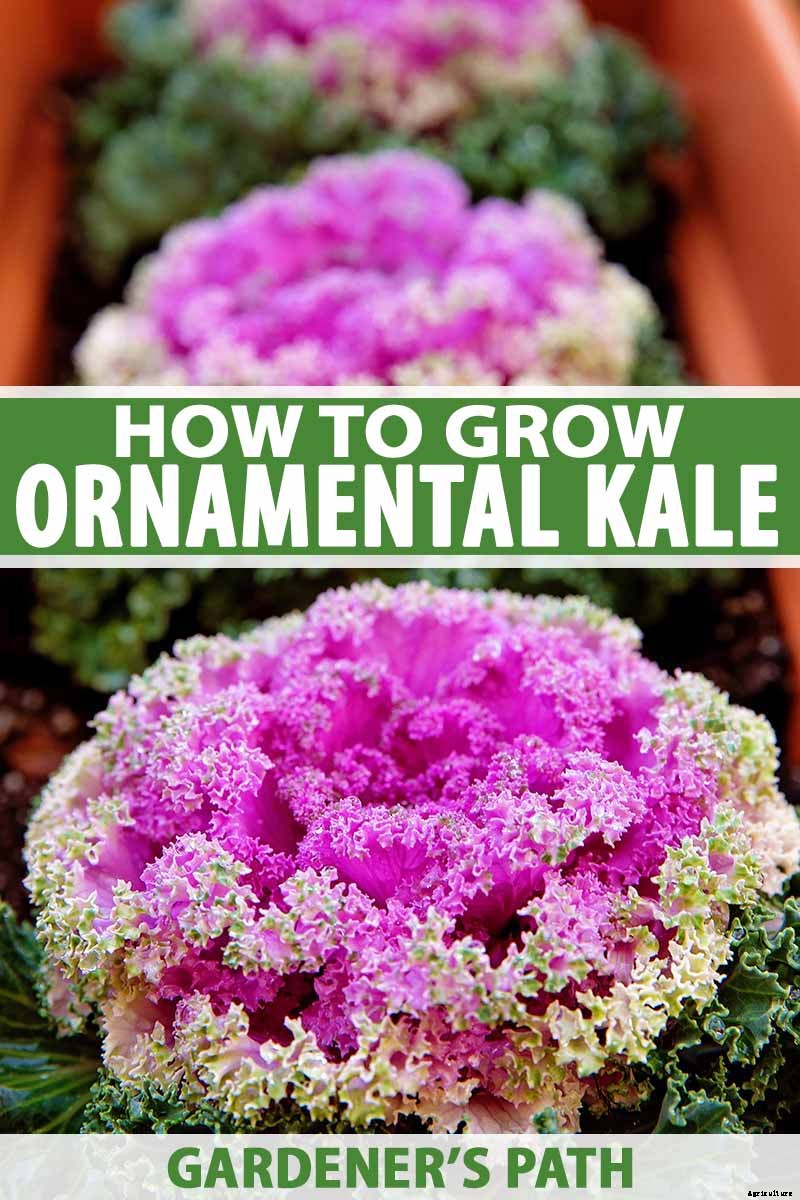
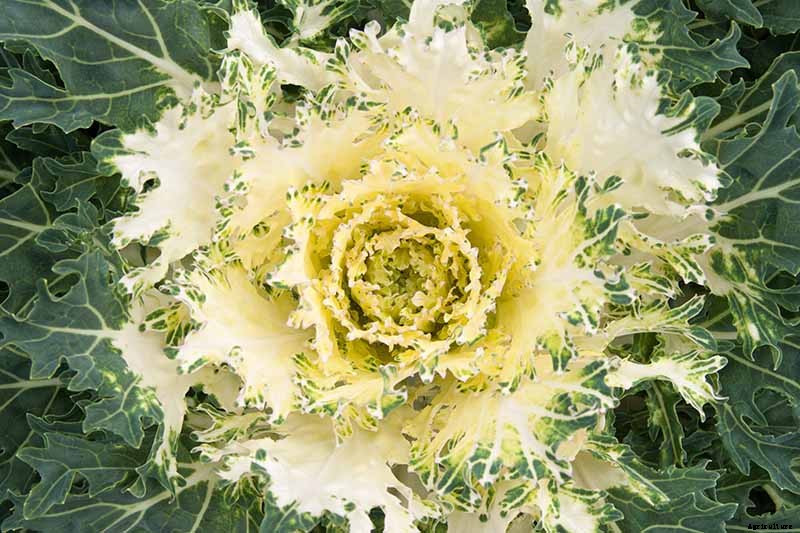
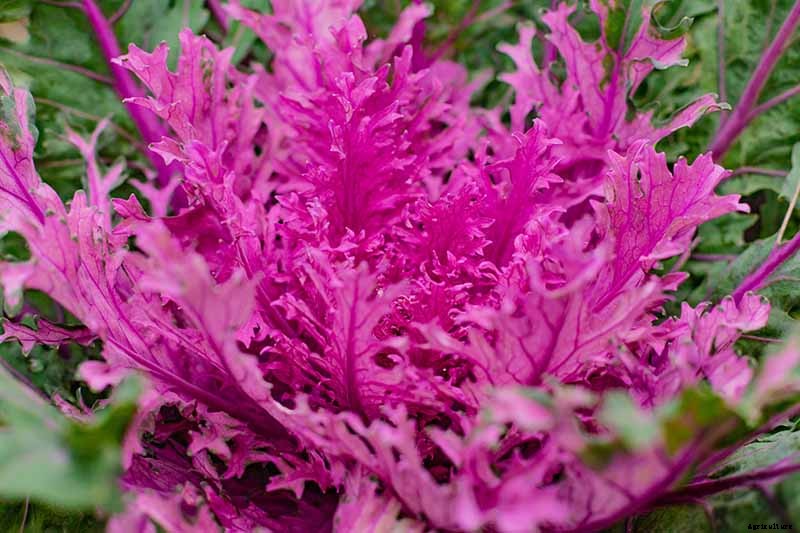
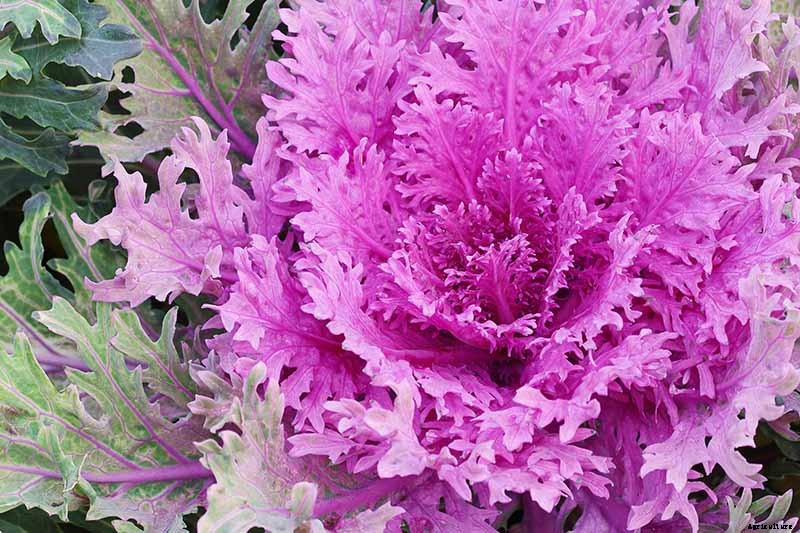
The name refers instead to the center leaves of pink, purple, red, or white, that give the illusion of a blossom surrounded by foliage.
In this article you will learn how to cultivate and care for annual flowering kale. In addition, you will discover available varieties, plus the best ways to display them.
Get ready to love a colorful, texturally-rich plant that makes cool season gardens come to life!
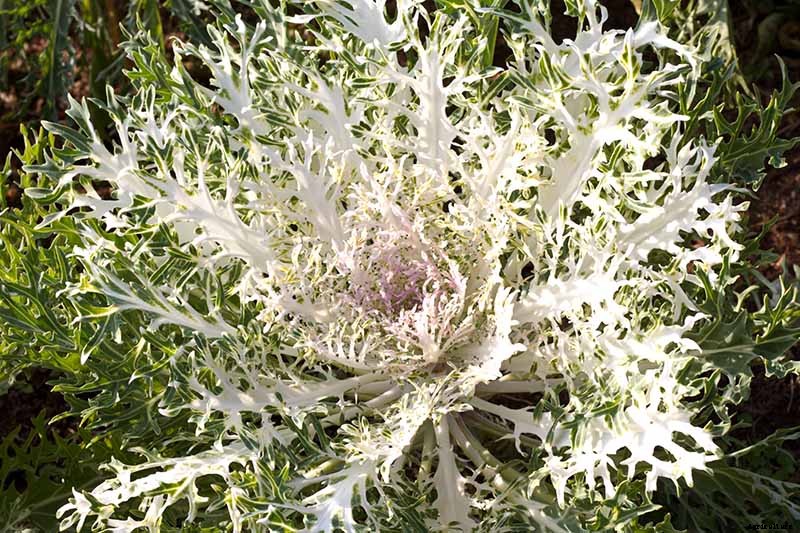
Ornamental kale and cabbage are in the same family. Kale is noteworthy for its feathery, fringed, or wavy leaves, while cabbage has smooth, rounded foliage.
Kale grows in all USDA Hardiness Zones. It prefers a location with full sun and organically-rich soil that drains well. The ideal pH is between 6.0 and 7.5.
Plant heights range from about 6 to 35 inches tall, with center rosettes in shades of pink, purple, white, and bi-color combinations.
According to the University of California Cooperative Extension Central Coast & South Region Center for Landscape and Urban Horticulture, colors begin to develop once nighttime temperatures dip below 60°F.
The ideal daytime temperatures are between 40 and 80°F, but plants can survive frosty air as cold as 5°F.
As a matter of fact, a chilling frost suppresses chlorophyll production and intensifies rosette colors.

In addition to its attractive center leaves, the outer foliage may be light, medium, or dark green; and bluish, pinkish, purplish, or reddish green.
Veining may match the leaf or rosette color, or appear whitish.
The cultivation of kale, or “cole,” as the Romans called it, dates back at least 4,000 years, according to Gerald Klingaman, retired Extension Horticulturist of Ornamentals at the University of Arkansas.
It made its way from the Mediterranean to China, and then to Japan.
Between 1929 and 1931, USDA horticulturists Dorsett and Morse conducted an expedition to China, Japan, and Korea.
It is believed that ornamental kale was one of the plant specimens they brought back with them. By 1936, this colorful cool-weather plant was listed in American seed catalogs for home gardeners interested in plants for their decorative value.
Whether you’re growing your kale in containers or in the garden, there are two ways to cultivate this cool-weather ornamental:
1. Sow seed directly into the garden or into a 12 inch wide by 12 inch deep container about three months before the last average frost date in the fall. If you’re planting as part of a mixed grouping in a large pot, allow this amount of space per kale plant, to allow it to spread.
2. Sprinkle seeds about an inch apart over organically rich soil. Do not cover them. Germination takes 7 to 10 days.
3. Once seedlings have one set of true leaves, thin them to a distance of 18 to 24 inches apart.

Where the ground doesn’t freeze, you can also sow seeds in the winter for a burst of color in early spring.
1. Work the soil to a friable consistency down to a depth of 8 to 10 inches.
2. Dig a hole about two inches wider and deeper than the pot.
3. Remove the plant from its pot and tease the roots a bit to loosen them.
4. Snip off any soggy, brown, or yellow bottom leaves.
5. Settle the plant into the hole so that its lowest leaves are at soil level.
6. Fill in soil around the roots.
7. Allow 18 to 24 inches between plants.
8. Water. Let the moisture soak in, and water again.
9. Tamp the soil down firmly.
10. Mulch around plants to help retain moisture. Although weeds aren’t much of a problem during cool seasons, mulch will inhibit their growth.
Some folks like to space plants closer together. This keeps them more compact, but reduces airflow. The risk here is that if there’s a warm spell, humidity may build between plants and invite fungal disease.
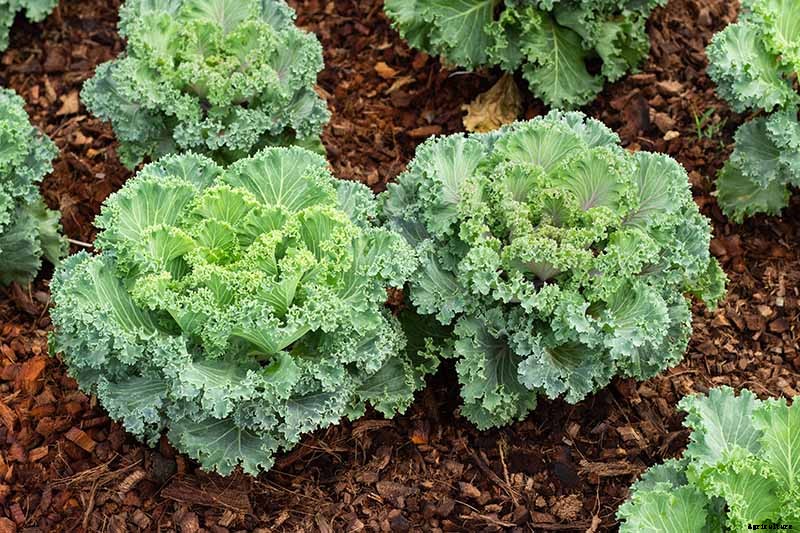
In my region of southeastern Pennsylvania, plants appear in local nurseries from early fall.
Some are still green, awaiting that first chill to bring out their vibrant hues. Others are already “flowering.”
As plants grow, an inch or so of rain per week is adequate. Supplement during dry spells. Plants that don’t get enough water may grow leggy, or the leaves may turn brown or yellow.

In addition, bottom leaves may become soggy, brown, or yellow with age, excess rainfall, and thawing after a frost. Remove them with clean, sharp pruning shears.
Sometimes, a sudden cold snap kills plants before they’ve had a chance to acclimate to winter temperatures.

In this case, they may become mushy and translucent as they thaw, and give off a cabbage-like odor. Remove them from the garden and dispose of them.
For tall cultivars, staking is required to maintain an erect posture. A bamboo landscape stake and some twine are all you need.
Once at full height, they benefit from having their lower leaves trimmed away, allowing them to put all their energy into rosette production.
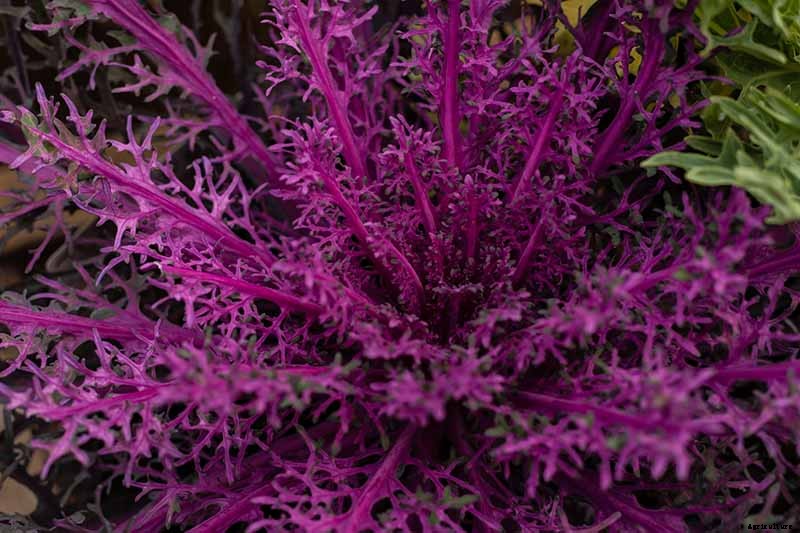
There are numerous cultivars from which to choose. Here are some of my favorites:
This series is known for its tight head-like formation. The foliage is very curly.
You’ll find rosettes of creamy white with bright green foliage, as well as those in red with dark purple/green leaves. This is a low-profile choice with heights ranging from 8 to 12 inches.
The ‘Coral’ varieties have serrated, feathery, medium green foliage surrounding a contrasting center.
‘Coral Queen’ has a red center, and ‘Coral Prince,’ creamy white. Heights range from 8 to 12 inches.
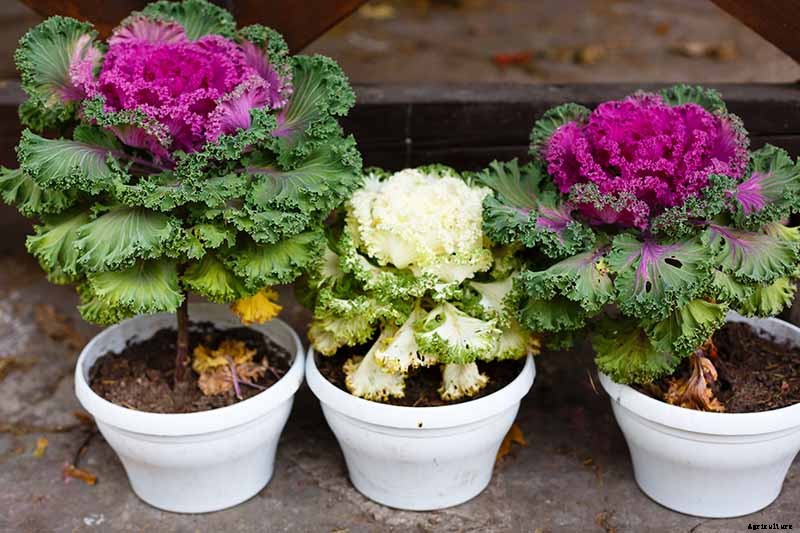
This kind is prized by floral designers. Small rosettes resembling roses perch atop tall stems.
Blue-green leaves are heavily veined with pink or white and resemble cabbage. Compact, uniform rosettes are pink, red, white, or bi-color.
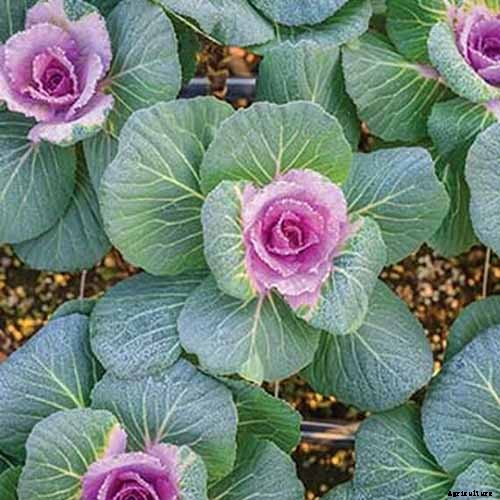
‘Crane Pink’
This type benefits from staking and the removal of lower leaves for the best stem quality. Heights reach 25 to 35 inches.
Choose either a 50-seed or 12-plant package of ‘Crane Pink’ now from Burpee.
A variation called ‘Crane Feather’ is also available.
The long stems and heights are the same, but the leaves are finely cut and feathered, and more loosely grouped near the top of the stem.
The rosette is also looser, for an airier look. Colors include creamy white and rose pink.
You will also find ‘Crane Feather Queen’ and ‘Crane Feather King’ in this series. Heights are comparable.
The Queen has red rosettes, and the King, creamy white to light pink.
Fringed medium green foliage surrounds a center rosette. Colors include pink, red, and white.
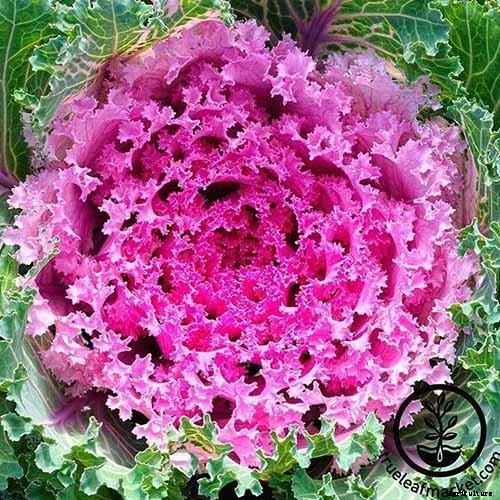
‘Kamome’
This variety has a mounding growth habit and a spread of about 12 inches. Heights reach from 8 to 12 inches.
Find ‘Kamome’ now from True Leaf Market. Choose pink, red, white, or a mix. Each package contains 1,000 seeds.
This variety has red, white, or rose-colored rosettes surrounded by fringed green to purplish-green leaves.
Heights range from 6 to 12 inches.
Finely cut, feathery foliage is light green at the edges and colorful in the center.
Choose ‘Peacock Red,’ with a red center that unfurls to reveal a loose purple rosette.
Or, ‘Peacock White,’ with a pale pink center that becomes creamy white. Heights range from 8 to 12 inches.
This series is noteworthy for its petite stature and wavy, rounded foliage that resembles cabbage.
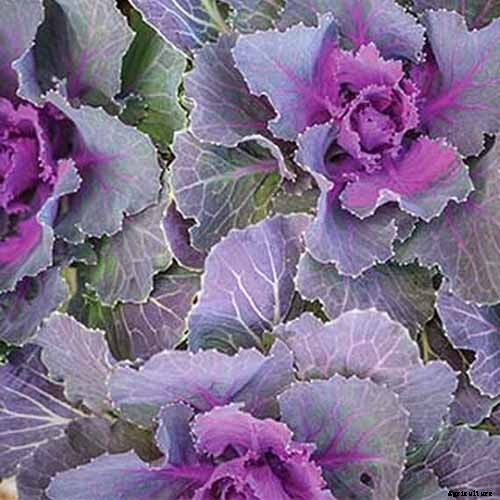
‘Song Bird Red’
Choose red, pink, or white rosettes, with foliage ranging from bluish green to purplish green. Heights range from 6 to 10 inches.
Find ‘Song Bird Red’ in packages of 4 live plants in 4-inch pots now from Burpee.
‘Redbor’ is a variety that does not have a contrasting central rosette but can still add rich color and texture to your garden.
This type has curly silvery purple leaves and tops out at 18 to 24 inches.
‘Yokohama’ also doesn’t have a contrasting rosette. Extra curly leaves in bi-color combinations of bright green and white, and purple and dark green, reach a low-profile height of 7 inches.
This variety adds interest amongst taller plantings in containers or borders.
While ornamental types are prone to the same wilting, yellowing, and insect infestation as kale grown for eating. See our full guide to kale pests and diseases here.
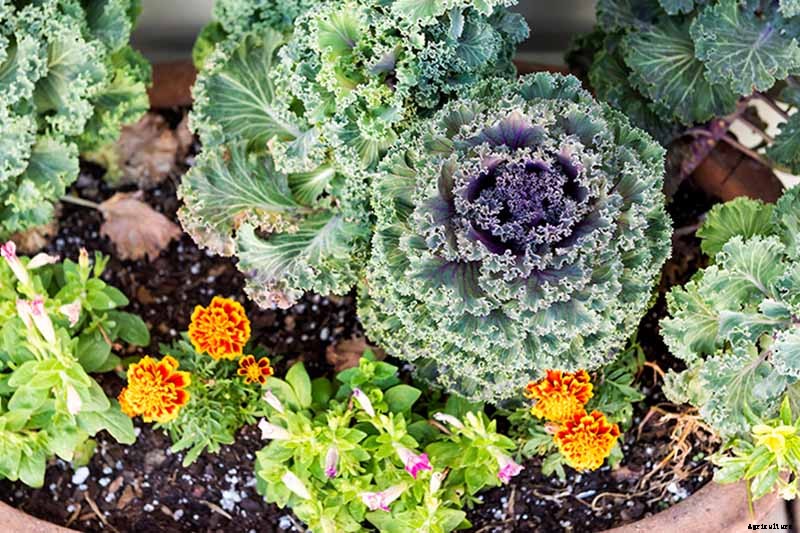
Transplanting nursery cultivars once nighttime temperatures are consistently below 60°F goes a long way toward avoiding issues.
For those who choose to sow seeds in mid-summer, you may run into issues with common pests such as:
And, since pests are disease vectors, you may encounter the following:
To deter pests, apply food-grade diatomaceous earth according to the package instructions. If you encounter an infestation, there are a variety of organic solutions to treat pests naturally, including Bacillus thuringiensis (Bt).
For the best resistance against fungal and bacterial conditions, purchase high-quality, disease-resistant seed and plants from a reputable nursery.
In the event of an infection, Bacillus subtilis, a biofungicide, is an excellent alternative to chemical treatments.
Practices like crop rotation, integrated pest management, and no-till gardening are useful preventative measures for all types of home plant cultivation.
Summer gardens transition beautifully to fall and winter when you clear away plants that have finished blooming, and replace them with ornamental kale rosettes.

Here are some creative ways to incorporate them into the landscape:
This year, instead of having bare gardens where summer flowers once bloomed, why not extend the growing season through fall and into winter with the bold rosettes of flowering kale?
Easy to grow from seed or plants, they pair well with other sturdy, cool-weather species, like mums, pansies, and ornamental grasses.
With color in the garden, you can keep up your curb appeal, even as the skies grow gray and the snow begins to fly. What better way to welcome all who come to visit during the cool season holidays?
If flowering kale plays a feature role in your landscape as the temperature begins to dip, please tell us all about it in the comments section below.
If you’re looking for more information about growing kale, you’ll need these guides:


