
Welcome to Modern Agriculture!

Red raspberry leaf is a delicious herb with a taste similar to green tea. See how to harvest, dehydrate, and brew raspberry leaf tea.
Jump to Recipe Print RecipeRed raspberry leaf tea has been used for centuries as a natural remedy for conditions involving the uterus including pregnancy, childbirth, menstruation, and menopause. See how to harvest and preserve your own raspberry leaf tea.
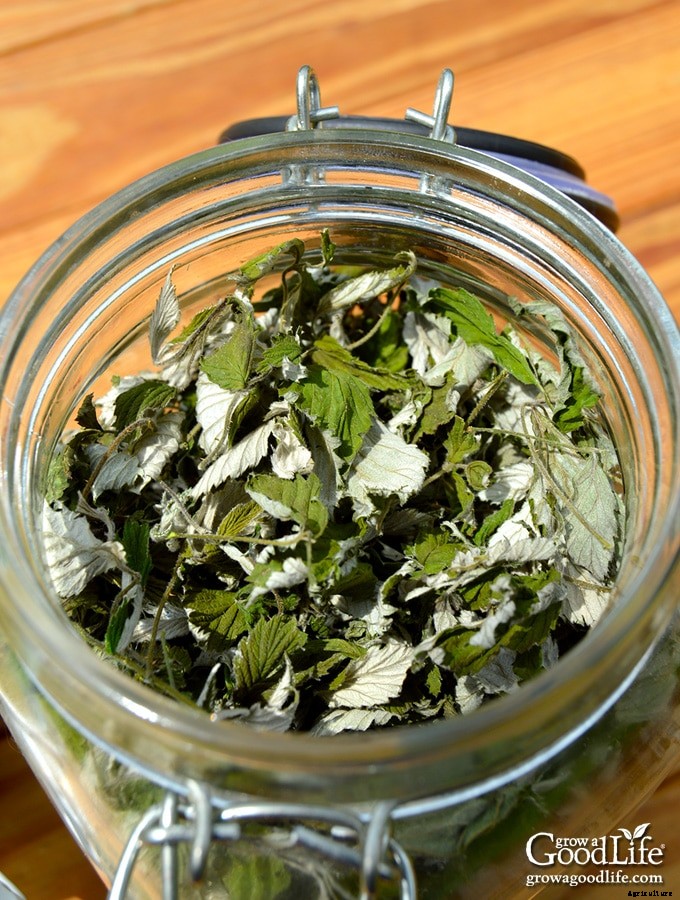
When I planted raspberries (Rubus idaeus) on the property back in 2010 it was for the delicious fruit. It was years later while researching natural remedies to ease my menstrual symptoms that I discovered that red raspberry leaf tea is a natural remedy for conditions involving the uterus, including menstrual support and menopause (Native American Medicinal Plants).
Red raspberry leaves have also been used as medicine for centuries for pregnancy and childbirth, astringent for skin irritations, gargle for sore throats, and for diarrhea. Raspberry leaf tea has no known side effects or drug interactions, but it can lower blood sugar and impede with the absorption of some vitamins (Healing Herbs A to Z).
It is not known precisely why Raspberry Leaf tea is so effective for uterine health. Herbalists believe that the presence of tannins and the alkaloid fragarine combined with other nutrients, including calcium, iron, phosphorus, potassium, and vitamin B, C, and E help tone and relax the pelvic and uterine muscles (Herbal Healing for Women).
After researching, I felt pretty confident in trying red raspberry leaf tea for my menstrual discomforts, and I had plenty of access to leaves to harvest. After drinking red raspberry tea for several months, it relieved a lot of my symptoms, including headache, cramps, and overall energy level and moodiness during that time of the month.
I wasn’t completely convinced until I casually remarked to Kevin that I thought the red raspberry leaf tea was helping. The next thing I knew, he was outside in the raspberry patch harvesting more raspberry leaves for me to use. Hmmm….
Harvest mid-morning after the dew has evaporated and before it the sun is hot to preserve the oils and flavor. Wear gloves and long sleeves to protect yourself from the thorns.
Like most herb, once the plant begins to bloom, the leaves turn bitter. Select young, healthy leaves that have not been treated with chemicals or eaten by bugs, and clip them from the cane.
I grow Heritage raspberries, an everbearing variety that produces two crops each season, a light crop in July followed by a heavy crop in fall. I allow the canes to begin leafing out before pruning the raspberry patch in the spring. I cut whole canes and trim the young leaves off into a large bowl as I prune.
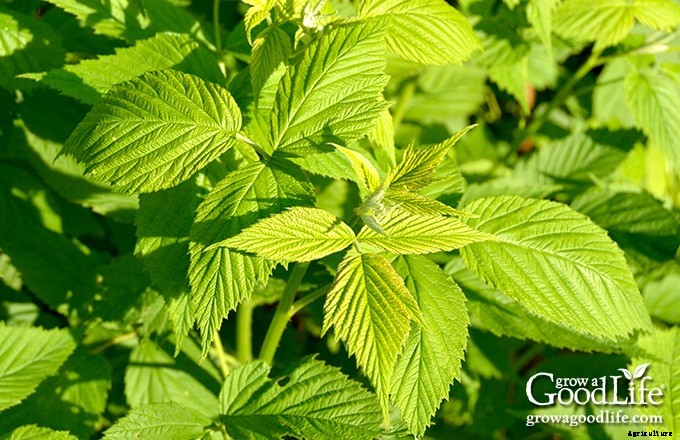
You can either let the leaves dry naturally, or use a dehydrator to dry the raspberry leaves quicker. First, wash the leaves well with running water to remove dust and insects and lay them out on a kitchen towel to let some of the moisture evaporate. Then decide how you are going to dry the raspberry leaves:
Let the Raspberry Leaves Dry Naturally: Spread the leaves out on a screen and allow them to dry naturally away from dust and sunlight. Or you can gather the leaves by their stems, tie the ends, and hang them to dry. Depending on the humidity, drying usually takes 1-2 weeks.
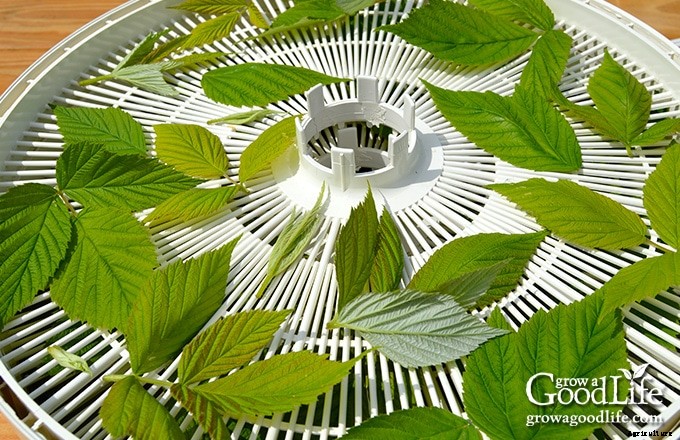
Use a Dehydrator to Dry the Raspberry Leaves: The quickest way to dry raspberry leaves is by using a dehydrator. Spread the leaves out on the screens and dry at a low temperature. Check every 30-minutes until completely dry.
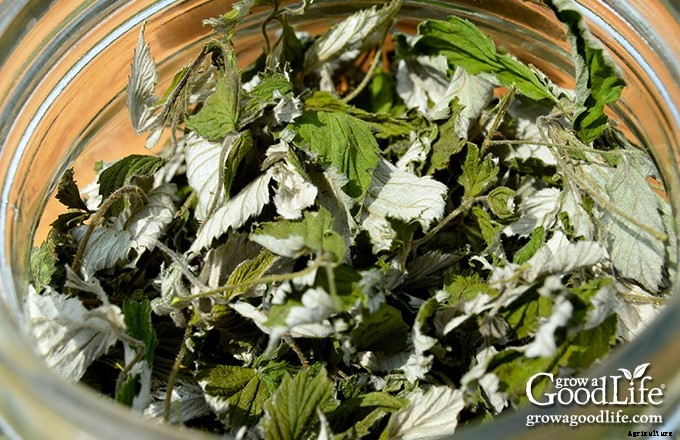
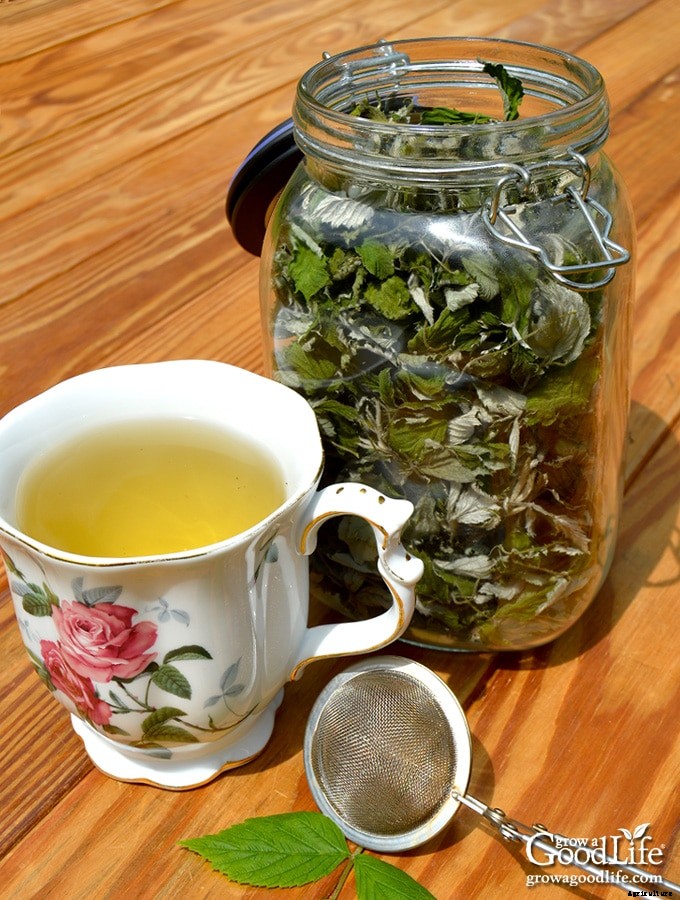
You can tell when the leaves are dry, by crushing a leaf or two. It should crumble easily. Once the leaves are dry, store leaves lightly packed in a glass jar away from direct sunlight. Try not to crush them to reserve the flavor until you are ready to brew your tea.
Red raspberry leaf tea tastes like a mild green tea, but without the caffeine. To make the tea, use about 1-teaspoon of crushed, dried raspberry leaves per 8-ounce cup of boiling water. Steep for at least 5 minutes and drink like regular tea.

Want to learn how to use herbs as medicine? Check out the online courses at The Herbal Academy of New England: Introductory Herbal Course and Intermediate Herbal Course.
 Print
Pin
Print
Pin
Resources and Further Reading:
I am not a doctor and the statements on this website have not been evaluated by the FDA. It is recommended that you consult your medical care provider or herbalist prior taking or relying upon any herbal product.
You May Also Like These Herb Articles:


