
Welcome to Modern Agriculture!

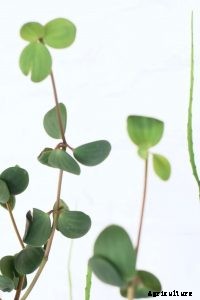 Peperomia Orba, also known as Peperomia Pixie lime, is a lovely dwarf plant from the Piperaceae family. Although smaller than most of its peperomia relatives, it stands out with its unusual lime green leaf color and compact shape.
The fast-growing succulent native to Southern America looks stunning in small decorative pots or mixed planters. If you add to that very modest growing requirement, it is clear why it has managed to win the hearts of many plant growers around the world.
Peperomia orba is a tropical perennial that grows 4 to 6 inches tall and 6 to 12 inches wide. Tiny, thickened, leathery, and shiny leaves 1 to 2 inches long are densely lined up on fleshy, red, trailing stems. They have a teardrop shape which is why the plant is often called peperomia teardrop.
The color of the leaves is usually greenish-yellow with slightly lighter white lines in the middle of the leaves. Particularly interesting is the variegated teardrop peperomia, whose leaves have an irregular white border.
In mid-summer, mature teardrop peperomia blooms with tiny, only one-inch large greenish piston-like and not particularly interesting flowers.
Inconspicuous bloom is a common feature of many peperomia, which in no way affects their popularity. Yet, these plants are grown primarily for their striking leaves and growing forms!
In its natural habitat, peperomias grow in the shade of high tropical and subtropical vegetation in the ground layers of rainforests where the direct sun hardly reaches.
Grown as houseplants, they prefer positions with moderate but filtered lighting, such as the east window sill. They will feel comfortable in other places where they are not exposed to the bright midday sun.
Although they are adaptable and tolerate shade better than most other houseplants, insufficient light can cause fading or wilting of the leaves. They respond well to artificial lighting, and if there is not enough natural light in the room, you can grow them under fluorescent lamps.
Peperomia is a succulent plant. Such plants deposit water in the leaves, stems, and roots, so we water them less often than plants that do not have this property.
The frequency of watering is always related to the amount of light – water evaporates from the soil faster in brighter positions. Temperature and season also affect the watering schedule.
Generally, you could water your teardrop peperomia once a week from spring to fall and once every 15 or 21 days in the colder part of the year. Like all other succulents, peperomia orba easily copes with a deficiency rather than an excess of water. Therefore, always allow the soil surface to dry slightly between waterings.
Peperomia orba grows best in light, loose, well-draining potting mix. It does not like heavy, clay, and compacted soils that retain moisture for a long time. In soaked substrate, the root of the plant decays very quickly.
The ideal combination is peat moss and perlite in a 2:1 ratio. You can also grow it in a standard substrate for potted plants but add orchid barks to improve water flow and ensure drainage.
Since it comes from warm regions, peperomia orba or tear drop plant is not resistant to low temperatures. In the northern hemisphere, it cannot survive outside in the colder part of the year or in a space that does not heat up in the winter months.
At temperatures approaching the freezing point, the water accumulated in its leaves turns into ice crystals that destroy leaf tissue. Therefore, do not expose it to temperatures below 50 F.
It grows best at a temperature between 65 and 75 F, in a place where it is sheltered from drafts or sudden temperature changes.
It can spend the winter in a slightly colder environment, in a room where the temperature is around 55 F. In that case, you could reduce watering to once a month so that the substrate is dry most of the time. The combination of low temperatures and moist soil is fatal for this plant.
To sum up, unless you live in a USA climate zone of 10 to 11, peperomia orba is a houseplant that can spend the summer outside but bring it into the house as soon as the night temperature drops to 50 F in early autumn.
Peperomia orba, like all other plants that have arrived in our homes from the tropics, is accustomed to increased levels of humidity in the air and has difficulty coping with dry air. Lack of moisture in the air is particularly pronounced in winter due to heating.
Values below 50 percent moisture bother the plant, and in such an environment, you can expect the appearance of brown edges and tops of the leaves, twisting or falling. To avoid such deformations and create conditions in which the plant will be satisfied, periodically spray its leaves. You can also place the plant on a pebble tray or use a plant humidifier.
Although peperomia orba thrives even without fertilizers, additional nutrient intake will help the plant grow faster and fuller. You can fertilize it with liquid fertilizer for leafy plants with a balanced NPK ratio.
Apply this fertilizer dissolved in water once a month from spring to autumn. In winter, when the plant is not actively growing, there is no need for additional fertilization.
Another option is a slow-release fertilizer. Usually, it comes in pellet, granules, or sticks forms. You could add them to the substrate at the beginning of the growing season, in late March.
Those fertilizers have a prolonged effect which facilitates the care of this plant. However, follow the instructions on the amount and concentration. The excess nutrients that the plant can not absorb could change the soil composition and make its life difficult.
Peperomia loves potbound. If you plant it as an individual plant, take a smaller pot, one inch wider than the diameter of its root. If you plant it in a planter with other plants or in a terrarium, the poorly developed root ball will be satisfied with as much space as it brings.
Additionally, the plant grows better in a confined space and can grow in the same pot for years. In other words, this is not a plant that you need to transplant every spring in a slightly larger pot! Quite the opposite: leave it to grow in the same pot for at least three or four years and replace the pot with a larger one only when the root fills the container.
For the healthy growth of peperomia, it is crucial to choose the pot with a drainage hole, aside from the appropriate size. Also, a good choice is pots made of natural materials such as terracotta because they absorb moisture from the substrate.
In such a pot, you might water your plant more often than the one that grows in plastic once, but the risk of excessive watering is much lower.
Peperomia orba tolerates pruning well, so this measure is beneficial if you want to control its size or shape. You can generally prune your teardrop peperomia at any time of the year, but it is still best to do it in spring or summer since the plant will recover faster. Pinching the tops will stimulate a more lush and fuller shape. Feel free to shorten the leggy and scattered shoots to one-third to invigorate the new growth and get a better appearance.
If you want to propagate your peperomia orba ist is best to wait until the spring as an ideal time for the process. If you are not sure how to do this, below we offer you a choice of two simple and effective methods.
If you want to propagate a peperomia orba ist is best to wait until the spring as an ideal time for the process. If you are not sure how to do this, below we offer you a choice of two simple and effective methods.
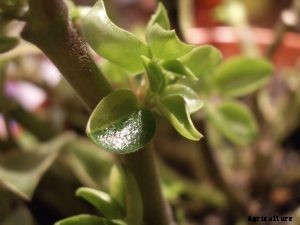 Cut off a healthy, mature leaf with a stalk at the point where it appears on the stem.
In the next few weeks, the root will develop from the leaves. Soon the signs of new growth will appear. At that time, the new plant is ready to continue growing in room conditions, so permanently remove the plastic bag.
If you have propagated several leaves in the same pot, you can leave them together or plant them in separate small pots.
Problems that might occur when growing this plant are always related to inadequate conditions in which it grows. Here we will mention the most characteristic ones.
If the plant has a leggy form with elongated stems and few leaves, then it suffers from lack of light. Shorten the unsightly growth and place the plant in a more favorable position.
There are several causes for sudden leaf fall. Most often, it is due to excessive watering. Next is exposure to drafts or low temperatures.
Changing the color of the leaves always suggests that some of the growth factors are not in line with the plant’s needs. The leaves may turn yellow due to excessive sun exposure, which destroys chlorophyll and leaves yellow spots that soon become necrotic brown.
Excessive watering has the same effect. The plant struggles because the water it already contains in the leaves and the water that the root pumps into them destroy the cellular structure of the leaves.
Therefore, pay attention to the schedule of watering and the composition of the substrate. Cut off the diseased leaves. The plant will make up for them quickly if conditions improve. However, if overwatering continues, you can face root rot, a real danger for the plant.
Unfortunately, root rot is a pretty common problem when growing peperomia orba as a houseplant. It is caused by excessive watering or poor soil permeability. You will recognize it by the unpleasant smell that spreads around the plant. If this happens, here is what you can try:
Peperomia orba can be exposed to their infestation. Here is a list of the most common ones:
Mealybugs are parasites that feed on plant juices leaving traces in the form of honeydew. The plant they attack quickly weakens, and its leaves turn yellow and wither. You can remove them by wiping the leaves with a cotton cloth soaked in isopropyl alcohol or neem oil.
Thrips are dangerous pets because they can quickly destroy the plant. These are tiny black, yellow, or white insects that destroy the cellular structure of the leaves by sucking the sap of the plant.
Your peperomia will need help to deal with these winged, fast-spreading pests. It is best to act preventively and treat it with a solution of neem oil or insecticidal soaps.
Spider mites are so tiny that it is difficult to see them with the naked eye. Before you notice the colonies of these relatives of scorpions and spiders, you will notice a delicate reddish net on the back of the leaves or among the leaves.
They cause curling and drying of the leaves. Fortunately, neem oil or insecticidal soaps are effective remedies to help you get rid of these pests. The procedure should usually be repeated several times, and all infected leaves should be removed and destroyed immediately.
Peperomia orba is a succulent that does not require much attention or care, it tolerates even occasional neglect, so it fits perfectly into the rhythm of life in the modern age.
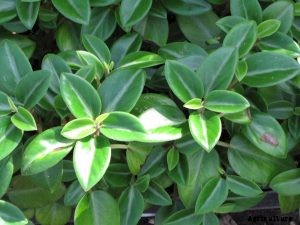
Peperomia pixie lime can be successfully grown by beginners and those who prefer low-maintenance houseplants. It is a small plant, so it will easily find a place in any room, and it looks great even when planted as in combined planters. Here is a short reminder of its requirements:


