
Welcome to Modern Agriculture!

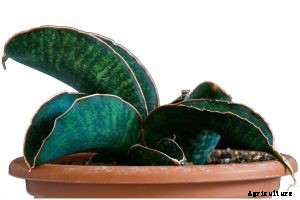 The short Sansevieria samurai succulent perennial plant belongs to the genus Dracaena, which according to research, the plant was named after the German naturalist known as Christian Ehrenberg.
The plant is sometimes referred to as Sansevieria ehrenbergii. It is also known as an air purifying plant because it effectively detoxifies the air.
This tiny Ehrenbergii plant only grows to about 4-7 inches tall and about the same width, which is why the plant is sometimes called Samurai dwarf.
The plant has dark green pointy leaves that grow in opposite rows with a slight red tint along the leaves’ edges and tips, further enhancing its appearance.
Sansevieria samurai, also called Ehrenbergii, Dwarf samurai, Sword sansevieria, or Blue sansevieria, is a short tropical perennial plant belonging to the genus Dracaena.
Sansevieria samurai is native to the arid regions of tropical Africa and parts of tropical Asia.
Currently known as Dracaena hanningtonii, the plant is one of the snake plants famous for its resilience and attractive appearance.
The plant has thick, dark green pointed leaves that grow in opposite paired rows in a unique zig-zag pattern with red tint edges that further enhances this plant’s appearance.
The pointed leaves of the Sansevieria samurai plant can grow up to 5 feet long when grown in a good space and with proper care.
The Sansevieria samurai variegated evergreen leaves have an extended blade-like V-shape with a slight red tint along the edges and tips of the leaves.
The leaves also follow an alternating growth pattern, thereby taking a spiral appearance when viewed from above.
The following are some tips to keep in mind when considering growing a Sansevieria samurai plant or caring for an existing plant.
Sansevieria samurai, just like all sansevierias, grow best in the full or partial sun. You can also put the plant under some indirect sunlight but bright shade.
Like snake plants, the Sansevieria samurai can tolerate a wide range of light, from full sun to deep shade conditions, making them an ideal houseplant.
So, you should avoid placing the plant in dark areas or corners of the house because they will not have access to brightness.
When growing this plant outdoors in tropical regions, the best position to place this plant would be from shaded to sun-shaded areas to encourage optimum performance of the plant.
If grown indoors, then the Sansevieria samurai prefers a bright indirect light to perform better.
Keeping your Sansevieria samurai plant in its ideal light requirement will enhance and increase the growth rate. Therefore, I recommend you provide the perfect light conditions for your plant.
You should water the Sansevieria samurai plant every 1-2 weeks as the plant is drought-tolerant.
However, during winter, you should water the plant monthly. I recommend that you let your Sansevieria samurai’s soil dry completely before watering again.
Moreover, it is better to check if the plant needs water before watering them and avoid overwatering the plants at all costs.
The plants should be thoroughly watered when dry, and the watering frequency should be infrequent to avoid excessive watering of the plants, which will lead to soggy soil.
The ideal watering procedure for the Sansevieria samurai plant is as follows:
Apply a balanced liquid houseplant fertilizer (10-10-10) to your dwarf Sansevieria plants, which should dilute to 50 percent strength when growing indoors.
This fertilizer application process should be done once every month throughout the growing season of your dwarf succulent plant.
You can replace a watering session with fertilizer application so as not to overwater your plant.
An average warm temperature of approximately 60 – 70 F (15 – 24 C) is recommended for the optimal performance of the Sansevieria samurai plant.
Meanwhile, temperatures that fall below 50 F (10 C) are not recommended for your plants as they will start experiencing damage.
Sansevieria samurai plants can tolerate fluctuating temperatures and generally do well in temperatures that are comfortable for humans.
However, ensure to keep your Sansevieria samurai plants away from frost and cold drafts, as leaving the plant exposed to extreme cold and in wet soil is fatal.
Sansevieria samurai plant requires a well-draining cactus or succulent potting mix with a pH of between 5.0 – 7.5.
Moreover, it is advisable that the clay pot used for potting can crack when the plant outgrows its containers.
A humidity of 50 percent is highly recommended as it is preferable for the plant. The plant can handle normal house humidity levels.
Although the Sansevieria samurai can also adapt to lower humidity levels, a 50 percent or higher humidity level is preferred. During the hot weather, a bit of extra humidity is recommended for the plant.
One trick that can help raise the air humidity level around your plant during a hot day is to place your Sansevieria samurai’s pot over a watered pebble tray. This trick will increase the air humidity around your plant.
Sansevieria samurai can be planted both as an indoor and outdoor plant. Heavy clay pots containing adequate drainage holes are recommended for potting this plant as it is top-heavy.
Sansevieria samurai should not be repotted very often as it is a slow-growing plant. One of the primary reasons you will repot your Sansevieria samurai plant is if the plant’s growth is causing the pot to lean.
Repotting is recommended if your Sansevieria samurai is beginning to get crowded and rootbound. Due to the long blades of the Sansevieria samurai plant, it is ideal to choose a wide pot that can support the long blades of your plant.
The Sansevieria Ehrenbergii is a slow-growing plant, just like the other plants in its genus. They perform more actively during warmer climates like spring and summer but grow dramatically slow during winter.
The Sansevieria samurai plant is highly resistant to pests and diseases. The only significant issues they encounter often come from freezing temperatures or overwatering, leading to root rot.
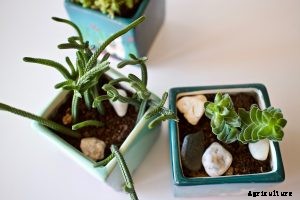
Propagation of the Sansevieria samurai plant is easy and quick, and below are some of the methods propagation methods to follow.
The Sansevieria samurai occasionally forms offsets that can be replanted easily. Additionally, this plant can also be propagated either by leaf cuttings or division. Dividing the roots of this plant is relatively simple, similar to most plants with rhizomatic roots. Plant division is the easiest of all the methods of propagating your Sansevieria samurai.
Here is how to propagate your Sansevieria samurai plant through the plant division propagation method:
Another simple way to propagate your Sansevieria samurai is through leaf cuttings.
A mature, healthy leaf should be used when creating cuttings and should be cut into parts of at least 4 inches.
The cut end requires a drying process of about a few days to prevent rotting, and once complete, you can plant your cuttings.
Push the cuttings to about 1 inch into the soil, and until the roots are set, the soil should be kept barely moist.
A succulent potting mix is recommended for planting your Sansevieria samurai leaf cuttings.
In summary, here is a detailed process you need to know when propagating a Sansevieria samurai plant:
Sansevieria samurai have no serious problems with disease or pests. However, some pests and diseases like spider mites and mealybugs can attack your plants once in a while. This problem can be controlled with adequate and proper care measures by simply keeping your Sansevieria samurai plants clean and free from dust.
Root rots that usually occur due to overwatering are the most prominent problem with the Sansevieria samurai. Remember that as a drought-tolerant plant, it does not enjoy being left in soggy soil.
Meanwhile, members of the Sansevieria genus contain saponins, a substance that is toxic to pets and mildly toxic to children when ingested. According to research, some of the symptoms associated with Sansevieria ingestion include depression, lethargy, vomiting, loss of appetite, and drooling. Therefore I recommend that you keep this plant away from pets and small children to protect them from possible harm.
Below are the recommended solutions to help prevent or control those problems associated with the Sansevieria samurai plant as identified above.
Here’s a summary of some of the essential points we’ve discussed so far.
Sansevieria samurai, also called Sansevieria ehrenbergii, is a unique tropical perennial plant from the well-known genus Sansevieria (currently known as Dracaena) and is native to Africa and Asia.
The Sansevieria samurai plant is also known as an air purifying plant that effectively detoxifies the air.
However, this tiny Ehrenbergii plant only grows to about 4-7 inches tall and about the same size wide, which is why the plant is sometimes called Samurai dwarf.
The plant has dark greenish point leaves that grow in opposite rows with a slight red tint along the leaves’ edges and tips, further enhancing its appearance.
With regards to how to care for the Sansevieria samurai plants, here are a few tips to remember:
Now I’m confident that you can grow your Sansevieria samurai successfully in your home or garden today following this comprehensive guide.
So let’s start growing today and watch as your Sansevieria samurai plant develops and grows into a beautiful plant.


